- On June 20, Australia confirmed its first case of H5N1 bird flu. So the virus has arrived on all seven continents.
- Since 2021, the highly pathogenic H5N1 strain has killed millions of wild birds and many mammals worldwide. The disease spreads through feces, direct contact, aerosols and scavenging of infected animals.
- Scientists said Australia might still have a chance to limit the outbreak if the virus remains confined to marine birds and does not spread to ducks, livestock and native wildlife.
Support reliable science news. Donate now to help EarthSky keep going.
By Marcel Klaassen, Deakin University; Meagan Dewar, Federation University Australia, and Michelle Wille, The University of Melbourne
H5N1 bird flu has spread to 7 continents
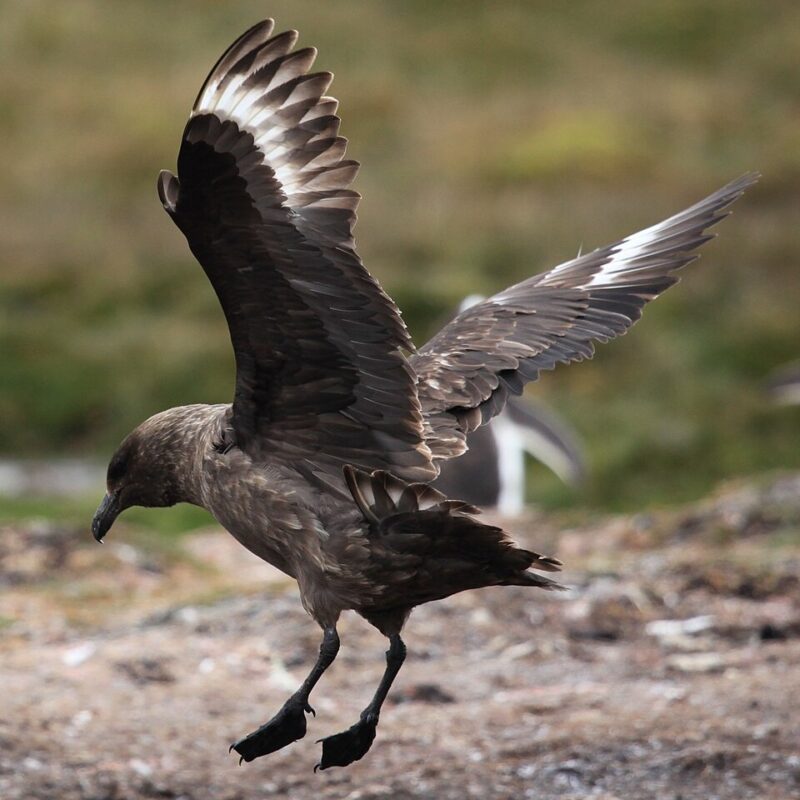
On June 20, 2026, a suspected case of the deadly bird flu, also known as high pathogenicity avian influenza (HPAI) H5N1, was confirmed in a brown skua.
This large seabird was found in Cape Le Grand National Park near Esperance, about 700 kilometers (430 miles) southeast of Perth in Western Australia.
The virus is also suspected to have affected another seabird, a southern giant petrel, found at the same area.
Following the initial testing, samples collected from these birds were sent to the CSIRO to confirm the first Australian cases of H5N1, specifically the clade 2.3.4.4b H5N1 lineage. Avian influenza viruses are categorized by subtype (creating the H and N number combination, here H5N1) and specific clades within the H5 subtype.
This virus has devastated wildlife populations in other continents. And this could be the start of a long push to protect Australian birds and wildlife in Australia.
Where did this virus come from?
Avian influenza viruses, of which HPAI H5N1 is just one kind, have been around for millennia. In the vast majority of cases they cause no disease in birds. These strains are referred to as low pathogenicity avian influenza viruses.
However, in 1996 one of these viruses evolved to become disease causing. Since then, this HPAI H5N1 has caused severe disease and became endemic in poultry. With chickens now forming about 70% of all birds worldwide, this is a critical reservoir where the virus continues to evolve.
The devastating effect of HPAI H5N1 is unfortunately not limited to poultry. Since 2021, HPAI H5N1 has caused a global animal pandemic, with enormous consequences for wildlife in all continents. It has killed millions of wild birds and caused significant drops in the global population of some species. It has also spread into wild and domestic mammals, with various species of seals particularly affected.
How H5N1 bird flu spreads
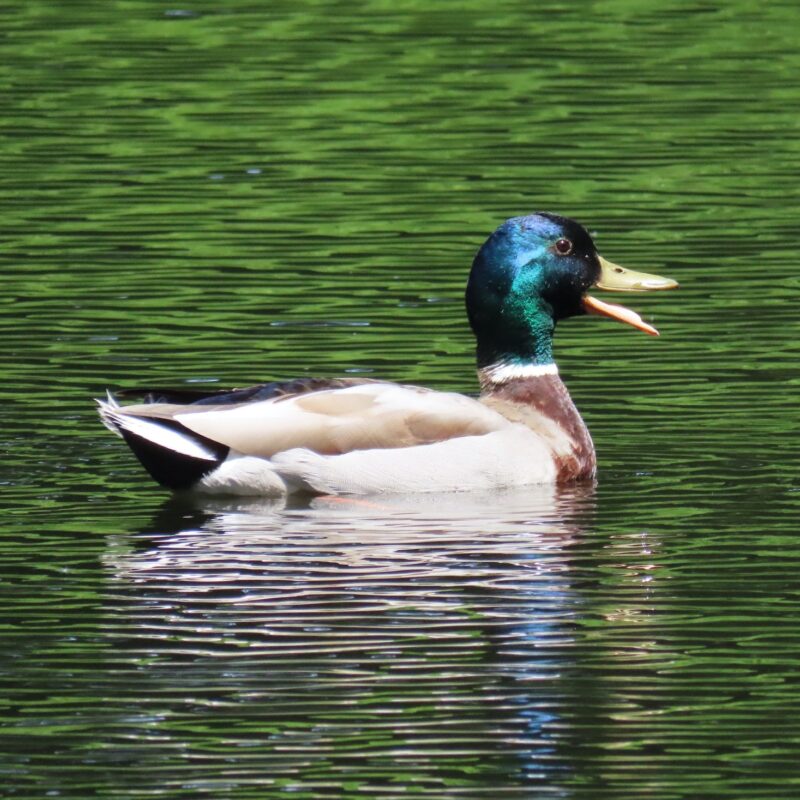
Part of the challenge in controlling HPAI H5N1 is that it can spread through a wide range of transmission pathways. For example, the virus typically spreads through feces, especially when in water. Imagine infected ducks in a pond, where the pond water acts as a conduit to infecting other ducks which are feeding or cleaning themselves.
It can also be spread through direct contact and aerosol transmission, particularly in poultry farms. And it is spread through predation and scavenging, where animals like foxes may eat the carcasses of infected birds they find.
While it has so far been found in more than 400 different bird species, the spread of HPAI H5N1 in the Northern Hemisphere is facilitated by freshwater dabbling ducks. Dabbling duck species feed predominantly at the surface of the water, sometimes even grazing on land.
Importantly, ducks have very limited signs of disease when infected with HPAI H5N1. And they appear to be able to continue to migrate while infected. This allows them to potentially spread the virus long distances.
Overall, this virus has been devastating for wild birds. For example, 33–47% of all adult northern gannets died in 2022 due to HPAI H5N1. On subantarctic Heard Island, 13,000 baby southern elephant seals died due to HPAI during the 2025–26 summer.
Why has it taken so long to reach Australia?
Despite being in Asia since the 1990s, and in Antarctica since 2024, HPAI H5N1 had not been detected in Australia until now. This is likely because there are no duck species which routinely migrate between Australia and Asia, nor are there ducks that migrate through Antarctica.
Despite the lack of ducks in Antarctica, the virus did arrive there in the summer of 2023–24. Subsequently, it spread thousands of kilometers through the subantarctic in the summer of 2024–25. Available evidence suggests birds like gulls, skuas and giant petrels may have taken on the role of long distance virus carriers in the Antarctic and subantarctic.
The various species of skuas and giant petrels that breed in Antarctic waters go on to roam the Southern Ocean, also venturing into the Atlantic, Indian and Pacific Oceans during the southern hemisphere winter. While rarely seen on Australian shores, these species are not too far offshore, looking for food and occasionally gathering in large groups.
Now that HPAI H5N1 has been found on mainland Australia, it will not necessarily establish itself and spread across the continent into other birds and mammals, including livestock.
Given that skuas and giant petrels are marine rather than freshwater species, and do not occur on land in large numbers outside the breeding season, there is still a chance that it may not spread further.
The biggest risk is that infected, sick birds are eaten or scavenged by native birds and mammals, which could transmit the virus to ducks.
The effort to stop the spread
Once in ducks, the likely spread of the virus increases dramatically, and the outlook would be grim.
But for now, we are a few critical steps away from that happening. Continued surveillance and testing, being led by Western Australia, is critical to reveal the extent of the virus and whether it has spread to local animals.
Vigilance is key: Do not touch or take sick animals into your care. In Australia, report suspected cases immediately to the Emergency Animal Disease Hotline on 1800 675 888.
For farmers or people who own chickens, it’s critical to follow guidelines provided by government departments and report any suspicious mortality.
Marcel Klaassen, Alfred Deakin Professor and Chair in Ecology, Deakin University; Meagan Dewar, Lecturer, Biological Sciences, Institute of Innovation, Science and Sustainability, Federation University Australia, and Michelle Wille, Senior Research Fellow, The University of Melbourne
This article is republished from The Conversation under a Creative Commons license. Read the original article.
Bottom line: The H5N1 bird flu has reached Australia, completing its spread to all seven continents and raising concerns for the nation’s birds, wildlife and livestock.
Read more: Media We Love: The Merlin Bird ID app

Like what you read?
Subscribe and receive daily news delivered to your inbox.
More from
Kelly Kizer Whitt


Visible planets and night sky guide for October

Arizona’s Chiricahua poised to become 64th US National Park
Another satellite breakup raises concerns about space junk
Smile mission releases its stunning 1st aurora footage!