



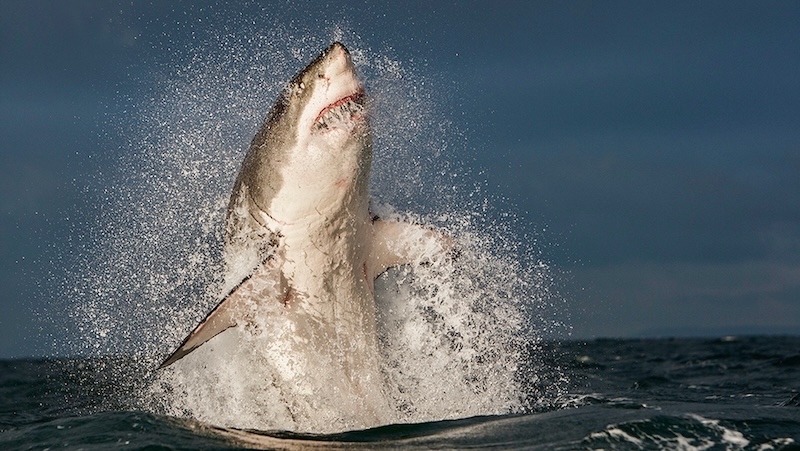
- Great white sharks disappeared from False Bay, South Africa, in mid-2018, leading to significant changes in the marine ecosystem.
- With the absence of this apex predator, Cape fur seal and sevengill shark populations increased, causing a decline in smaller fish species.
- Several factors contributed to the decline of great white sharks at False Bay, scientists say. That includes getting trapped in nets used to protect beachgoers and orca predation.
The 2025 EarthSky lunar calendar makes a great gift. Get yours today!
Great white sharks disappeared from False Bay
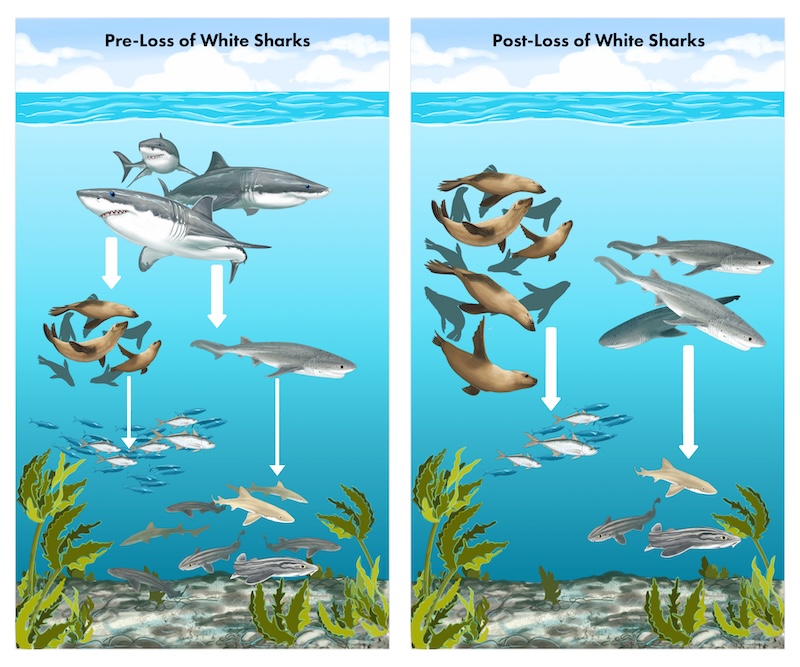
False Bay, in South Africa, used to be a prime location for spotting great white sharks. But by mid-2018, the sharks had vanished. On March 25, 2025, researchers from the University of Miami said the False Bay ecosystem changed when its apex predator (superpredator) disappeared. Cape fur seals, a major prey for great white sharks, rose in numbers. There was also an increase in the sevengill shark population. This resulted in fewer smaller fish that are the primary prey of the seals and sevengill sharks.
Researchers published their peer-reviewed study in Frontiers in Marine Science on March 24, 2025.
Lead author Neil Hammerschlag of the University of Maine said:
The loss of this iconic apex predator has led to an increase in sightings of Cape fur seals and sevengill sharks, which in turn has coincided with a decline in the species that they rely on for food. These changes align with long established ecological theories that predict the removal of a top predator, leads to cascading effects on the marine food web.
Who ate who at False Bay?
Historically, great white sharks (Carcharodon carcharias) were the apex predators of False Bay.
Great whites preyed on Cape fur seals (Arctocephalus pusillus) and fish. In addition, great whites and Cape fur seals preyed on sevengill sharks (Notorynchus cepedianus). The seals, however, primarily ate schooling fishes, while sevengill sharks mostly preyed on benthic (ocean floor-dwelling) sharks.
Then, the great white shark population began to decline, and they eventually disappeared. With this came a shift in the marine wildlife ecosystem of False Bay. The population of seals and sevengill sharks increased. This coincided with a decline in the population of small fishes, the favorite prey of seals. Meanwhile smaller benthic sharks, often eaten by the sevengill sharks, also decreased in numbers.
Hammerschlag said:
Without these apex predators to regulate populations, we are seeing measurable changes that could have long-term effects on ocean health.
Documenting changes due to the absence of great white sharks
The scientists said they based their analysis on two decades of observations. These included boat-based shark sightings, surveys of Cape fur seals by citizen scientists and underwater fish camera survey stations with bait.
Co-author Yakira Herskowitz of the University of Miami said:
The use of underwater video surveys conducted more than a decade apart provided us with a snapshot of the food web both before and after the disappearance of white sharks from False Bay. The number of individuals of a given species recorded on the videos not only informs us about their numerical abundance, but also their behavior, as species under increased predation risk often become more elusive and are thus less likely to be detected on our cameras.

Boat surveys of great white sharks were conducted between 2000 to 2020. For the first 15 years, the population was stable. But after 2015, observers noticed a big decline in the shark numbers. By mid-2018, there were no more great white shark sightings.
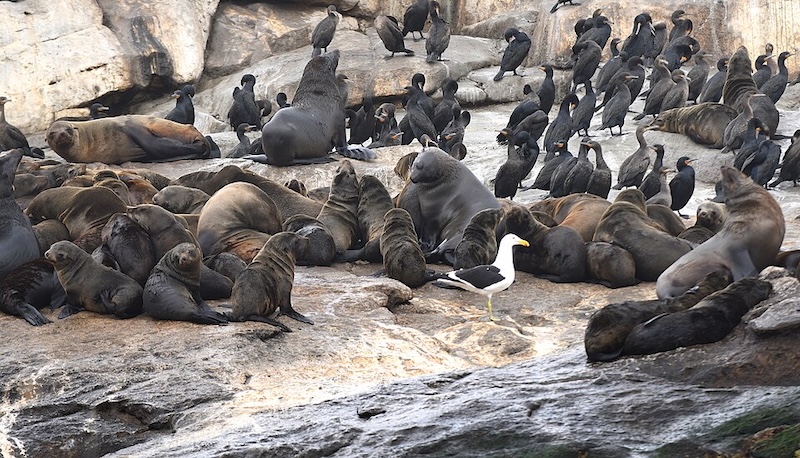
As the decline and eventual absence of great whites was occurring, Cape fur seals started changing their behavior. They exhibited less stress levels and begun rafting further away from their island refuge, Seal Island.
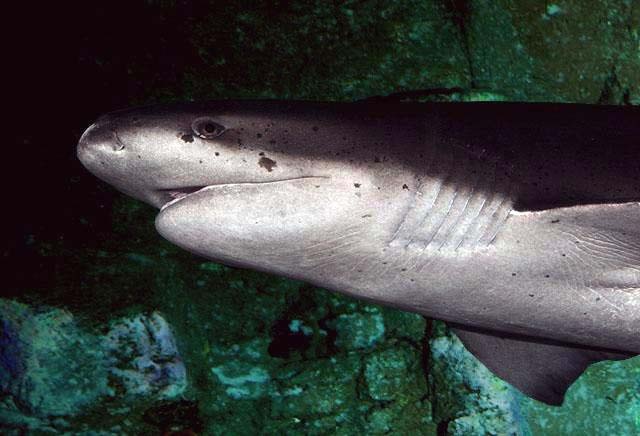
Meanwhile, sevengill sharks, a smaller shark species, started increasing in numbers in False Bay. Historically, great whites would have preyed on these sharks.
Apex predators are essential for a healthy ecosystem
This study illustrates the importance of apex predators, which are experiencing global declines. Animals at the top of the food chain are necessary for a healthy, balanced ecosystem. At False Bay, the loss of great white sharks will have long-term effects on this marine ecosystem.
What scientists observed in the data fits the trophic cascade hypothesis. This hypothesis suggests that predators at the top of the food chain have the strongest effect on the next level of the food chain. But that influence gradually diminishes at subsequently lower levels.
The scientists said in their paper:
Our findings were consistent with this ecological pattern, with the largest magnitude in relative differences between pre- and post-loss periods recorded in seals and sevengill sharks, with a relatively lesser magnitude in relative differences seen in lower trophic levels [organisms’ positions at different levels in the food chain].
Why did the False Bay’s great white sharks disappear?
Historically, great white sharks inhabited False Bay year round. Their primary prey during colder months were Cape fur seals that inhabited Seal Island, a rocky outcrop about 6 miles (10 kilometers) from the shoreline. During warmer months, the sharks would also go after sevengill sharks.
Why did the great white sharks disappear? Scientists think it could be a combination of factors. Many great whites, for instance, were caught in nets set out to protect recreational beachgoers who ventured into the water.
Another intriguing suggestion points to predation by orcas. According to an article by shark expert David Shiffman, orcas were preying on the great whites. They were eating the shark’s nutrient-rich oily liver. In fact, great white sharks were washing up on beaches with their undersides between their pectoral fins gouged out. And, Shiffman said, scientists think that the sharks simply moved to other locations.
Bottom line: Great white sharks disappeared from False Bay, South Africa, in mid-2018. This resulted in a significant ecological change, with an increase in Cape fur seals and sevengill sharks, and fewer smaller fish.
Like what you read?
Subscribe and receive daily news delivered to your inbox.
More from
Shireen Gonzaga


Alpha Cephei, or Alderamin, is a fast-spinning star

Delta Cephei helps measure cosmic distances



