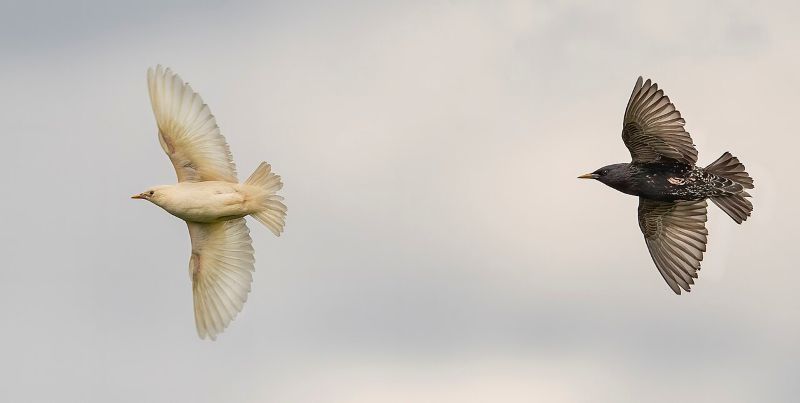
Color plays an outsized role in the animal kingdom. What scary things can happen when color production goes awry?
Animals use color to communicate in many ways. For example, some creatures camouflage themselves to hide from predators, like moths that look like tree bark (nothing to see here!). And animals can display warning colors that scream beware, like black and white striped skunks and red poison dart frogs.
Colors also can absorb light to keep animals warm, act as sunscreen, and communicate social status or readiness to breed. Some colors change over time, while others are permanent throughout an animal’s lifespan.
So how are colors made? What can happen when things go wrong? Here’s the science behind animal color, and how some animals end up ghostly white.
How are colors made?
Colors that appear in animal fur, feathers, and skin are largely the result of three primary mechanisms: genes, diet, and physics.
Genes. Genes code for the building blocks (amino acids) and enzymes (proteins) that produce the pigment melanin. A specific type of melanin called eumelanin creates the blacks, browns, and grays widely seen throughout the animal kingdom. Another type, called pheomelanin, makes those reddish-browns, oranges, and yellows, such as those found in orangutan hair and tiger stripes.
There are other types of endogenous (produced within) pigments too, like porphyrins pteridines, and psittacins. The latter are responsible for a parrot’s bright colors.
Diet. Many yellow, orange, and red colors in the animal kingdom are created by pigments called carotenoids. However, unlike melanin, animals cannot make carotenoids. Instead, animals acquire these plant-, algae-, or microbe-derived pigments through their diets. These are known as exogenous (produced without) pigments.
As example, the bright yellow colors of American goldfinch (Spinus tristis) come from the carotenoids lutein and zeaxanthin consumed in foods like asters, dandelions, sunflower hearts, and goldenrod.
Physics. Lastly, reflective physical structures can create an illusion of color. The brilliant blue feathers of blue jays (Cyanocitta cristata) are created by microscopic structures that scatter (randomly deflect) certain wavelengths of light. The color your eyes see is a result of the selective reflection of blue wavelengths of light. Red wavelengths get absorbed by the feathers.
Iridescent colors in the animal kingdom are another spectacular example of structural coloration. For example, iridescent throat feathers of hummingbirds, called the gorget, are created by structures that refract (bend) light.
Genetic mutations affecting color
Two genetic disorders that lead to a lack of color production in animals are leucism and albinism.
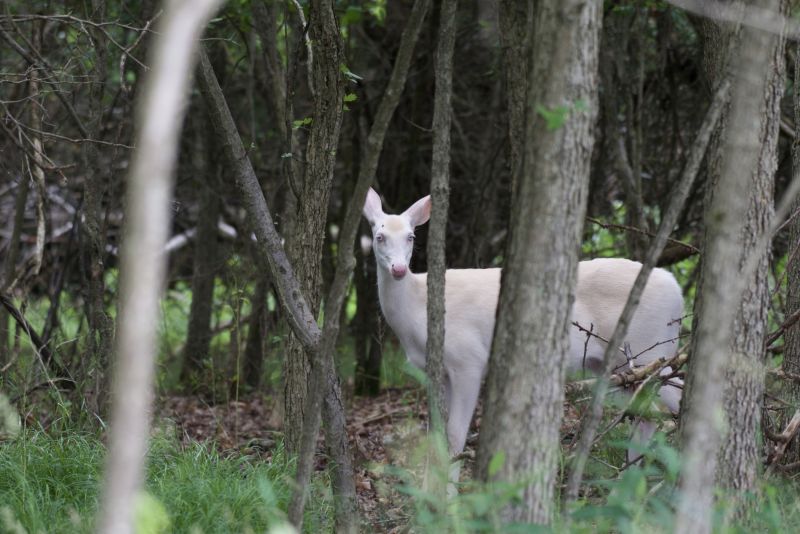
In leucistic animals, the cells that produce melanin — called melanocytes — don’t form, or don’t migrate properly to the intended destinations during embryonic development.
Without melanocytes, the overlying skin, fur, or feathers remain white. Eyes, however, are not affected. That is because melanin is produced differently in the eyes of embryos than in other parts of the body. Mutations in several different genes can cause leucism. The white areas may appear patchy if some parts of the body were not impacted.
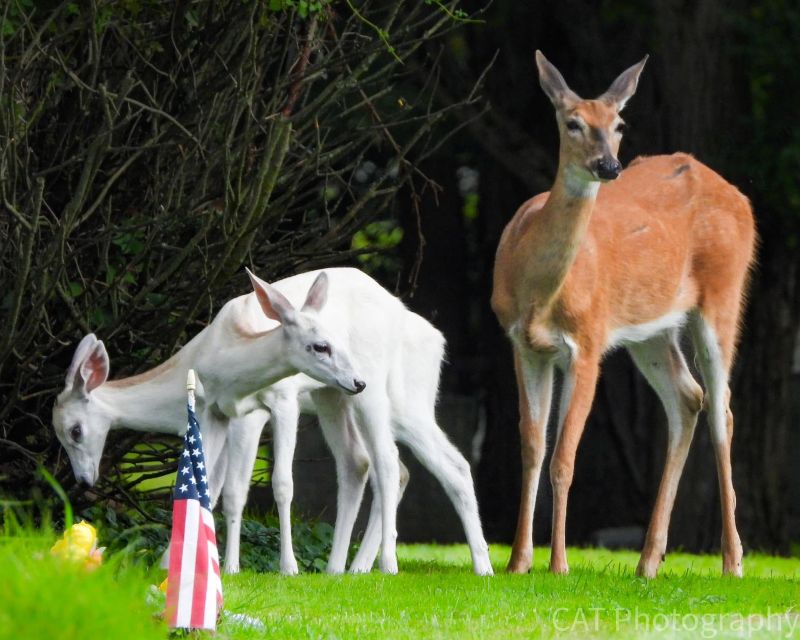
In albino animals, melanocytes are present in proper locations, but the cells cannot produce melanin because of defective enzyme activity. Enzymes are specialized proteins that trigger or speed up biochemical reactions. In albinism, the enzyme tyrosinase is unable to make melanin.
In albino animals, the eyes are affected and appear as pink or red because of underlying blood vessels. Mutations in several different genes can cause albinism.
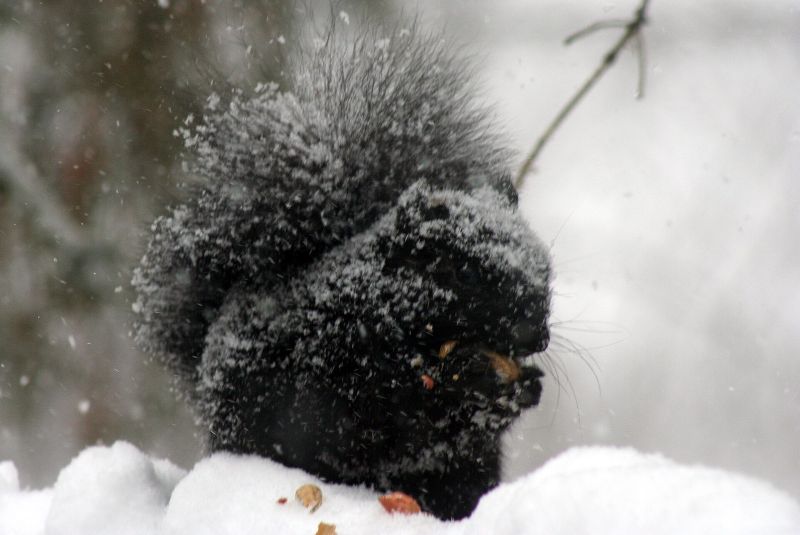
Genetic mutations can also lead to an over production of color. Such animals are termed melanistic. Visitors to Niagara Falls and surrounding regions are often treated to sightings of black squirrels. These are actually Eastern gray squirrels (Sciurus carolinensis) that overproduce melanin.
Occasionally, a melanistic squirrel will appear sporting Halloween colors: a black body but bright orange tail. The black is eumelanin, while the orange is pheomelanin. Both pigments start from the same precursor, dopaquinone. How exactly the black and orange colors in the squirrel’s body and tail differentiate is a bit of a mystery to me. Please drop a comment if you know the mechanisms involved.
Why aren’t leucistic and albino animals more common?
Anecdotally, leucistic and albino animals are thought to be rare because they are noticeable and easy targets for predators. A few scientific studies do bear this out. However, context matters and there are other reasons why white animals might not survive long in the wild.
Albino animals have poor vision, and this deficit can contribute to their early demise. In an experiment with captive cane toads (Rhinella marina), Alexander Funk and colleagues used CRISPR-Cas9 gene editing to knockout the gene for the enzyme that makes melanin. They then raised the white tadpoles and frogs along with pigmented ones in aquaria without predators. The white tadpoles were less successful at foraging for food because of their poor vision, and they showed lower rates of survival.
Additionally, albino animals may be more susceptible to skin cancer and have trouble regulating body temperature. In birds, the feathers lacking pigment are weaker.
Images of ghostly white animals tend to attract a lot of attention on social media. Like this sighting: Rare white killer whale caught on camera. Next time you see such a post, help explain why the animal looks that way.
Bottom line: Atypical white animals may be leucistic or albino due to genetic mutations that disrupt color production.
Like what you read?
Subscribe and receive daily news delivered to your inbox.
More from
Deanna Conners


Goblin sharks, ghost crabs and vampire bats, oh my!

How does smoke from wildfires affect birds?
See the International Space Station before it’s gone
5 amazing places to see migrating birds in spring