Early season heatwave brings record temps
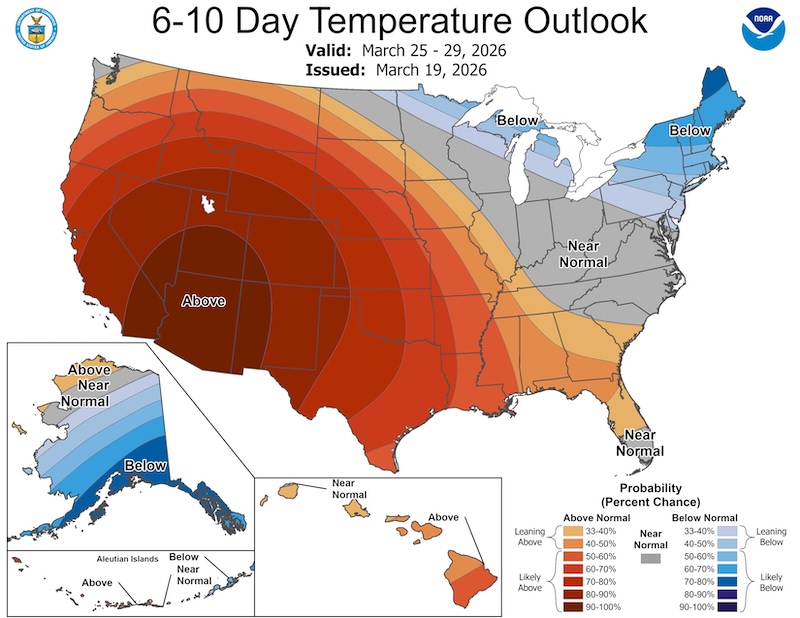
The early season heatwave has already led to new high-temperature records. On Thursday, the community of Martinez Lake in Arizona hit 110 F (43.3 C). It sets a new record for the highest March temperature ever recorded in the entire U.S. Here is a selection of some of the cities that broke all-time March temperature records on Wednesday, March 18, 2026.
- 107 F (41.6 C) in Indio, California
- 105 F (40.5 C) in Palm Springs, California
- 102 F (38.8 C) in Phoenix, Arizona
- 101 F (38.3 C) in Needles, California
- 95 F (35 C) in Bakersfield, California
- 94 F (34.4 C) in Las Vegas, Nevada
- 93 F (33.8 C) in Salinas, California
- 92 F (33.3 C) in Fresno, California
- 86 F (30 C) in Reno, Nevada
- 79 F (26.1 C) in Elko, Nevada
- 76 F (24.4 C) in Lake Tahoe
- 76 F (24.4 C) in Flagstaff, Arizona
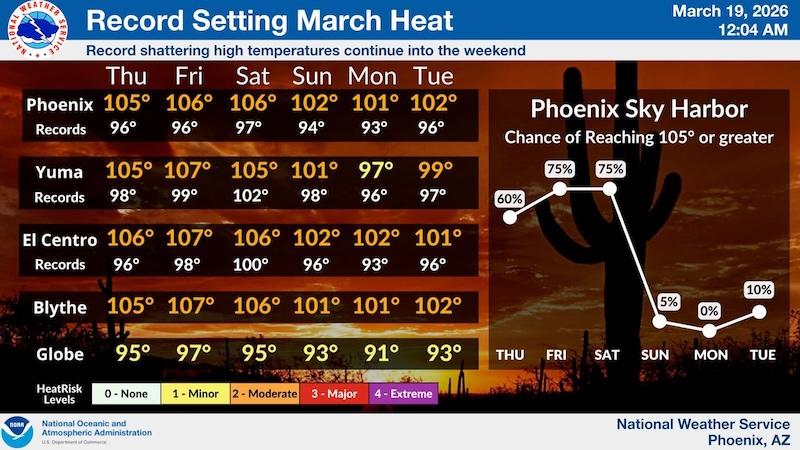
For Phoenix, it is the earliest 100-degree day since records began. And Phoenix’s all-time April high is 105 F. Phoenix tied that record … in March. It hit 105 F on Thursday. Expect more cities to see more records in the coming days.
Early season heatwave hits large swath of US
An early spring heatwave is bringing record temperatures for this time of year to much of the U.S. this week.
Thanks to a strong ridge of high pressure centered over the American Southwest, temperatures in the region have hit 100 degrees F (38 C). Across California and the desert southwest, temperatures through the weekend are forecast to be 20 to 30 degrees Fahrenheit (11 to 17°C) warmer than normal for this time of year. The heatwave will also expand east, toward the Rockies and Great Plains.
This heatwave is going to be persistent. Record-high temps will continue all the way through Sunday. The triple-digit heat may ease by early next week. However, forecasts call for temperatures to stay above average for the next week and a half. And that’s not just in the southwestern United States but across most of the country.
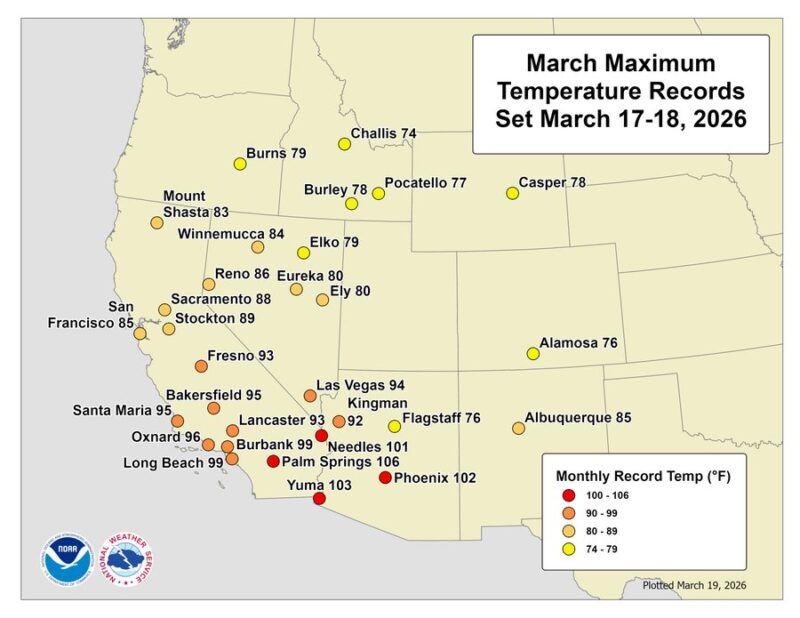
The Climate Prediction Center has outlined a majority of the United States for a higher probability of warmer-than-average temperatures through March 27, 2026. This doesn’t mean most of the country will break high temperature records or soar into the triple digits. But it does mean temperatures have a better chance of being warmer than normal for that region during this time frame.

Heat advisories
Normally associated with summer, heat advisories are issued by local weather service offices whenever they expect the heat to be a danger to health and safety.
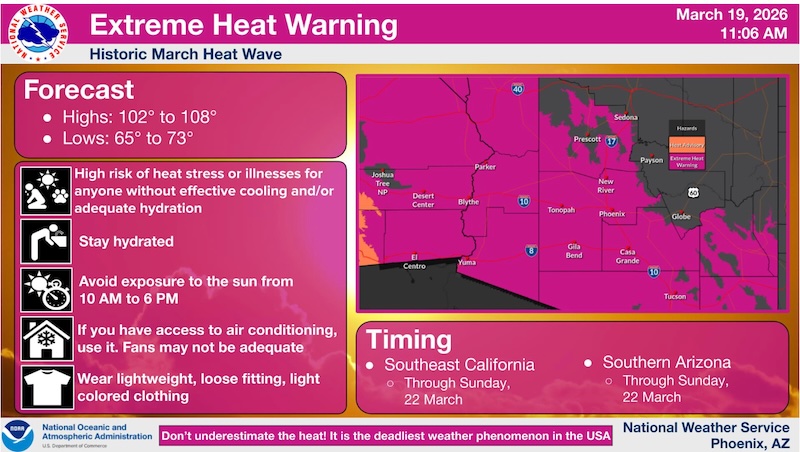
Many areas of the southwestern United States are under an Extreme Heat Warning. This means meteorologists expect extremely dangerous heat or it’s already occurring. During an Extreme Heat Warning, you shouldn’t go outside during the hottest part of the day unless absolutely necessary. If you cannot avoid being outside, stay well-hydrated with water, take frequent breaks in the shade, but find air-conditioning as often as possible.
When hot weather is on the way, you may get an Extreme Heat Watch. This means the extreme, dangerous heat is possible but hasn’t arrived just yet. The NWS issues these watches so you can prepare for dangerous heat. Steps to take include having a backup for outdoor plans, finding the closest cooling center and checking in on family and friends.
Staying safe in extreme heat
Staying safe in extreme heat can vary a bit depending on your situation. But the main idea is to avoid the heat as much as possible. If you are able to stay inside, ideally in air-conditioning (A/C), this is your best option. But as mentioned, if you cannot avoid the hot weather, there are things you can do. Take frequent breaks in the shade. Make sure you’re staying hydrated. Wear light color, loose-fitting clothing. And pay close attention to how you’re feeling as the day goes on.
If you, or someone you are with, is sweating heavily, feeling weak, tired, dizzy or nauseated, these could be signs of heat exhaustion. Immediately move yourself or the other person into A/C. Loosen their clothing, give them sips of cool water and put cold compresses on their body.
If someone is acting confused and slurring their speech, has red and hot skin or passes out, this is likely a heat stroke. They need medical attention immediately! Call 911. While you wait for help to arrive, move the person to A/C, add cool compresses to lower their body temperature, but do not give them anything to drink.
The heat can also be more dangerous to the very young, the very old, people with chronic medical conditions and pregnant women. In addition, the unhoused and lower income communities, who may not be able to afford to run their air-conditioning, are also at risk. Check on your friends, family and neighbors before, during and after extreme heat.

Bottom line: An early season U.S. heatwave has spread across a wide swath of the country. Many all-time high temp records for March have fallen. How hot will it get?
Read more: Cloud shapes are a useful tool for predicting weather
Read more: Why no radio signals from aliens? Is space weather to blame?
Like what you read?
Subscribe and receive daily news delivered to your inbox.
More from
Rachel Duensing


US winter weather outlook: What will El Niño bring?

Isaias is a major hurricane, headed for the Gulf Coast