- Antarctica is home to a variety of plant and animal life, despite the extreme cold. What about microbes?
- Researchers at University of Colorado have discovered microbes in Antarctica soil that are not known to exist anywhere else on Earth.
- The microbes are uniquely adapted to the extreme conditions in Antarctica.
Microbes in Antarctica
Antarctica is a unique environment on Earth, with its own plant and animal life such as penguins. But what about microbes? We think of microbes as being everywhere. That is, the same types of microbes all over the planet. But it turns out that Antarctica is unique that way, too. On August 31, 2026, researchers at CIRES at University of Colorado Boulder said that they’ve discovered microbes in Antarctica that are found nowhere else on Earth. And indeed, the microbial critters are uniquely adapted to the extreme conditions in Antarctica.
Notably, these are specific microbes, not all microbes in Antarctica. But it shows that some life in Antarctica can be different from the rest of the world.
The researchers published the new peer-reviewed findings in Proceedings of the National Academy of Sciences (PNAS) on August 31, 2026.
Microbes found in Antarctica's soil are unique to the continent. In a new study, the researchers analyzed soil samples from Antarctica and similar cold, dry environments like the Tibetan Plateau, Svalbard in the Arctic, and Chile’s Atacama Desert. @pnas.bsky buff.ly/Ds9MBDm
Everything is everywhere … or not
We know that microbes can be found virtually everywhere on Earth. Even Antarctica. But there’s a misperception that the same microbes are everywhere.
Nick Dragone at University of Colorado Boulder led the new study. He said:
There is a long-standing assumption in microbiology that ‘everything is everywhere.’ Antarctica has often been viewed as a possible exception, and our findings support that idea. Some Antarctic soil microbes appear to be distinct from those found in soils elsewhere around the world.
And finding microbes that are endemic – living naturally in only one specific geographic location – in Antarctica has implications for how scientists think microbial life spreads around the planet. Microbes can disperse great distances on winds or ocean currents.
Co-author and CIRES Fellow and Director of the Center for Microbial Exploration Noah Fierer added:
If we do find we’re looking for endemic microorganisms, a good place to start is Antarctica, because it’s an entire continent that is geographically isolated. It also has unique conditions not typically found in other soil environments. Cold is the obvious one, but also super dry; Antarctica is a desert.
The search is on
The team searched for and collected soil samples from across Antarctica, which was essential to the study.
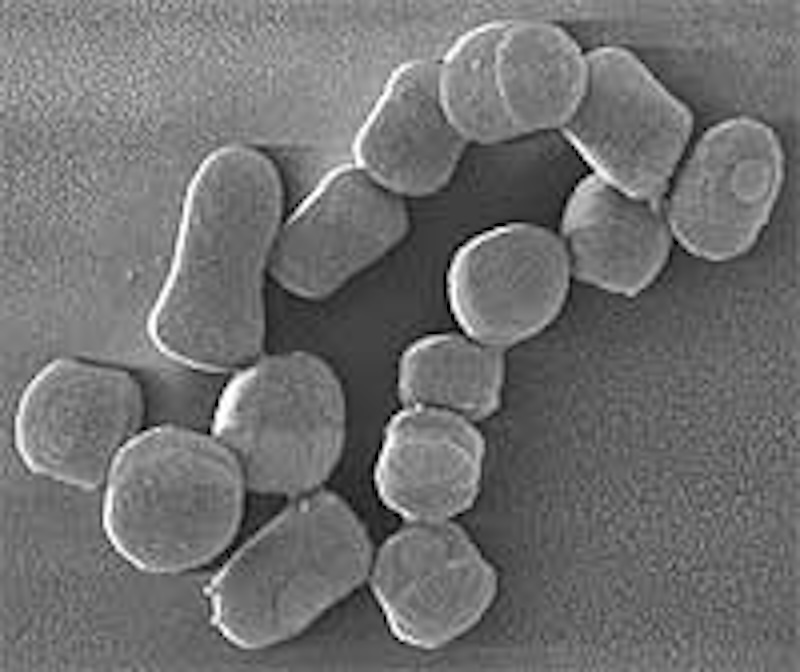
The researchers tested the soil samples from Antarctica and similar cold, dry environments such as the Tibetan Plateau, Svalbard in the Arctic and Chile’s Atacama Desert. Overall, this included over 100 Antarctic strains in the Arthrobacter group and nearly 500 strains from other locations worldwide. These particular strains are common in soils from Antarctica to Colorado to the tropics. Co-author Byron Adams at Brigham Young University said:
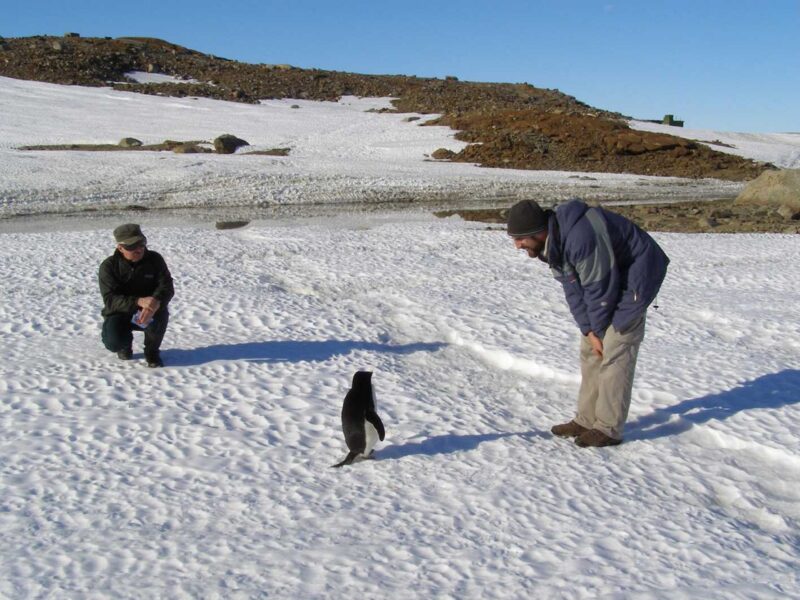
Arthrobacter as a group may be found all over the planet, but when we look closely at individual strains, just like penguins, Antarctica clearly has its own distinctive biological history.
Fierer said:
We already knew that a broad diversity of microbes can survive the inhospitable conditions of Antarctica. Now we know that some of those microbes are also unique to Antarctica and are uniquely adapted to life on the southern continent.
Genomes and simulating Antarctica
The researchers conducted the laboratory studies in two steps. First they sequenced the genomes – the genetic information of organisms – of the Arthrobacter strains. They compared the genomic traits of the bacteria to other samples collected from around the world. It was the genomic traits that showed that these specific microbes were unique to Antarctica. In fact, 90% of the strains are found nowhere else on Earth.
The team then simulated the conditions of Antarctica in the lab, such as the extreme cold and dryness. Then, they grew strains of Arthrobacter in Petri dishes. These strains tended to grow more slowly than the other test strains. But they did survive and grew.

Ancient birds in Antarctica
Speaking of life in Antarctica, last year scientists said that the fossil of an ancient bird called Vegavis iaai showed how many birds survived the asteroid impact that killed off the dinosaurs about 66 million years ago. The great distance from the impact site in Mexico and Antarctica could have allowed some birds to survive the upheaval.
At the time, Antarctica was ice-free and had a temperate climate with forests of conifers, cycads and ferns. So Vegavis lived among a diverse fauna of other birds, non-avian dinosaurs, insects, reptiles, pterosaurs and small early mammals.
Bottom line: Researchers have discovered that some microbes in Antarctica are unique to the icy continent and are found nowhere else on Earth.
Source: Evidence for endemism and local adaptation in Antarctic soil bacteria
Via CIRES/ University of Colorado
Read more: Stardust in Antarctica shows Earth crossed a supernova cloud
Read more: Bird fossil hints Antarctica was a refuge from killer asteroid
Like what you read?
Subscribe and receive daily news delivered to your inbox.
More from
Paul Scott Anderson


Mars’ southern hemisphere is unusually hot deep underground

Giant mega-Earth is 23 times more massive than Earth
How do lava-world exoplanets keep their atmospheres?
‘Jellyfish’ on Mars: Image from Curiosity rover goes viral