



How the monsoon could impact wildfires in the West
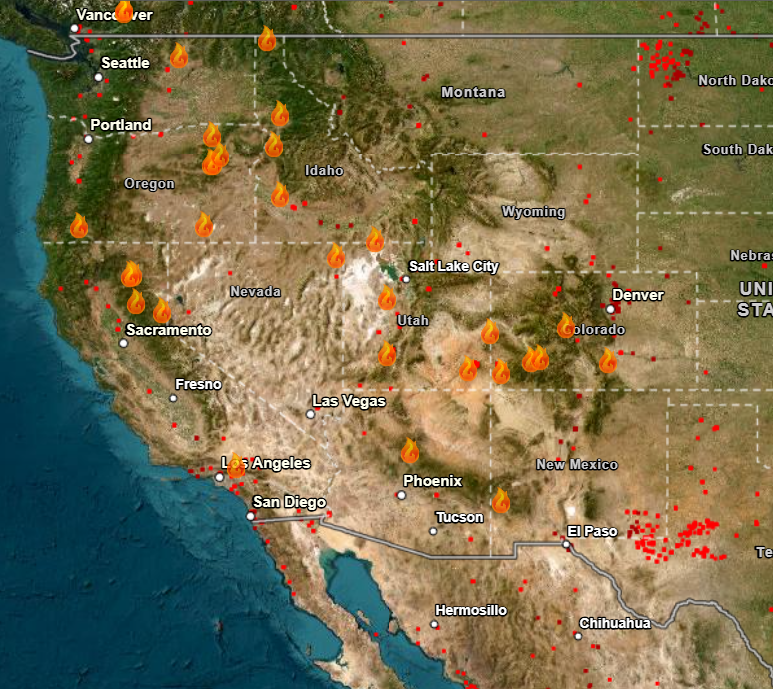
Around 700,000 acres (283,000 hectares) from active fires are burning in the United States as of July 14, 2026. That includes 14 states, many in the Western U.S. The National Interagency Fire Center said there were 46 large fires – those that consume at least 100 acres (40 hectares) of forest or 300 acres (120 hectares) of grassland – still burning.
This week, a weather pattern of rain and storms in the American Southwest, called a monsoon, might both help and hurt firefighting efforts.
Monsoonal rains are a weather pattern that affects the southwestern U.S. every year. While monsoonal rains can bring relief, that relief is often uneven, resulting in some places going without precipitation while others receive flash floods. And monsoon season in the U.S. – which runs from about July to mid-September – can start with storms, with heavy rains only coming months later. So at first, the monsoons could actually exacerbate the wildfires, with gusty winds, haboobs (dust storms) and dry lightning.
A heat dome over the U.S. causes temperatures to soar across the country, while monsoon season is kicking off in the Southwest U.S.The outline of the heat dome and monsoon moisture can be seen from clouds and water vapor arching from the Pacific Ocean and across the continent.
Where are the western wildfires this year?
This year, Colorado and Utah have been hit particularly hard with wildfires. Utah has the most acreage burned so far at more than 238,000 (96,000 hectares), while Colorado has seen 204,000-plus acres (82,500) burn. These two states have been the most affected so far, with Arizona coming in third at a much more distant 27,000-plus acres (11,000 hectares).
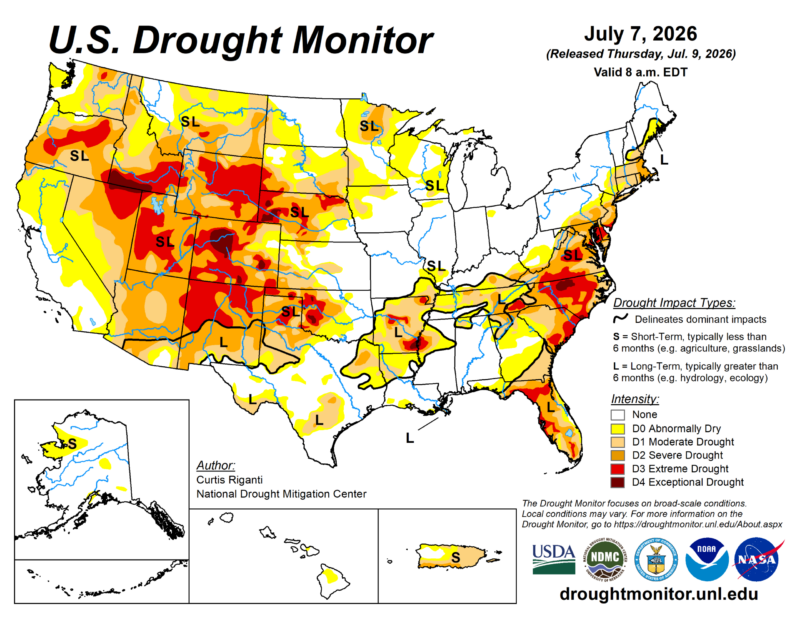
It should be no surprise that the U.S. Drought Monitor shows both Colorado and Utah have huge swaths of extreme drought, with areas of Colorado facing exceptional drought.
Aspen Acres wildfire in Colorado
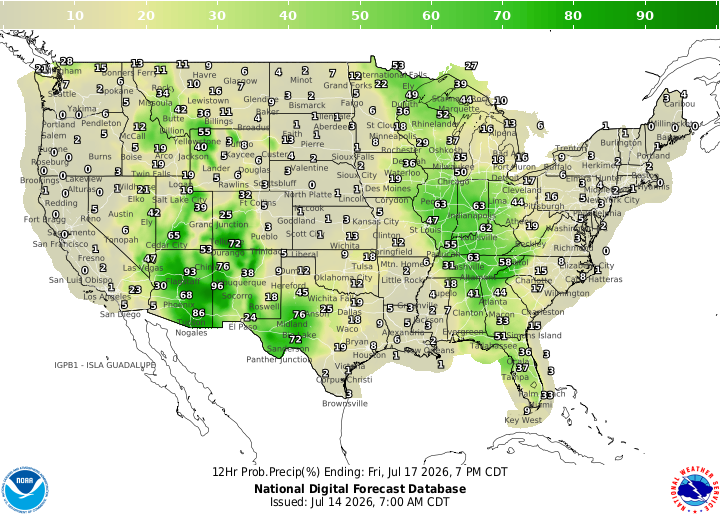
The Aspen Acres wildfire in Colorado has burned more than 98,000 acres (40,000 hectares) alone. This fire is burning just southwest of Pueblo. Unfortunately, forecasters expect the region to have hot, dry and windy conditions this week. The monsoonal rains that are coming to the southwest will not reach far enough east to provide relief. A high-pressure system should remain in the region this week.
The Aspen Acres wildfire, which began on June 29, has destroyed more than 800 structures, which includes 337 homes. So far, it is the 7th-largest wildfire in Colorado history. Officials said it was human-caused, but the source is still under investigation.
Babylon wildfire in Utah
The Babylon fire in southeastern Utah started on June 26, 2026. This fire is about halfway between Moab and Monument Valley. The fire has since grown to more than 100,000 acres (40,500 hectares), making it the state’s 5th largest. And Utah’s Cottonwood fire is not far behind. At 96,000 acres (40,000 hectares), it’s now the state’s 6th largest fire.
These fires might feel some relief this week from monsoonal rains coming in from the south. But locals need to be alert for flooding. Areas burned over will be dry and less permeable, meaning the water won’t be able to sink into the soil as easily. And without vegetation to slow down the runoff, flood waters can accumulate quickly.
The imminence heat from the Babylon Fire in southeastern Utah causes a pyrocumulonimbus cloud to form above it.
Rain in the Southwest
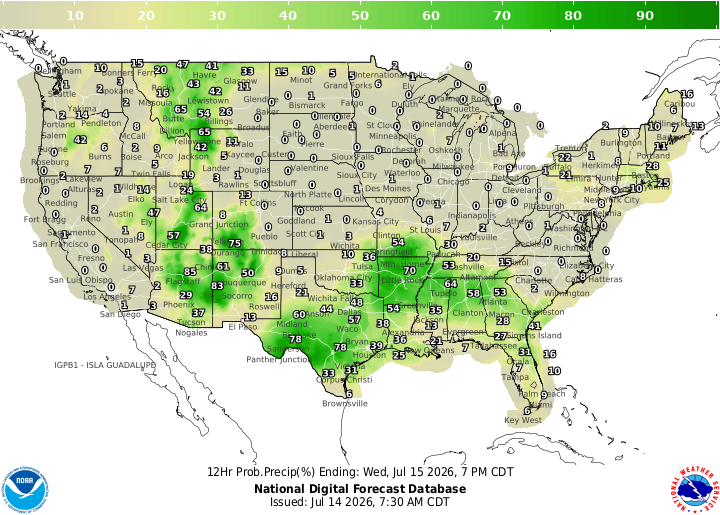
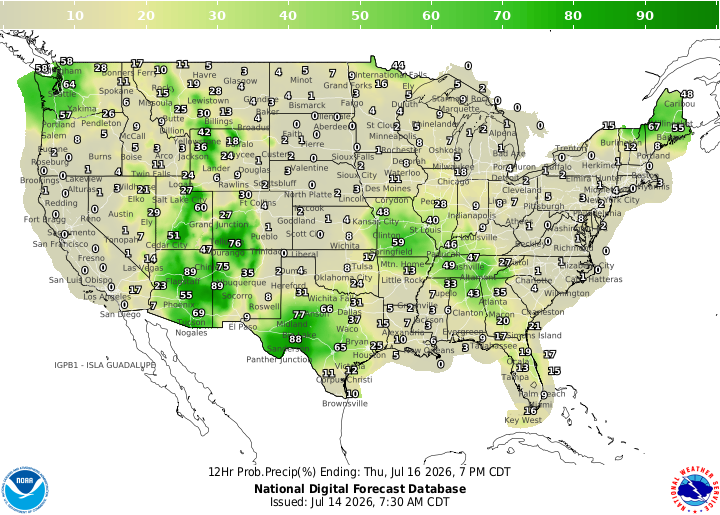
Rain is forecast for many of the regions currently experiencing wildfires. Look at the maps below for the probability of precipitation forecasts for Wednesday through Friday. And check Weather.gov for more precise forecasts by entering a zip code at the top left on the page.
Fires elsewhere
The American Southwest is far from the only region currently dealing with wildfires. Northern Minnesota up into Ontario currently has many large fires ongoing. And the smoke from these fires is forecast to spread across the Great Lakes region and farther east.
Smoke forecast from the HRRR
— Brad Panovich (@wxbrad.bsky.social) 2026-07-14T13:30:35.965Z
In Europe, an early, intense heatwave this summer set the scene for wildfires. The UK and France in particular have been dealing with large wildfires. In 2025, the European Union set a record for wildfires with 563,000 acres (228,000 hectares) burned. There are worries that with the fire season starting strong this year the record could again be broken. So far this year, the EU has seen more than 371,000 acres (150,000 hectares) burned. Read more about the current wildfire situation in Europe here.
Bottom line: How could a monsoon impact wildfires in the American West? Monsoonal rains can bring relief in the form of moisture, but they can also bring gusty winds and lightning.
Read more: This Is Wildfire: Tips on preparing yourself and your home
Read more: Pyrocumulonimbus clouds are thunderheads spawned by fires
Like what you read?
Subscribe and receive daily news delivered to your inbox.
More from
Kelly Kizer Whitt


Visible planets and night sky guide for October

Why does anything exist? New theory emerges
Euclid was mapping the universe. Then it found a comet
Auriga the Charioteer and bright Capella on October evenings



