The boat-billed heron is a startling creature! And behind its looks lie some powerful adaptations. Image via StockMediaSeller/ Shutterstock.
The boat-billed heron is one of those creatures that makes you look twice. The first time, to make sure you’re not seeing things. The second, to figure out what exactly you’re looking at.
This bird’s enormous bill seems far too large for its head. Its eyes are strikingly oversized. And its crest gives it the appearance of a rock star who has spent a little too much time in the mangroves. Yet none of this is accidental. Every one of these features serves a specific purpose and forms part of one of the most remarkable adaptations among water birds.
Science matters. Wonder matters. You matter. Join our 2026 Donation Campaign today.
Heron, what a big mouth you have!
The boat-billed heron’s most distinctive feature is the enormous bill that gives the species its name. It is so broad and deep that it resembles a small boat turned upside down over its face. This wide-mouthed creature could easily have replaced the wolf in Little Red Riding Hood!
Compared with other herons, the size difference is so striking that it’s hard to believe they belong to the same group of birds.
And this bill is far more than a decorative feature. It’s actually an extraordinarily effective hunting tool. Its large surface area helps the bird catch fish, crustaceans, frogs and other aquatic animals.
What is even more fascinating is that much of its anatomy appears to have evolved around this structure. The skull, neck and muscles all work together to support and control one of the most specialized hunting tools found in the wetlands of the Americas.
Seen head-on, the bill occupies such a large portion of the head that it’s hard to imagine how the rest of the bird managed to fit around it.
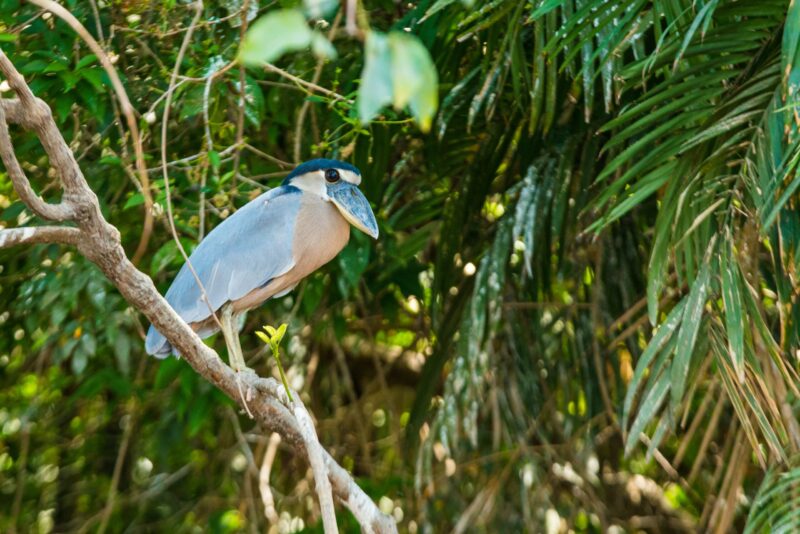
A head built to support an impressive tool
Having one of the most oversized bills in the heron world comes with certain anatomical challenges. Evolution has invested a lot of this bird’s resources into this feature.
The boat-billed heron’s skull is sturdier than you might expect for a bird of its size, and its neck muscles are especially well developed to support the weight of the head. In a sense, much of its anatomy is organized around a single mission: handling that extraordinary bill efficiently.
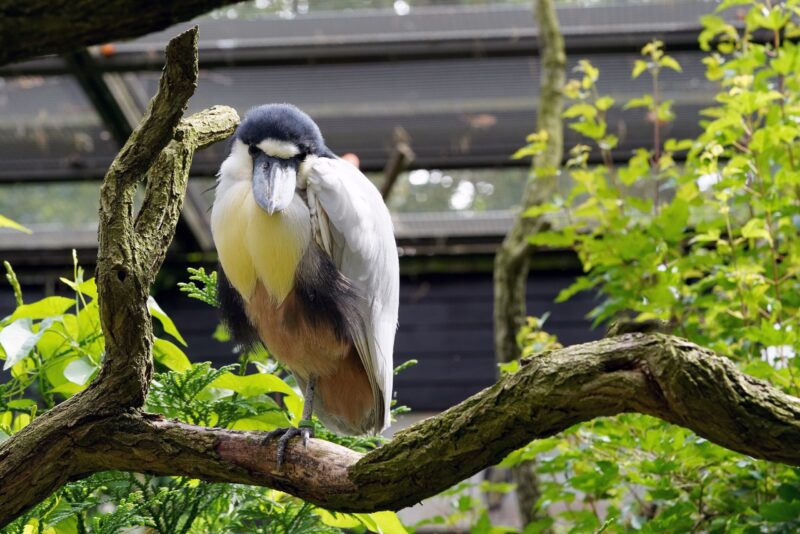
The eyes of a nocturnal hunter
While many herons are mainly active during the day, the boat-billed heron prefers to emerge after dark.
To do so, it relies on exceptionally large eyes capable of making the most of the limited available light. Thanks to this adaptation, it can detect movement on the water’s surface when most other birds are already at rest.
These huge eyes give it such an unusual expression that many people compare it to an owl, despite the fact that the two are not closely related.
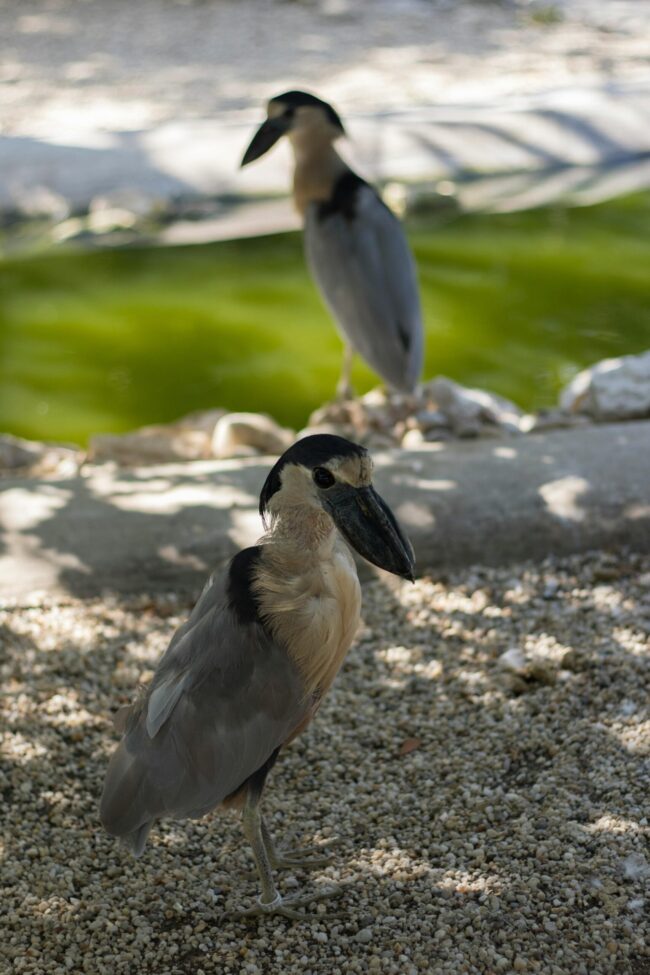
A hairstyle worthy of a rock star
And if the bill and eyes are not enough to attract attention, the boat-billed heron also sports an elegant crest made up of long, dark feathers that grow from the back of the head. More than a few people would envy such impressive “hair”!
These feathers can lie smoothly backward or become more prominent when the bird is alert. The result is a slightly tousled appearance that adds to its eccentric look. Both males and females possess this striking crest, and during courtship it may play an important role in their visual displays.
Few birds manage to look dignified, comical and powerful all at once, but this species pulls it off effortlessly.
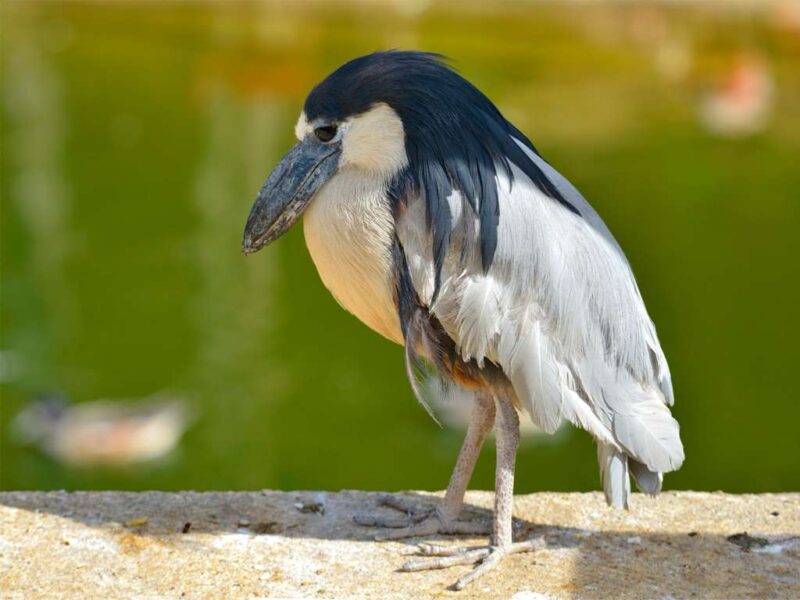
The art of disappearing into the mangroves
Despite its eye-catching appearance, the boat-billed heron is surprisingly difficult to spot.
It inhabits tropical wetlands, particularly mangroves, estuaries, coastal lagoons and the banks of slow-moving rivers. Its range extends across much of tropical America, from southern Mexico through Central America and into large areas of South America.
These habitats are not only its home but also one of its greatest advantages. Submerged roots, deep shadows and tangled vegetation create the perfect setting for both hunting and hiding.
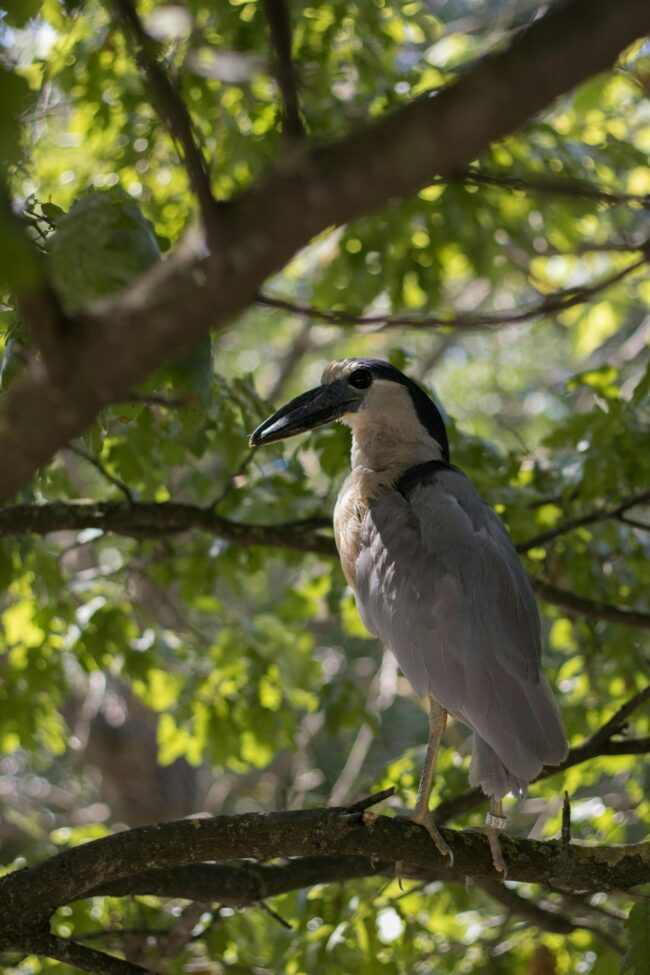
Its plumage – a blend of grays, blacks and browns – blends seamlessly into this environment. During the day, it remains motionless among branches and roots, letting its camouflage do the work as it observes from a hidden vantage point.
It’s likely that many have passed within just a few feet of a boat-billed heron without ever noticing it.
A patient and methodical hunter
The hunting strategy of this species relies more on patience than speed.
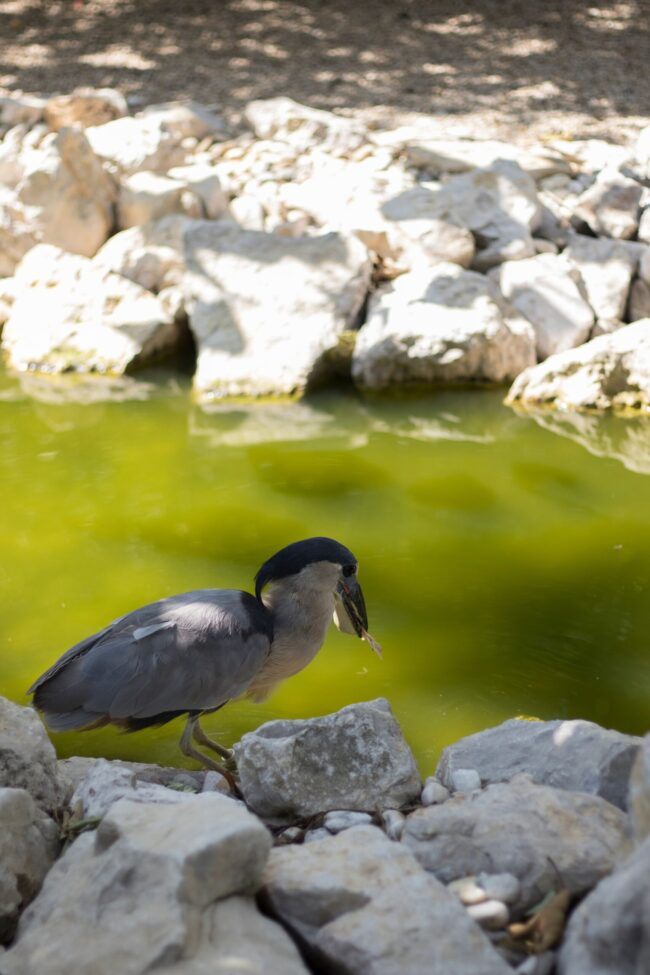
Rather than constantly patrolling the shoreline in search of food, it often stands still for long periods, waiting for the right opportunity. When prey comes close enough, it strikes with remarkable speed and precision.
Most of its activity takes place at dusk and during the night. While other water birds become less active, the boat-billed heron uses its enormous eyes to detect even the slightest movement in shallow water.
It will often remain motionless for minutes at a time, carefully watching the surface. Once it detects potential prey, it reacts with impressive speed. It uses its huge bill like a trap, snapping it shut around fish, amphibians or crustaceans before they have a chance to react.
Its diet includes small fish, frogs, aquatic insects, crabs, shrimp and other wetland creatures. It is an opportunistic hunter, capable of taking advantage of almost any food source it encounters in shallow waters.
A flight silhouette like no other
In flight, it adopts the typical heron posture, with its neck tucked back into a characteristic curve.
There is, however, one detail that sets it apart immediately: its enormous head. Even from a distance, its silhouette looks unusual because the front part of the body appears disproportionately large compared with the rest.
Chicks are born looking outlandish
Boat-billed heron chicks look like unfinished miniature versions of the adults.
From a very young age, they already possess a surprisingly large bill for their size, giving them a disproportionate and somewhat comical appearance. As they grow, this feature becomes increasingly pronounced until it reaches the mighty dimensions of adult birds.
Both parents build the nest, incubate the eggs and later feed the chicks through regurgitation, a common practice among many water birds.
The bird that puzzled scientists
For a long time, ornithologists struggled to determine exactly where this species belonged on the avian evolutionary tree.
Its appearance was so different from that of other herons that some specialists even suggested it deserved its own classification. Although modern studies have clarified its evolutionary relationships, it remains one of the most distinctive species in the entire group.
And perhaps that is the best way to describe it: a heron that looks startlingly unlike a heron.
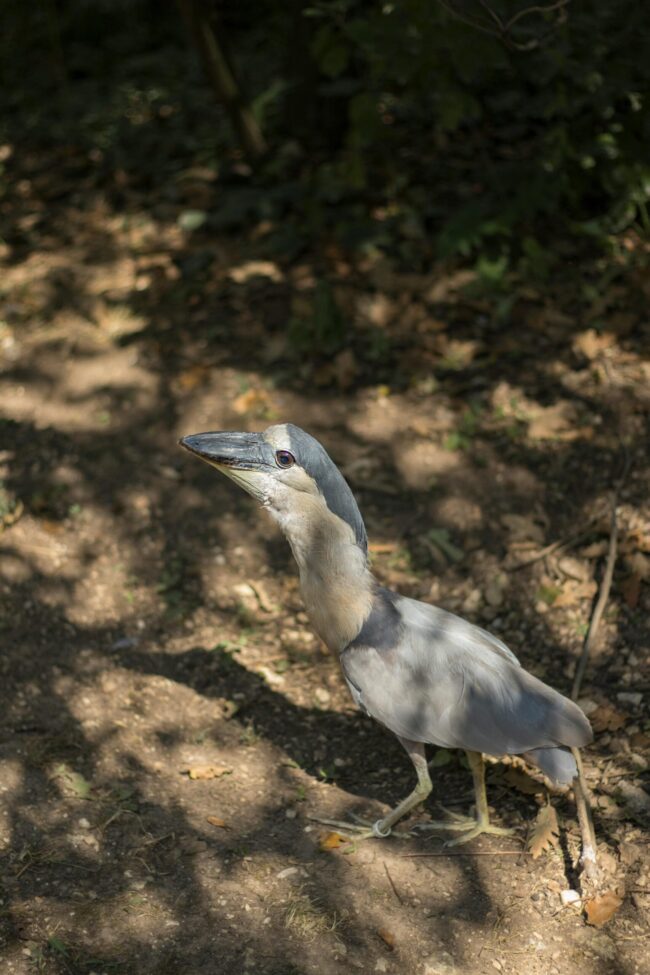
Bottom line: The boat-billed heron is a striking example of evolution going big. This creature has an oversized bill, large eyes, and an anatomy shaped around a specialized hunting tool.
Read more: The shoebill stork is our fierce lifeform of the week
Like what you read?
Subscribe and receive daily news delivered to your inbox.
More from
Cristina Ortiz


Giant trees break a decades-old science theory

Walking shark discovered in Papua New Guinea
The giraffe weevil: When a beetle grows a giraffe’s neck
Pinocchio frogs seem straight out of a fairy tale