Why is June’s full moon the lowest full moon of 2026 for viewers in the Northern Hemisphere? And why does the same moon ride high in Southern Hemisphere skies? Join EarthSky’s Deborah Byrd as she explores the geometry behind this month’s full moon. Watch in the player above or on YouTube.
We live in uncertain times. Look up! It’s peaceful. And please help EarthSky keep going.
When to watch in 2026: The full moon comes on June 29 for the Americas, Europe, and Africa, and on June 30 for Australia, New Zealand, and much of Asia. Same full moon for all of Earth … but different timezones.
The crest of this month’s full moon will fall at 23:57 UTC on June 29, 2026. That’s 6:57 p.m. Central Daylight Time in the Americas on June 29. It’s 11:57 a.m. New Zealand Standard Time on June 30.
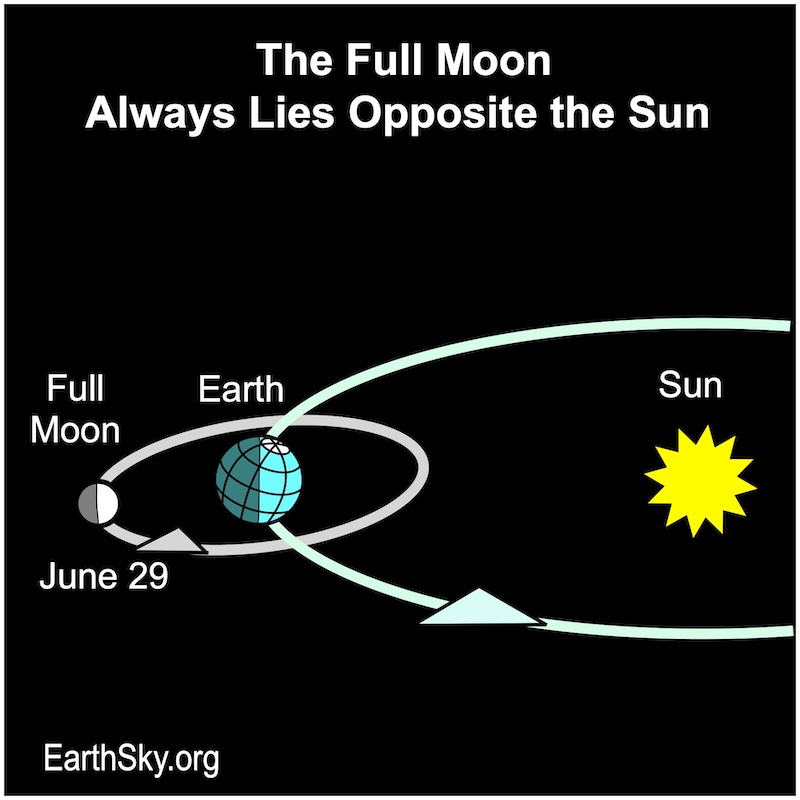
Where to look: Full moons are always opposite the sun. They must be, in order to look full. So every full moon rises in the east just after the sun has set in the west. And full moons reach their highest points in the sky in the middle of the night, when the sun is below your feet.
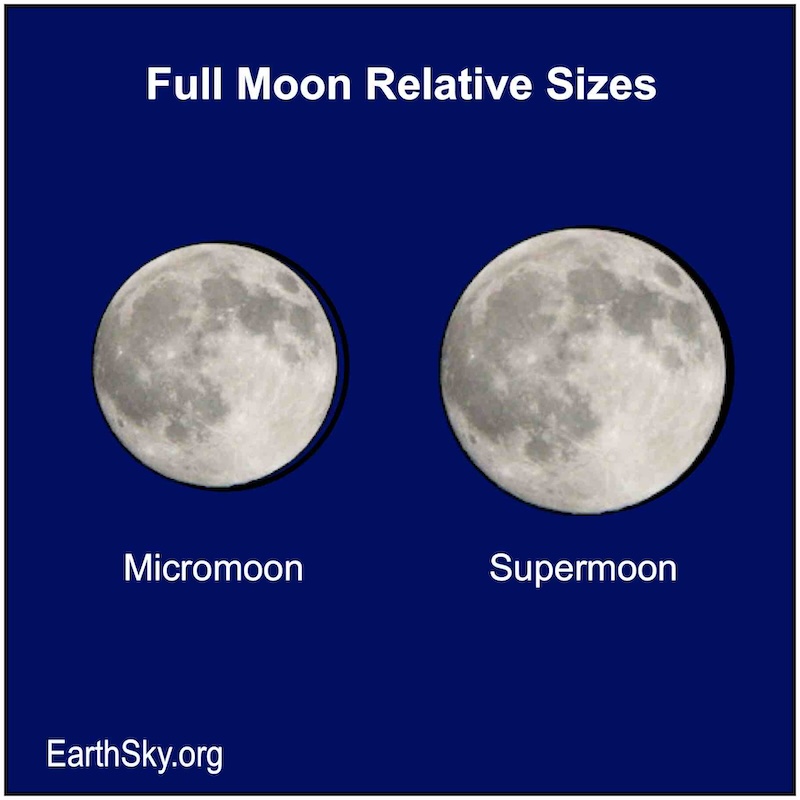
This June 2026 full moon is a micromoon – or particularly distant full moon – in a far part of its orbit from Earth. It’s the last full micromoon of 2026.
The June 2026 full moon is noteworthy for its path across our sky. It’s one of the lowest moon paths in decades for the Northern Hemisphere, one of the highest in decades for the Southern Hemisphere.
The June full moon can help you locate yourself within the Milky Way galaxy. That’s because it points (more or less) toward the galaxy’s heart.
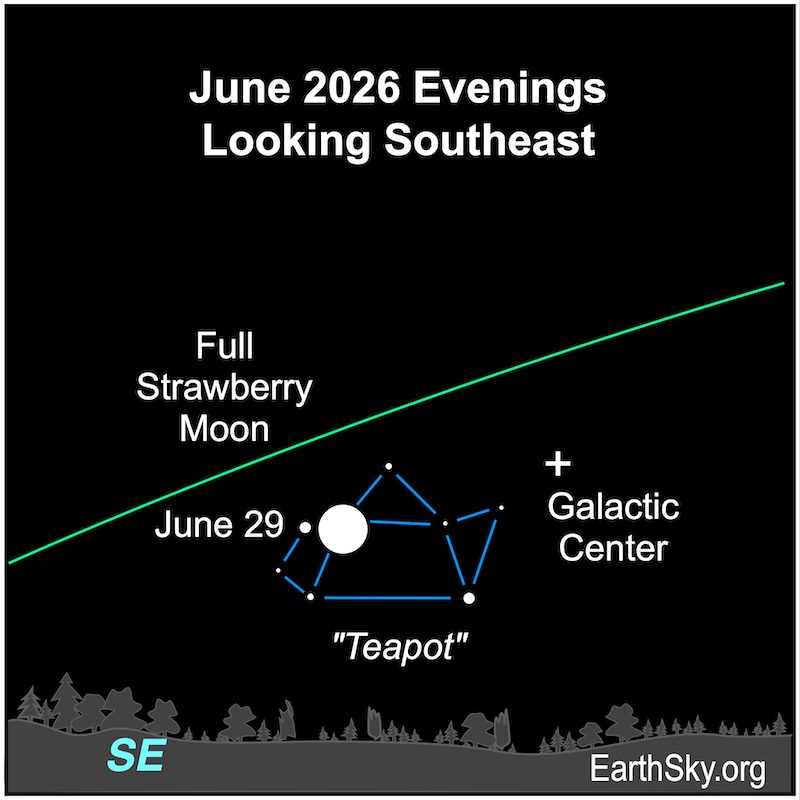
In 2026, the June full moon is passing through Sagittarius
The center of our Milky Way galaxy lies near the famous Teapot asterism in the constellation Sagittarius the Archer.
The 2026 full Strawberry Moon will lie (more or less) in this direction. So when you are looking toward the June full moon, you’re looking toward the heart of our home galaxy, the Milky Way. Cool, right?
For us in the Northern Hemisphere, this particularly low June full moon might illustrate to you that – as always – the Teapot rides low in our southern sky.
But for the Southern Hemisphere the Teapot – and June’s full moon – ride high! The Southern Hemisphere has a much better view of the direction toward the Milky Way’s center than we do, north of the equator.
By the way, there’s nothing unusual about the full moon pointing toward the galaxy’s heart. The June full moon can lie in front of one of three constellations of the zodiac: Sagittarius, Scorpius the Scorpion or Ophiuchus the Serpent Bearer.
The June full moon rides low
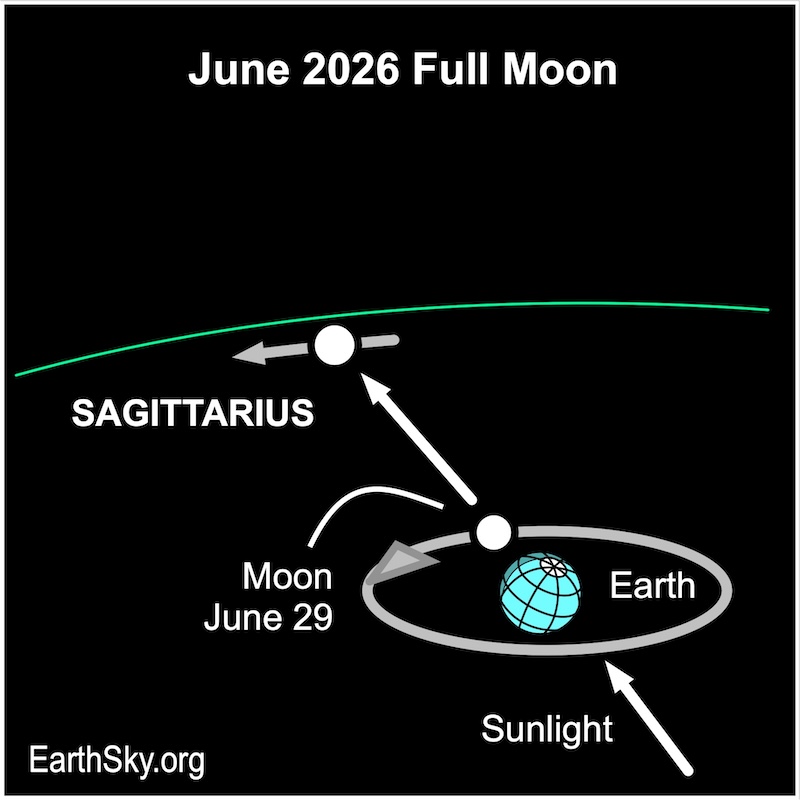
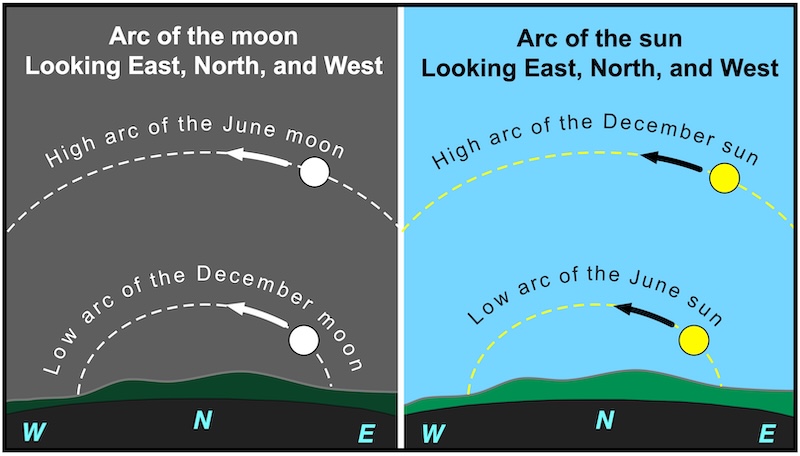
As seen from the Northern Hemisphere, the June full moon always rides low. And, as seen from the Southern Hemisphere, the June full moon always rides high. It’s because every full moon must be opposite the sun. It’s only when the moon is opposite the sun that we can see its fully lighted “day” hemisphere.
It’s opposite the sun. So its nighttime path mimics the sun’s daytime arc from six months ago, and six months hence.
This June 29 full moon will occur just eight days after the June solstice, which fell on June 21. So the moon’s trek across the sky, throughout the night around the June 29 full moon, will resemble the path of the December sun: low from the Northern Hemisphere, high from the Southern Hemisphere.
The June full moon is the Strawberry Moon
All full moons have names, which come mostly from native American, colonial American or European traditions. Many full moon names correspond to seasons of the year. And, interestingly, the Southern Hemisphere tends to use the Northern Hemisphere’s full moon names, too. That’s probably especially true since the advent of an internet!
We most commonly hear Strawberry Moon for the June full moon. The name is supposed to highlight the time of year when many species of berries ripen, particularly sweet strawberries. In reality, strawberries in the Northern Hemisphere ripen anywhere from April through June, depending on local climate and the variety of berry. That’s a clue to the name’s origin, because berries in northern North America do ripen around June.
Meanwhile, Europe has used the names Honey Moon and Mead Moon for the June full moon. That makes sense because the June full moon always rides so low. And when we look at sky objects nearer to the horizon, we’re looking at them through an extra thickness of Earth’s atmosphere. The extra air creates the golden color of the June full moon. It’s truly honey-colored (and mead is made from honey, too).
This June’s full moon is a micromoon
Some moons are supermoons. That is, they’re both full and in a close part of their orbit around Earth. So they’re particularly large, as seen by cameras or measured by special instruments. And they’re extra bright, as seen to the eye and also in the light they cast on the ground.
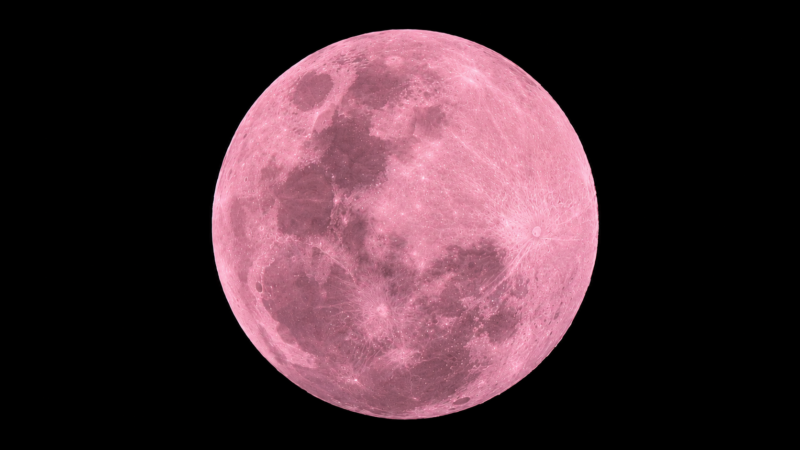
But the June 2026 full moon is the faint counterpart of a supermoon. It’s a micromoon, or a particularly small full moon, in a far part of its orbit from Earth. It’s the last of three full micromoons in a row in 2026. Apogee – the moon’s most distant point for the month – happens the day before this month’s full moon.
A micromoon can appear up to 14% smaller and 30% fainter than a supermoon. You definitely won’t notice with your eye that it’s any smaller. But will it appear less bright to your eye than a supermoon? Probably not. Supermoons do look noticeably brighter. But part of a supermoon’s brightness is due to the extra light it casts on earthly landscapes. Around the time of a supermoon, you can see moon shadows. A fainter landscape is just harder to notice.
And, like all full moons – micro or super – this June 2026 full moon will shine so brightly that its light will obscure many twinkling stars.
Bottom line: The June full moon – the Strawberry Moon – will occur on the overnight of June 29, 2026, and will lie in front of the Teapot asterism in the constellation Sagittarius.
Like what you read?
Subscribe and receive daily news delivered to your inbox.
More from
John Jardine Goss


Visible planets and night sky guide for October

The September full Moon is the Harvest Moon near Saturn
The July full moon is the beautiful Buck Moon
May 1 full moon is a Flower Moon and micromoon