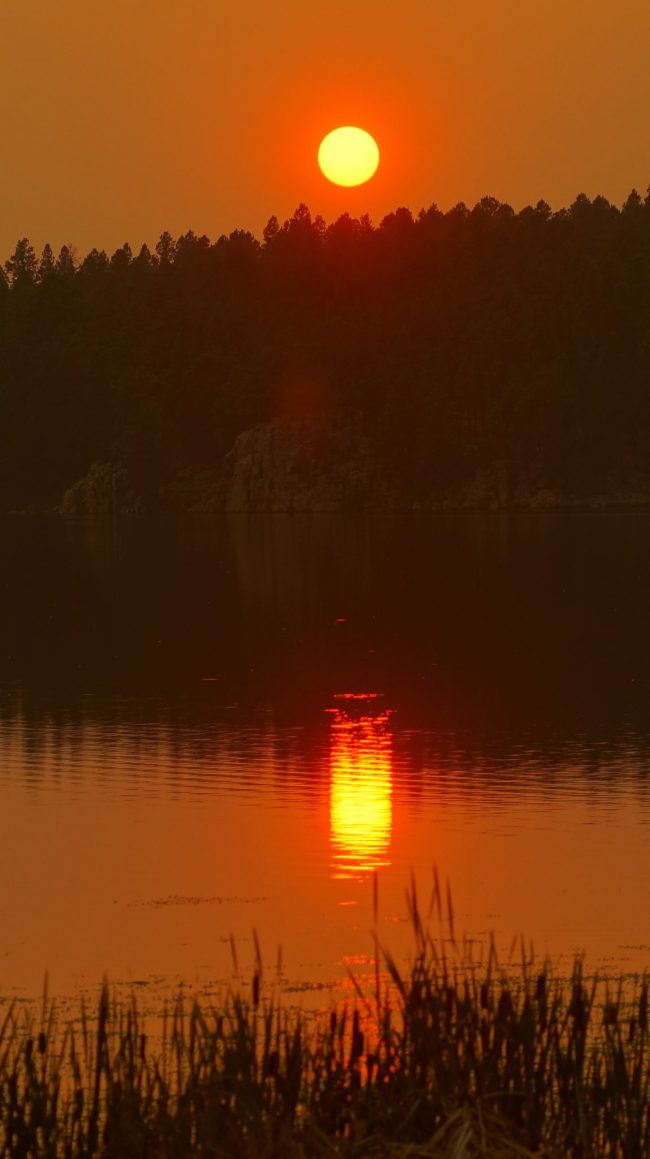
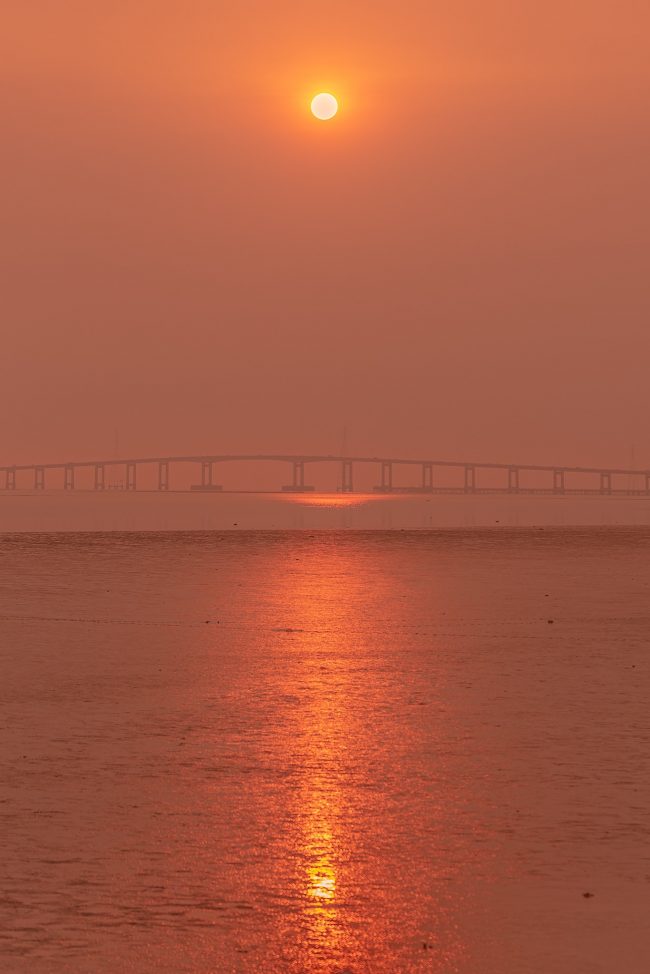
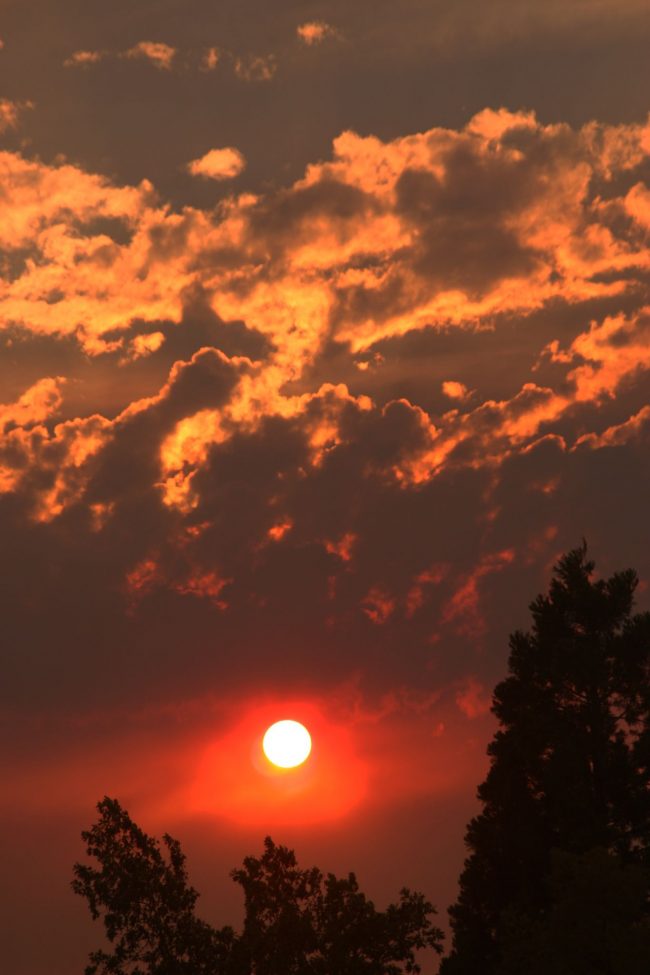
It’s wildfire season in the American West, and we’re receiving photos of fiery sunrises and sunsets. The sun always looks reddish when you see it near the horizon. That’s because, at such a time, you’re looking at the sun through more atmosphere than when the sun is overhead. But the effect is accentuated when wildfires fill the air with smoke. The sky can look hazy, and the setting or rising sun may appear very red. Scott Hughes captured this vivid sunrise shot on August 22, 2020, just east of Cheyenne, Wyoming. Thank you, Scott.Jim Livingston captured this sunset image from Custer, South Dakota, on August 21, 2020. He wrote: “South Dakota sunset, thanks to the California wildfires.”Ken Chan in San Mateo, California, captured this smoky sunrise on Wednesday morning, August 19, 2020. He wrote: “The thick smoke filtered the sunrise on Wednesday. Yesterday was pretty clear, but the smoke has returned today.” Thank you, Ken.
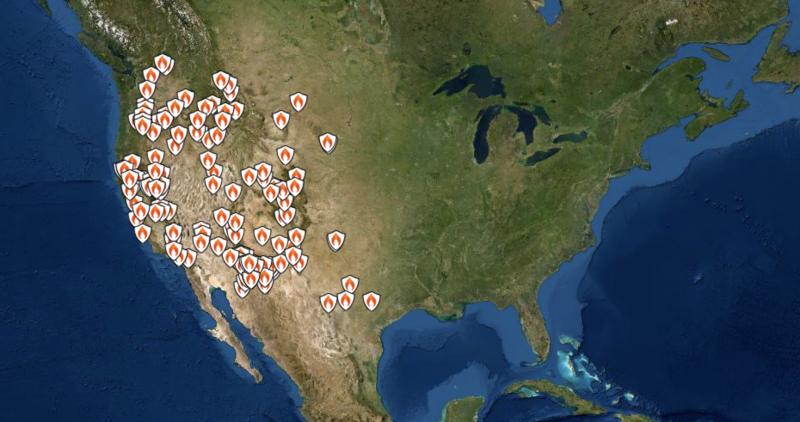
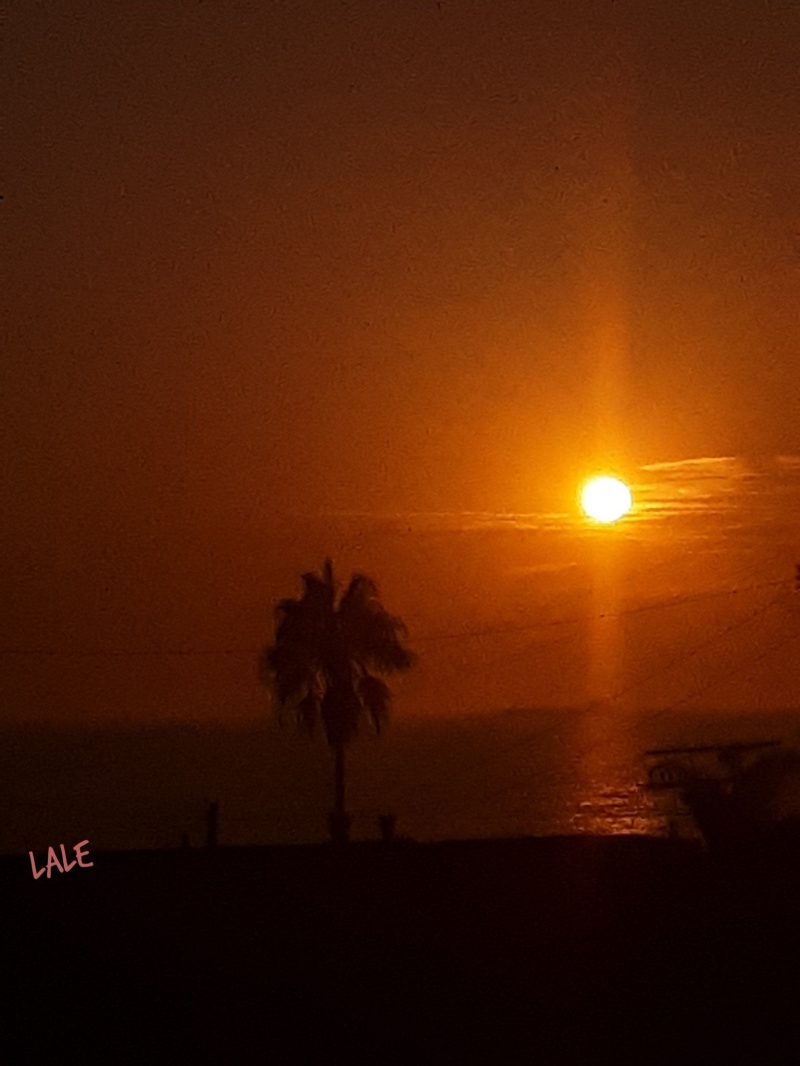
Fires in the U.S. West on August 22, 2020, via Inciweb.Laurie Engelhardt in Hermosa Beach, California, captured this sunset scene on August 17, 2020. She wrote: “Beautiful sunset over Southern California!” Wildfire season began in California this year around early May. It typically ends when the first significant rainstorm of winter arrives, usually around October in Northern California, and roughly between late October to December in Southern California.Kim Schuett in Spanish Springs, Nevada, captured this image on August 16, 2020. She wrote: “An all-too-common California wildfire sunset. Smoke is from several fires. The nearest is the Loyalton Fire in the Tahoe National Forest (44,147 acres).” That fire is now contained, according to Inciweb, but burned nearly 50,000 acres.
By the way, the famous Lick Observatory – on the summit of Mount Hamilton, California, roughly 20 miles (30 km) east of San Jose, California – was also being threatened by wildfires this week. Lick Observatory posted the video below on YouTube on August 20, 2020, saying:
The wildfire that ran through Lick Observatory and surrounding areas August 19 and 20 was captured by HamCam2. The extent of the fire around our main telescope domes is especially evident in the nighttime photos. CalFire did excellent work protecting the facility and we give them our wholehearted thanks for their efforts. The HamCam2 camera is mounted on the top of the Lick Observatory Main Building and points east. The fire reached the observatory grounds in the early afternoon August 19 and continues to affect the observatory and surrounding areas the morning of August 20.
Fortunately, the fires around Lick Observatory now appear to be under control. For updates, visit Lick Observatory’s Facebook page:
Bottom line: Photos of vivid sunrises and sunsets, caused by smoke in the air from wildfires in the North American West.
Deborah Byrd (asteroid 3505 Byrd) helps edit EarthSky.org and is a frequent host of EarthSky videos. Deborah created the EarthSky radio series in 1991 and founded EarthSky.org in 1994. Prior to that, she had worked for the University of Texas McDonald Observatory since 1976, and created and produced their Star Date radio series. She has won a galaxy of awards from the broadcasting and science communities, including having an asteroid named in her honor in 1990, a Public Service Award from the National Science Board in 2003, and the Education Prize from the American Astronomical Society in 2020. A science communicator and educator since 1976, Byrd believes in science as a force for good in the world and a vital tool for the 21st century. "Being an EarthSky editor is like hosting a big global party for cool nature-lovers," she says.
Like what you read? Subscribe and receive daily news delivered to your inbox.
Thank you! Your submission has been received!
Oops! Something went wrong while submitting the form.