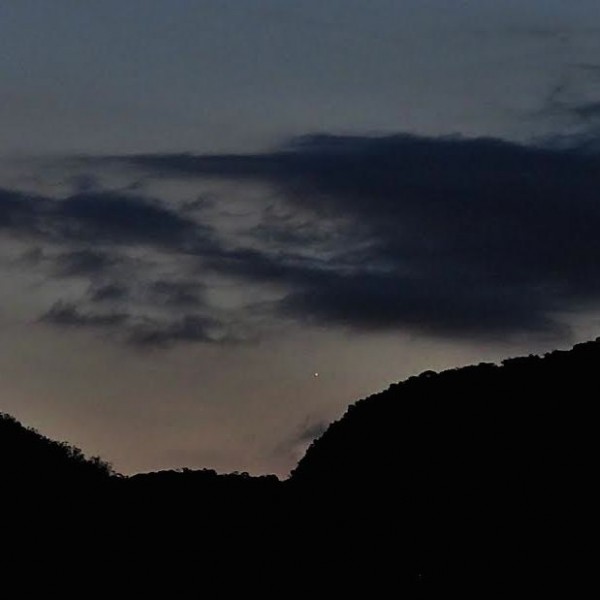
The planet Mercury is back in the evening sky! In fact, it’s lone visible evening planet; the other visible planets appear in the predawn sky (except Saturn, which is officially up before dawn, but probably too close to the sun to be visible now).
Several in the EarthSky community have captured Mercury this week. Helio Calvalho in Brazil caught the photo above. Ken Christison in North Carolina caught the one below. As the evenings pass, Mercury will set later behind the sun. It’ll be setting 80 to 90 minutes after the sun by the year’s end. Binoculars will help out with your Mercury quest. Use them to scan near the sunset horizon.
Mercury reaches its greatest elongation – greatest apparent distance – from the sun on December 28 or 29, 2015 (depending on your timezone). It’ll be well placed for viewing for a few weeks, centered on this date.
By the way, Mercury will swing back into the morning sky on January 14, 2016. Later in the January of 2016, Mercury will join up with the other four morning planets – Jupiter, Mars, Venus and Saturn – to feature the first appearance of all five visible planets in the same sky since the year 2005.
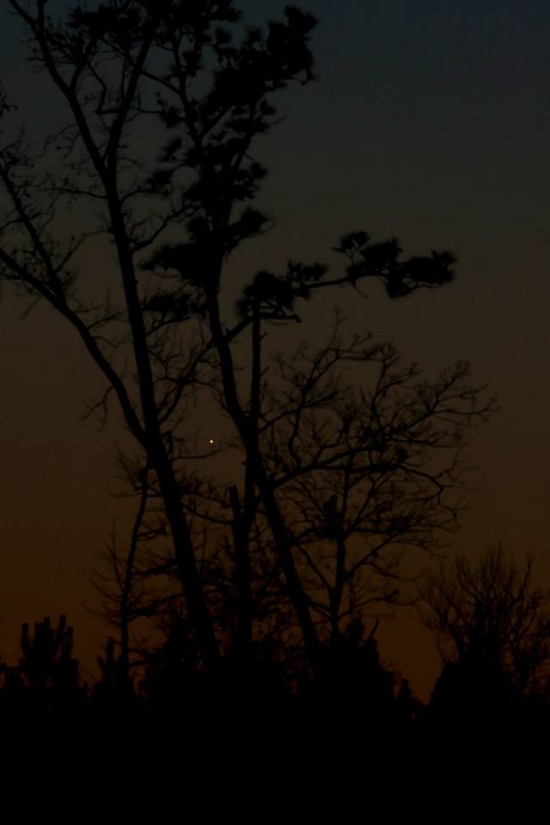
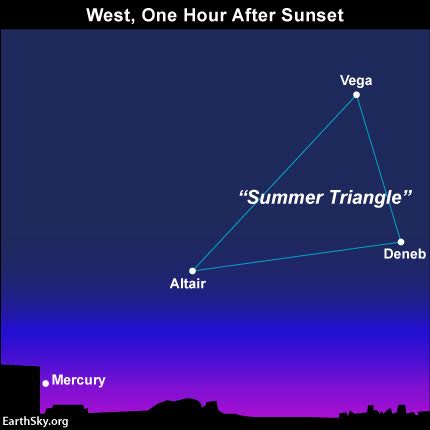
Bottom line: We’re beginning to receive a few photos of Mercury in the December 2015 evening sky. Watch for it through the year’s end in the west after sunset. Photos and a chart, in this post.
Like what you read?
Subscribe and receive daily news delivered to your inbox.
More from
Deborah Byrd


Visible planets and night sky guide for October

Hera mission hits the brakes to arrive at asteroid
Flashing star in autumn? Here are 3 candidates
Stargazing tips! 10 great tips for beginning astronomers