



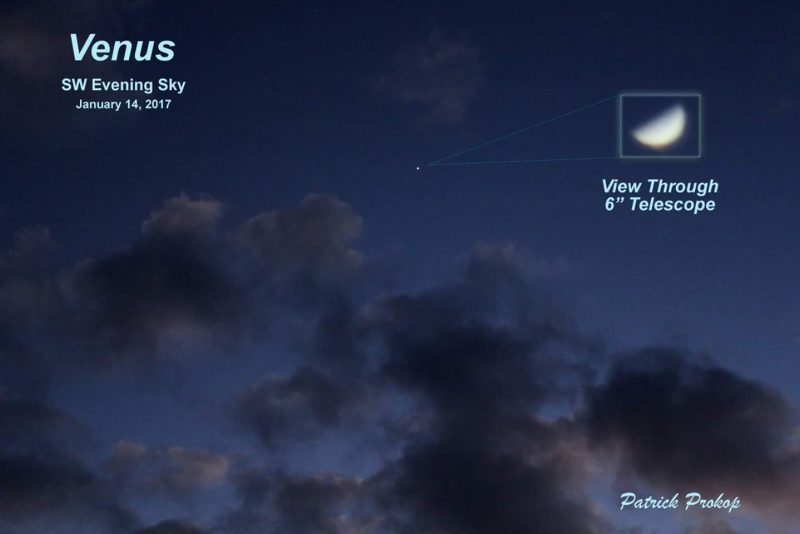
Venus is the brightest planet in Earth’s sky, and it’s now a blazing light in the west after sunset. It orbits the sun one step inward from Earth. And that’s why, when we gaze at Venus through a telescope, we sometimes see the planet show phases, like a tiny, featureless moon. Venus reached its greatest elongation or greatest apparent distance from the sun on January 12, 2017. At such times, it appears as a tiny half moon through a telescope. Between mid-January and late March – when Venus will pass more or less between Earth and the sun, those watching through telescopes will see Venus decrease in phase. Keep an eye on this page … we’ll post more images as we see them come in!
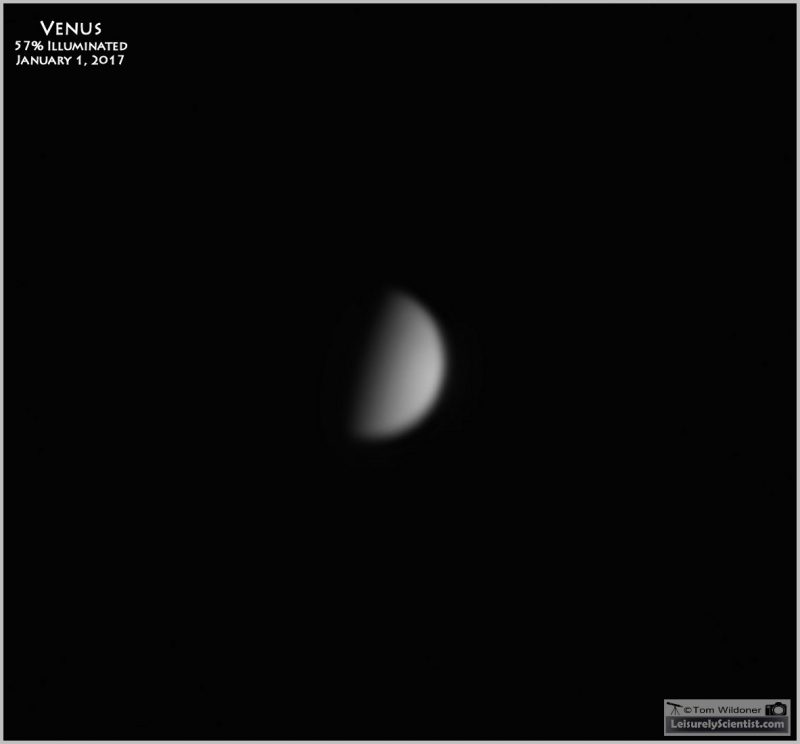
Bottom line: Photos of waning Venus, January to March 2017.
Like what you read?
Subscribe and receive daily news delivered to your inbox.
Thank you! Your submission has been received!
Oops! Something went wrong while submitting the form.
More from
Deborah Byrd
View All


Visible planets and night sky guide for October

October 14, 2026
Proxima Centauri is the closest star to our sun
October 14, 2026
NASA’s Perseverance rover on Mars sets off-world driving record
October 13, 2026
Hera mission hits the brakes to arrive at asteroid
October 8, 2026



