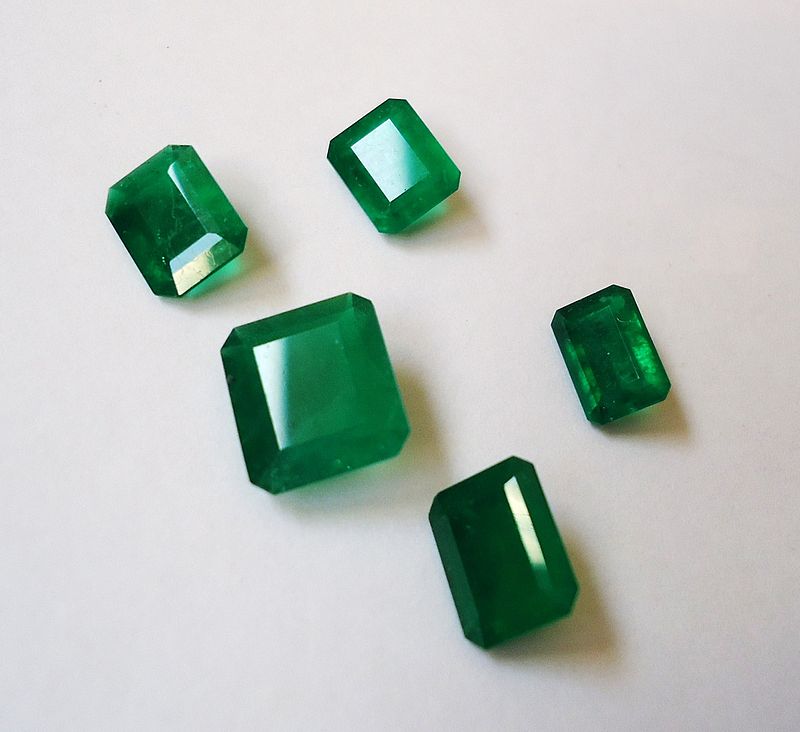
History of emeralds
Knowledge of emeralds dates back to antiquity. The name emerald derives from the Greek word smaragdos, a term applied to several kinds of green stones.
Royalty wore them in ancient Babylon and Egypt. For example, Queen Cleopatra is known to have worn emeralds during her reign in Egypt from 51–30 BCE. It’s said her emeralds probably originated from mines in southern Egypt, near the Red Sea.
And the emerald mines of ancient Egypt had tools dating back much farther, to the reign of
Emeralds in South America
Emeralds weren’t just a part of the “old world.” When the conquistadors first arrived in South America from Spain in the late 1400s, they saw indigenous rulers wearing emeralds.
And today, among the famous historical artifacts containing emeralds is the Crown of the Andes, made from emeralds worn by Atahualpa, the last Inca (king) of Peru. The crown is set with about 450 emeralds, collectively weighing 10 ounces (1523 carats).
The Spanish conquerors later stole large quantities of emeralds from the Peruvians. But it took them decades to discover the source of the emeralds.
It wasn’t until 1537 that the Spaniards found Chivor in Colombia, now the location of an important emerald mine. They also took over the Muzo mine in Colombia, following the defeat of the Muzo Indians. Mining operations at Muzo have continued almost uninterrupted since the Spanish invasion. It’s perhaps the most famous emerald mine in Colombia and is said to produce the world’s best emeralds.
Emeralds in Russia and elsewhere
In 1830, a Russian peasant charcoal-burner named Maxim Kozhevnikov found several green crystals in the exposed roots of a fallen tree along the banks of the Tokovaya River in the Ural Mountains of Russia. He brought the stones to the Royal Lapidary Factory in Yekaterinburg, where the director, Yakov Kokovin, identified them as high-quality emeralds. This find sparked an immediate gem rush and the establishment of official state-run mining operations in early 1831.
Today, North Carolina – in the United States – is a source for emeralds.
Around the world, they also occur in Zambia, Brazil, Pakistan, Norway, Austria, India, Madagascar, and Australia.
German chemists began making synthetic emeralds shortly before World War II. Then, growing synthetic stones of fine quality began in the United States in 1946. Also, there are excellent imitation emeralds on the market made of colored cut glass.

Science of the emerald
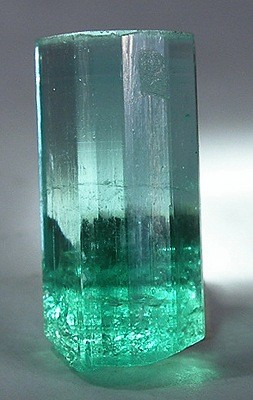
The emerald belongs to the beryl family of minerals. This family also includes aquamarine (one of March’s birthstones). And it includes heliodor, aka golden or yellow beryl. It also includes morganite, which has an orange-pink color.
Beryl is a six-sided symmetrical crystal. Chemically, it contains beryllium, aluminum, silicon, and oxygen.
Emeralds vary in color from light to deep green. And it’s commonly thought that an emerald’s color derives from the presence of chromium and/or vanadium replacing some of the aluminum in the mineral’s structure.
Emeralds are known to lose their color when heated strongly.
They’re most frequently found inside a form of shale, a fine-grained sedimentary rock. Emerald-bearing shale has undergone recrystallization pressure and/or temperature changes.
Find out about the birthstones for the other months of the year
January birthstone
February birthstone
March birthstone
April birthstone
May birthstone
June birthstone
July birthstone
August birthstone
September birthstone
October birthstone
November birthstone
December birthstone
Bottom line: Happy birthday, May babies! The May birthstone is the emerald, a stone once worn by royalty in ancient Babylon and Egypt. Perfect emeralds are among the rarest of all gemstones.
Like what you read?
Subscribe and receive daily news delivered to your inbox.
More from
Editors of EarthSky


We fly between the sun and Saturn. At opposition today

October birthstone: Colorful opal and tourmaline
Watch for the daytime moon after sunrise this week
Neptune at opposition on September 26, 2026