We live in uncertain times. Look up! It’s peaceful. And please donate to help EarthSky keep going.
How to find the Northern Cross
The Northern Cross is an asterism, or noticeable pattern of stars within or overlapping a constellation. The Northern Cross is part of the constellation Cygnus the Swan. And it’s embedded within another, larger asterism: the famous Summer Triangle. It’s easy to see, even if your sky is less than perfectly dark.
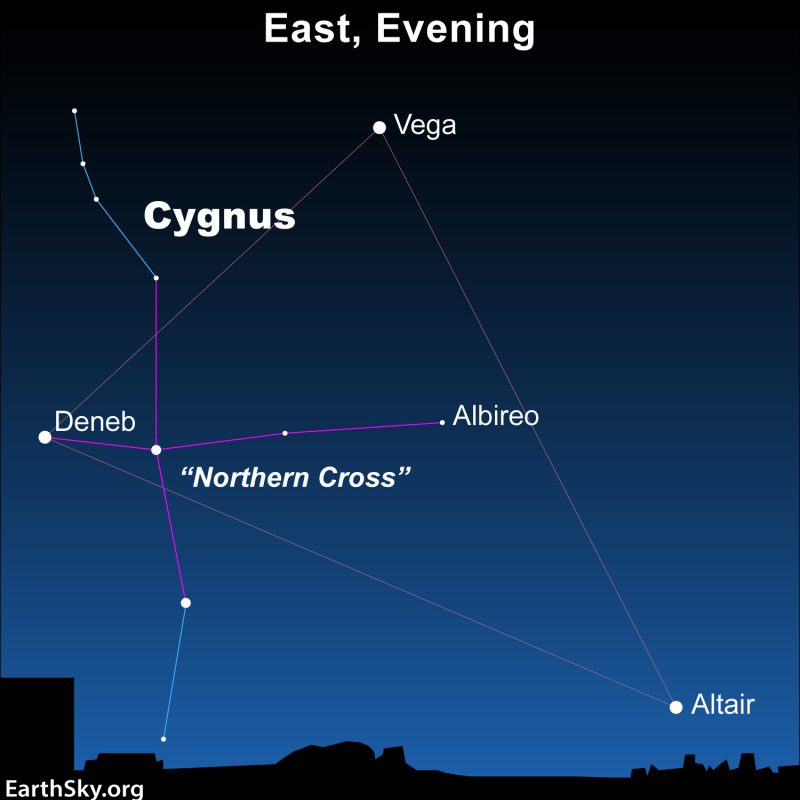
Here’s step one for finding the Northern Cross. Look for the asterism’s most brilliant star, Deneb. Deneb marks the top of the Northern Cross. It’s also well known as one of the three bright stars of the Summer Triangle, along with Vega and Altair.
Now, look for a bright star roughly halfway between Altair and Vega and slightly offset toward Deneb. That’ll be Albireo. Although only a modestly bright star, Albireo is easy to see on a clear, dark night. There are no similarly bright stars near Albireo, so it’s fairly easy to find.
Once you locate Deneb and Albireo, you’re halfway to piecing together the Northern Cross. All you need now is the crossbar, which most people see as three moderately bright stars. Then as you can see in the illustration below, these three stars extend about halfway out into the wings of Cygnus the Swan.
Backbone of the Milky Way
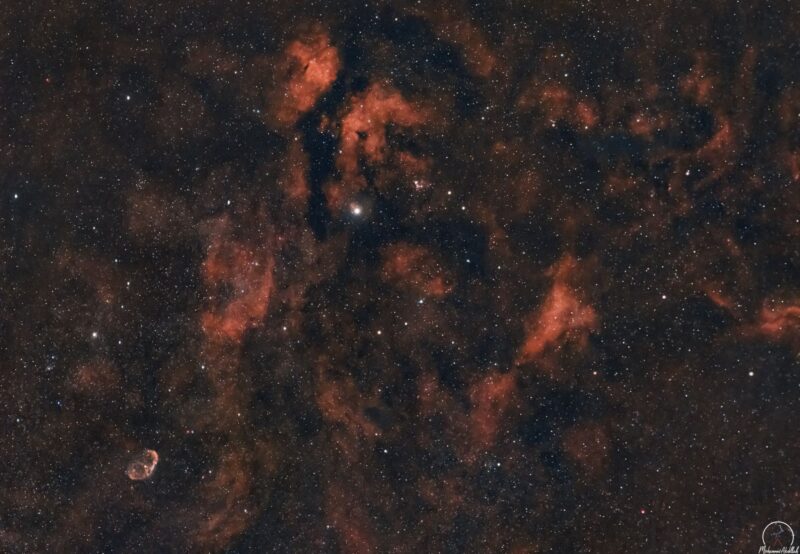
When you look at the Northern Cross, you’re looking directly into the flat disk of our galaxy, the Milky Way. In fact, the galactic plane (equator) runs right through the Northern Cross, encircling the sky above and below the horizon. So the Northern Cross serves as a great signpost for a view of our home galaxy. If you’re under a dark sky on a northern summer evening, the Milky Way appears as a luminescent river of haze passing directly along the length of the Northern Cross. You can see this hazy band stretching all the way across the sky on late July and August evenings.
You probably know that this haze is actually countless stars. So, these stars will emerge beautifully through binoculars, as will the star fields, star clusters and nebulae that abound within the disk of the Milky Way!
Northern Cross as a marker of seasons
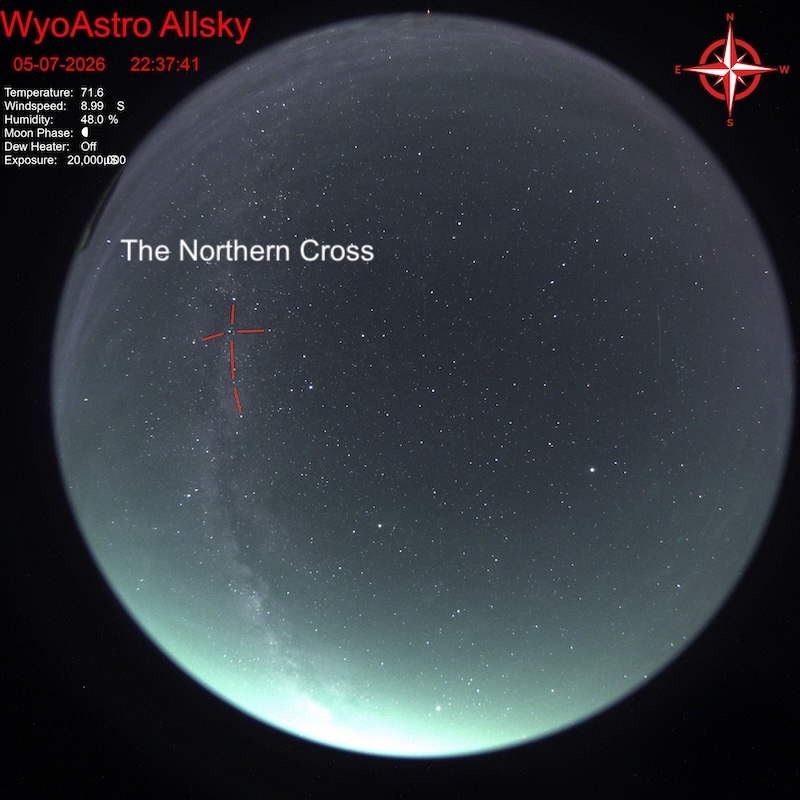
As seen from mid-northern latitudes, the Northern Cross is out for at least part of the night all year around. Plus, it’s out all night in summer. On Northern Hemisphere summer nights, the Northern Cross shines in the east at nightfall, sweeps high overhead after midnight, and swings to the west by daybreak. So when you see the Northern Cross in the east on summer evenings, it’s sideways to the horizon.
By the time northern autumn arrives, the Northern Cross is still out from nightfall until midnight, but it appears high overhead in the evening and sets in the northwest after midnight.
And when winter comes, the Northern Cross is standing upright over your northwest horizon before midnight.
Star chart
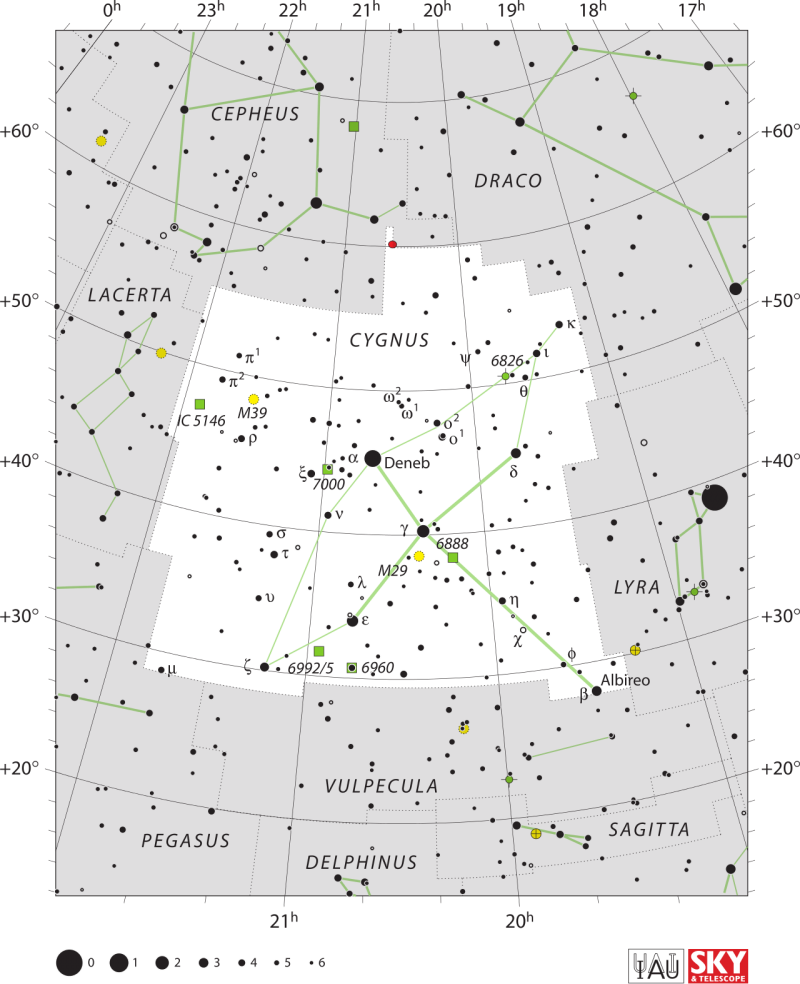
Bottom line: The Northern Cross is an asterism – or recognizable pattern of stars – within the constellation Cygnus the Swan. And here’s how to find it in your sky.
Like what you read?
Subscribe and receive daily news delivered to your inbox.
More from
Bruce McClure


Alpha Cephei, or Alderamin, is a fast-spinning star

The Andromeda Galaxy: All you need to know
Are day and night equal on the equinox? Not exactly
See the year’s fastest sunsets and sunrises around equinoxes