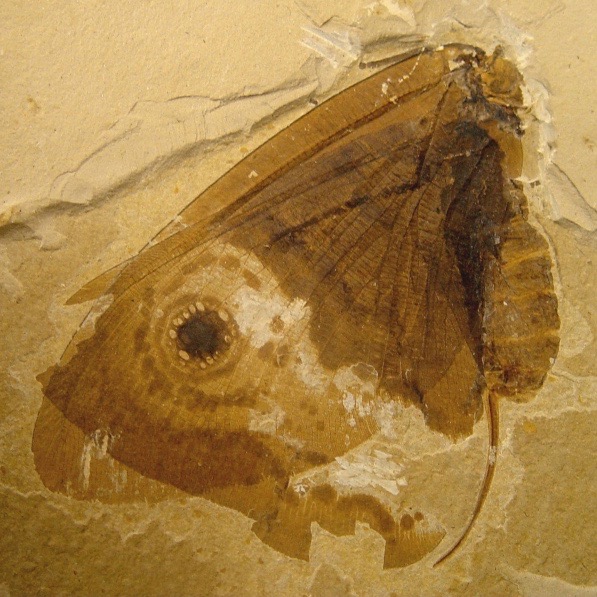
Here’s a fossil of a large butterfly-like insect known as a Kalligrammatid lacewing, which has been extinct for more than 120 million years. Scientists at the Smithsonian’s National Museum of Natural History used new fossil analysis techniques to learn that these ancient lacewings were surprisingly similar to modern butterflies, which did not appear on Earth for another 50 million years.
Like what you read?
Subscribe and receive daily news delivered to your inbox.
Thank you! Your submission has been received!
Oops! Something went wrong while submitting the form.
More from
Deborah Byrd
View All


Visible planets and night sky guide for October

October 15, 2026
What star in the northeast flashes colorfully? It’s Capella!
October 15, 2026
Proxima Centauri is the closest star to our sun
October 14, 2026
NASA’s Perseverance rover on Mars sets off-world driving record
October 13, 2026