




Helio de Carvalho Vital sent these photos to us over the weekend, and wrote:
That the strong refraction next to the horizon flattens the image of the setting sun is no surprise to anyone. But what if the sun suddenly becomes shaped like a mushroom? Saturday evening [January 17, 2015], I took some photos of the sun setting over the Atlantic Ocean from Saquarema, a small city 100 km east of downtown Rio de Janeiro.
The local air temperature was 34°C but the seawater was only 21°C. Thus a layer of cooler air formed on the surface of the sea.
As sunlight crossed that layer to reach my camera, it underwent a complex series of refractions and reflections that severely distorted the image of the sun, making it acquire very unusual shapes.
A Canon Powershot SX60 HS was used for all the shots, taken at 21:39-41 UTC.
After sunset that same evening, Venus and Mercury appeared!
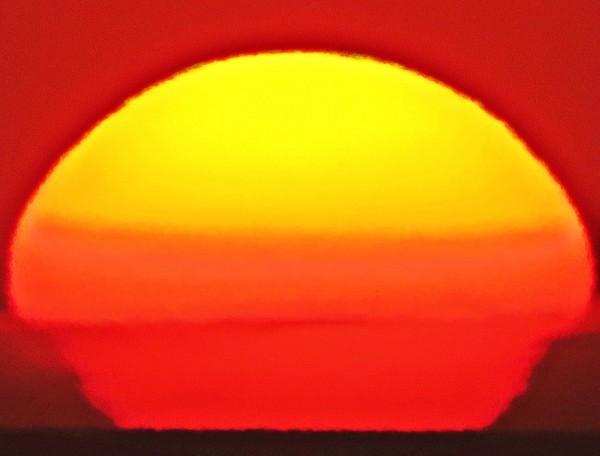
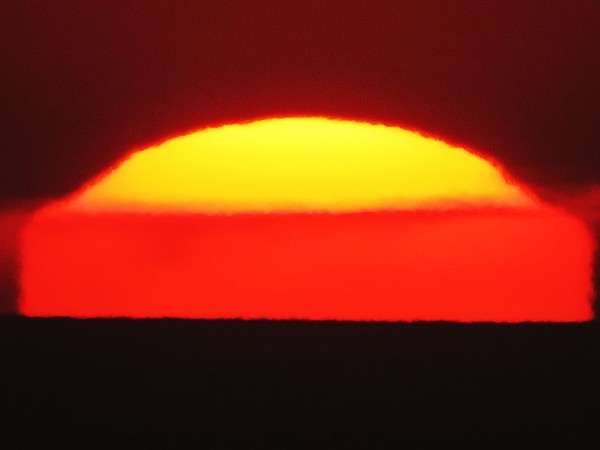
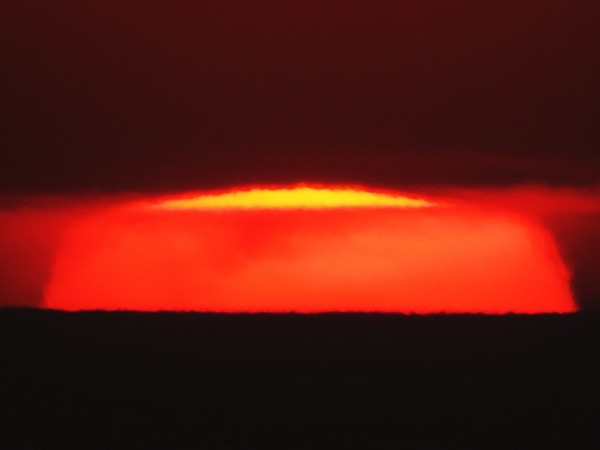
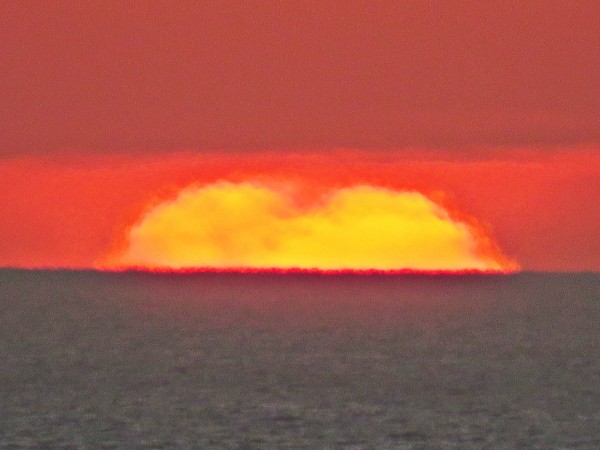
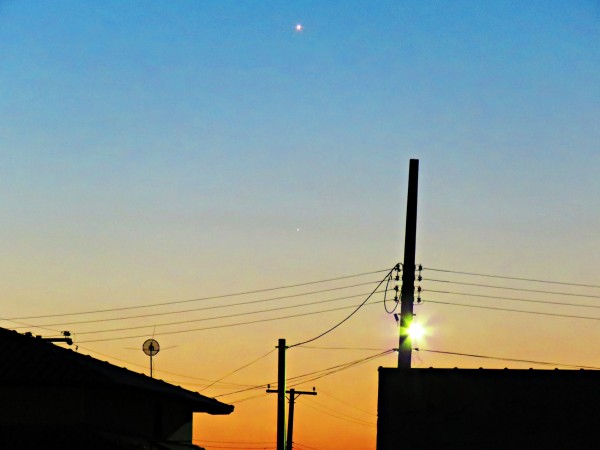
Bottom line: Series of images of Saturday night’s amazing sunset, seen over the Atlantic from a small town near Rio de Janeiro, Brazil.
Like what you read?
Subscribe and receive daily news delivered to your inbox.
More from
Deborah Byrd


Earthquake in Japan triggers mall collapse in Kumamoto

Return of Orion the Hunter, ghost of the summer dawn
Wildfires in Spain and France: 200,000 forced to flee
Find M4: An easy to spot globular cluster near Antares


