



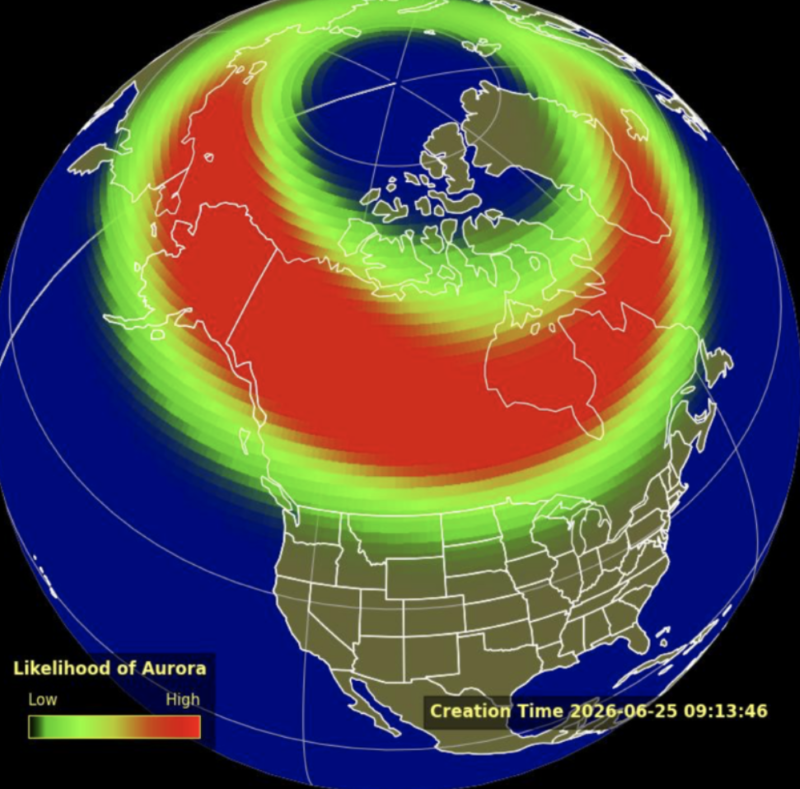
Sun news June 25: Surprise geomagnetic storm hits overnight
Today’s top story: Bam! A surprising G1 (minor) geomagnetic storm arrived overnight. It came as fast solar wind from a coronal hole buffeted Earth’s magnetic field, combining with a complex knot of solar winds known as a co-rotating interaction region (CIR). Effects from a glancing blow of the CME hurled into space on June 20 also might have contributed. The disturbance crossed the G1 (minor) storm threshold at 4:43 UTC this morning. More active and storming periods are possible during the rest of today and through June 27. Stay tuned!
Past 24 hours of sun news
(11 UTC June 24 – 11 UTC June 25)
Flare activity
Over the past day, solar activity continued at low levels. In total, the sun sparked 16 C-class flares. The bulk originated from the incoming regions in the southeast quadrant.
- Strongest flare: C4.3 from newcomer AR4478 in the southeast at 0:22 UTC on June 25.
- Lead flare producer: AR4478 topped the list. It fired 10 C-class events. Meanwhile, AR4475 closely followed with 5 C-class flares. The remaining flare came from elsewhere on the disk.
Sunspot regions
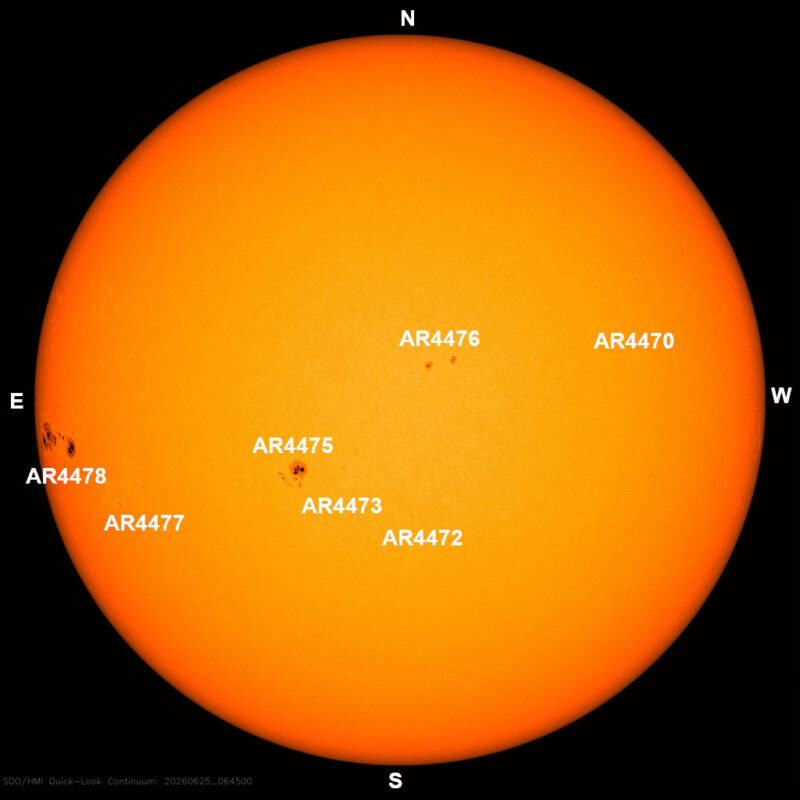
Currently, the Earth-facing solar disk shows 7 numbered active regions.
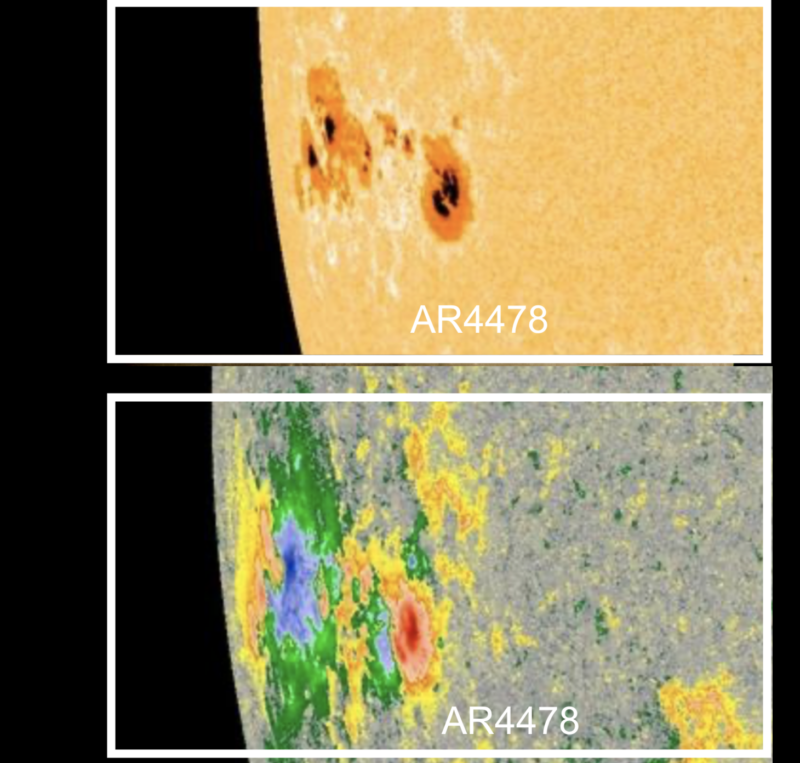
AR4478 is the newcomer making waves. The large active region we noted yesterday rotating onto the southeastern limb received its official number during this period. It still sits too close to the southeast horizon for a complete analysis. But initial impressions suggest a beta-gamma configuration. And given how large this region appears, its true complexity may be even greater once it rotates further into view. Forecasters will release a more complete analysis as it becomes clearer.
AR4475 also carries a beta-gamma complexity. Together, these two regions carry the highest flare potential on the disk right now.
Blasts from the sun?
Available coronagraph imagery showed no Earth-directed coronal mass ejections (CMEs) during the period.
Past 24 hours in space weather
Solar wind
Solar wind speeds stayed at background levels late on June 24. But at 20 UTC, they climbed sharply to moderate-high levels. And they held there through 11 UTC on June 25 at the time of this writing. Meanwhile, the total interplanetary magnetic field (IMF) ranged from strong to moderate levels throughout the period.
Bz and magnetic coupling
The Bz component pointed southward for much of the period. A few northward peaks occurred starting at 2:44 UTC on June 25. As always, a sustained southward Bz is what opens the door for significant auroral displays.
Earth’s magnetic field
Over the past day, Earth’s magnetic field ranged from unsettled to active (Kp 3–5). A G1 (minor) geomagnetic storm period occurred. The Kp 5 threshold was reached at 4:43 UTC on June 25. And at the time of this writing, storming conditions continue.
What’s ahead? Sun–Earth forecast
Flare activity forecast
Forecasters expect predominantly low levels of activity through June 26. But the chance for M-class flares sits at 25% today. And X-class (strong) flare chances hold at 5%. Both numbers are expected to climb as AR4478 rotates fully into view, and its true complexity becomes apparent.
Geomagnetic activity forecast
- June 25: Unsettled-to-active conditions continue (Kp 2–4) with chances for additional geomagnetic storming periods. Fast solar wind from a coronal hole combined with CIR effects may bring further enhancements.
- June 26–27: Expect unsettled conditions with periods of active levels (Kp 3–4). A chance of isolated G1 (minor) geomagnetic storm intervals (Kp 5) exists late on June 26 as the coronal hole stream strengthens. If sustained southward Bz develops, aurora could reach Seattle, Minneapolis, Edinburgh, and the Scottish Highlands. But short June nights will severely limit displays in the Northern Hemisphere. Aurora watchers in the Southern Hemisphere, particularly in Tasmania, New Zealand’s South Island, and southern Australia, have the best prospects given longer winter nights.
Sun news June 24: Powerful sunspot group rotating into view
A large, complex sunspot group is rotating into view over the sun’s eastern horizon. It marked its grand entrance with a C8.7 flare at 23:18 UTC, which was partially blocked by the solar horizon and therefore was likely more powerful than a C8.7 in reality. It accompanied this flare with a steady drumbeat of C-class activity that kept the limb glowing throughout the day. The sunspot group appears to be a substantial region first spotted on the sun’s far side by the Solar Orbiter spacecraft. Once it fully arrives onto the Earth-viewed sun over the next day, the chance for M-class flares is expected to climb. Stay tuned!
Past 24 hours of sun news
(11 UTC June 23 – 11 UTC June 24)
Flare activity
Over the past day, solar activity held at low levels. But the eastern limb stayed busy. In total, the sun fired 21 C-class flares. The bulk originated from the incoming region and from AR4475.
- Strongest flare: C8.7 from the eastern limb at 23:18 UTC on June 23. This was a partially occulted event, meaning its true intensity was likely higher than measured.
- Lead flare producer: AR4475 was the top identified on-disk producer. It fired at least 5 C-class events: C3.5, C2.0, C1.9, C1.8, and C1.4. The remaining C-class events came from the incoming limb region or had unassigned source regions.
Sunspot regions: Key players
The Earth-facing solar disk showed 7 numbered active regions. Several continued to decay. A large, unnumbered region is rotating onto the southeastern limb and should be catalogued soon.
Blasts from the sun?
No Earth-directed coronal mass ejections (CMEs) were observed during the period. Three CMEs were cataloged in coronagraph imagery, but none are expected to impact Earth directly.
Past 24 hours in space weather
Solar wind
Solar wind conditions stayed at background levels for most of the period. The total interplanetary magnetic field (IMF) stayed unremarkable for most of the period. But solar wind speeds and IMF strength rose a little last night and again this morning.
Bz and magnetic coupling
The Bz component was northward for much of the period. A southward Bz turn is needed to open the door for significant auroral activity.
Earth’s magnetic field
Over the past day, Earth’s magnetic field ranged from quiet to unsettled (Kp up to 3). Conditions are expected to become more active over the coming days as a coronal hole high-speed stream intensifies.
Sun news June 23: Three sun blobs to brush past Earth

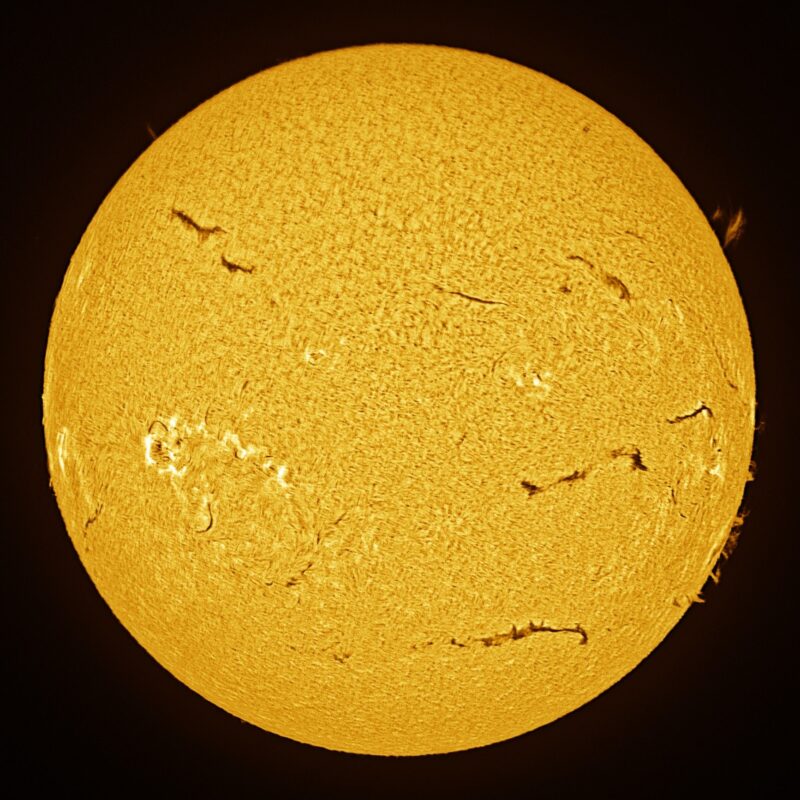
After a round of high activity from sunspot region AR4473, including an impressive M6.8 flare on June 21, the sun has dialed back to very low activity. But the sun-stuff fired out during AR4473’s eruptions is still traveling through space. Analysis shows that slow coronal mass ejections (CMEs) from June 19, 20, and 21 might deliver minor glancing blows to Earth late on June 23, June 24, and June 28. No major geomagnetic storms are expected, but some mild disturbance should be on the way.
Past 24 hours of sun news
(11 UTC June 22 – 11 UTC June 23)
Flare activity
Over the past day, solar activity dropped to very low levels. In total, the sun fired just 3 faint B-class (weak) flares. Each came from a different active region.
- Strongest flare: B9.1 from an incoming as-yet-unnumbered region at 11:31 UTC on June 22.
Sunspot regions
Currently, the Earth-facing solar disk shows 5 numbered active regions. Notably, three of them carry beta-gamma configurations: AR4473, AR4474, and AR4475. That makes them the top candidates for stronger flare production.
AR4475 is the newcomer and the largest of the three. It received its official number during this period, after splitting off from the former AR4473 to become a distinct region.
AR4474 is approaching the northwest limb and should depart to the far side soon. But newcomers are approaching the east limb and may begin to rotate into view in the coming days.
Blasts from the sun?

Analysis of the eruptions on June 19, 20, and 21, including the M6.8, shows slow CMEs traveling through interplanetary space. These blobs of solar material may catch up with each other along their paths. And when combined with an anticipated corotating interaction region (CIR), they could deliver glancing blows at Earth on late June 23, June 24, and June 28.
Specifically, the June 19 CME may deliver a minor glancing blow late today, on June 23. And the June 20 CME may arrive late on June 24. Kp estimates for both range from 3 to 5. But timing carries considerable uncertainty for both events.
Past 24 hours in space weather
Solar wind
Solar wind conditions continued at slow background levels throughout the period. Meanwhile, the total interplanetary magnetic field (IMF) stayed weak, with a slight increase at the end of the period.
Bz and magnetic coupling
The Bz component pointed mostly southward late yesterday into early today. But at 4:30 UTC this morning, it shifted sharply northward for about two hours. At the time of this writing, the Bz has returned to a southward orientation. As always, a sustained southward Bz favors auroral displays.
Earth’s magnetic field
Over the past day, Earth’s magnetic field continued at quiet levels (Kp 0–2). No geomagnetic storm levels were reached. Aurora visibility remained limited to the highest latitudes. And short northern summer nights further constrained any viewing opportunities.
Sun news June 22: M6.8 flare erupts, activity surges!

The sun fired its strongest flare in days! An M6.8 (moderate) eruption from AR4473 peaked at 19:17 UTC on June 21. The blast released a burst of sun-stuff – a coronal mass ejection (CME) – into space, although it doesn’t appear to be heading toward Earth. AR4473 was the undisputed star of the period, producing every significant flare of the 24-hour window. And an earlier M2.6 from the same region on Sunday morning had already set the tone for an active day. This region is growing rapidly and its beta-gamma complexity makes it the one to watch. Stay tuned!
Past 24 hours of sun news
(11 UTC June 21 – 11 UTC June 22)
Flare activity
Over the past day, solar activity reached high levels. In total, the sun fired 8 flares: 1 M-class, 3 C-class (common) and 4 B-class (weak) events. AR4473 was the sole driver, producing every flare of the period.
- Strongest flare: M6.8 from AR4473 at 19:17 UTC on June 21. It triggered an R2 (moderate) radio blackout over the Americas and eastern Pacific.
- Earlier M-class activity: An M2.6 from AR4473 peaked at 2:46 UTC on June 21. It also produced a faint, west-directed CME.
Sunspot regions
The Earth-facing solar disk showed 3 or 4 numbered active regions. The exact count in the far southeast remains uncertain due to viewing geometry as new spots rotate into view.
AR4473 (beta-gamma) was the star of the period. It continued vigorous development and was responsible for all significant flaring. As it rotates further onto the disk, its complexity is likely to grow further.
Blasts from the sun?
Multiple CMEs were observed during the period, but none are expected to have a direct impact on Earth. Analysis of the M6.8-associated CME from AR4473 is still being refined, but because AR4473 sits well east of the sun-Earth line, the CME should sweep east of Earth.
And the M2.6-associated CME from 2:46 UTC on June 21 was a faint, west-directed event. Earth arrival is not expected from that one either.
However, two CMEs from prior days remain in the forecast pipeline. The June 19 CME might deliver a glancing blow around 8:00 UTC on June 23. Kp estimates range from 3 to 5, suggesting at most G1 (minor) geomagnetic storm potential. And the June 20 CME may arrive around 10:00 UTC on June 24. Kp estimates also range from 3 to 5. But timing carries considerable uncertainty for both events.
Past 24 hours in space weather
Solar wind
Solar wind conditions remained firmly in a slow background regime throughout the period. Meanwhile, the total interplanetary magnetic field stayed well within normal bounds.
Bz and magnetic coupling
The Bz component showed no significant southward dips. It stayed weak and variable. As a result, Earth’s magnetic shield remained effectively closed and aurora activity stayed suppressed.
Earth’s magnetic field
Over the past day, Earth’s magnetic field stayed quiet (Kp 0–2). No geomagnetic storm levels were reached. Aurora visibility remained limited to the highest latitudes. And the short hours of northern summer darkness further constrained any viewing opportunities.
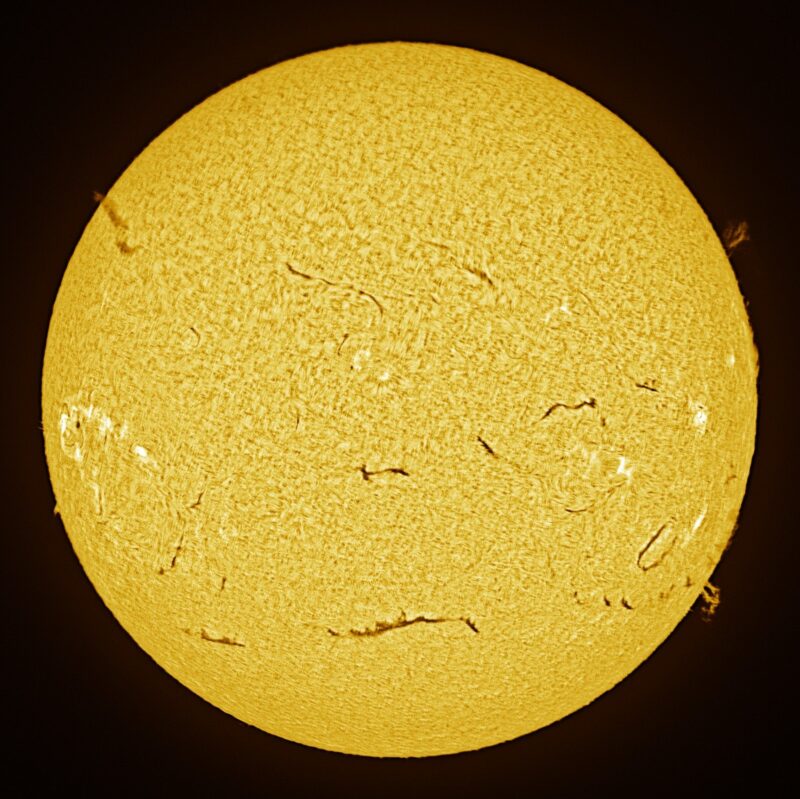
Sun news June 21: M flare brightens the June solstice!

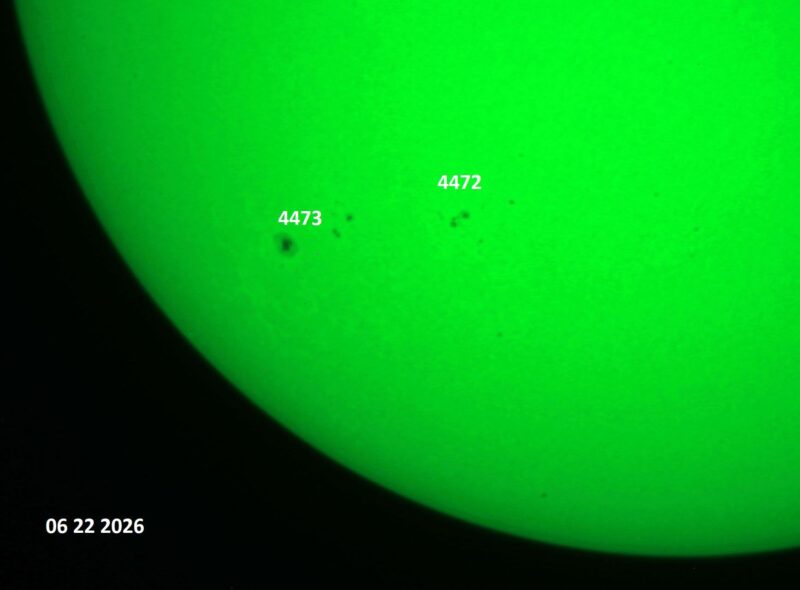
Happy June solstice! And what a way to mark it. The sun continued to simmer at moderate to high levels on the longest day of the year in the Northern Hemisphere. Newly numbered AR4473 stole the spotlight, firing an M2.6 flare at 2:25 UTC this morning. It was the strongest blast of the period. The flare triggered an R1 (minor) radio blackout, briefly disrupting HF communications over the Pacific and eastern Asia. And AR4473 is just getting started. It’s growing as the sun’s rotation carries it further onto the visible disk. Its increasing magnetic complexity makes it the region to watch over the coming days. Earlier in the period, neighboring AR4472 contributed its own M1.0 flare along with a string of C-class events. The solstice also marks a turning point for aurora watchers. Today is the peak of the seasonal disadvantage for aurora viewing in the Northern Hemisphere. The sun-Earth geometry works against displays right now. But from here, the nights gradually grow longer again. And as they do, aurora opportunities will slowly improve. In the Southern Hemisphere, today is the winter solstice, and darkness is at its peak, giving southern aurora chasers their best seasonal window in terms of light.
Past 24 hours of sun news
(11 UTC June 20 – 11 UTC June 21)
Flare activity
Over the past day, solar activity reached moderate levels. In total, the sun fired 12 flares: 2 M-class and 6 C-class events, plus several B-class flares.
- Strongest flare: M2.6 from AR4473 (S07E65) at 2:25 UTC on June 21. It triggered an R1 (minor) radio blackout over the Pacific region.
- Other M-class flare: M1.0 from AR4472 at 14:50 UTC on June 20. It also produced an R1 (minor) radio blackout, affecting the sunlit African and European sectors.
- Notable C-class events: C4.9 from AR4472 at 21:22 UTC on June 20; C1.3 from AR4472 at 23:01 UTC on June 20; C1.1 from AR4472 at 1:01 UTC on June 21; C1.2 from AR4473 at 8:31 UTC on June 21.
- Lead flare producers: AR4473 fired the period’s strongest event, the M2.6. And AR4472 generated the bulk of the overall activity with an M1.0 and multiple C-class flares. Together they drove all the significant activity of the period.
Sunspot regions
The Earth-facing solar disk showed approximately 7 numbered active regions. But the majority remained small and quiet.
AR4473 (beta) received its official number this period. It is growing as it rotates further onto the visible disk. It produced the period’s strongest flare, the M2.6, plus additional C- and B-class events. Its increasing magnetic complexity makes it the primary region of concern going forward.
AR4472 (beta) was the most prolific flare producer of the period. It fired an M1.0 and several C-class events. Its position near the southeast limb makes full analysis difficult. But it shows some mixed-polarity magnetic structure worth monitoring.
The remaining 5 numbered regions were small and simple. They were either stable or in gradual decay. Several areas of pores appeared in the western hemisphere. But most decayed before developing into numbered sunspot groups.
Blasts from the sun?
Two CMEs were observed during the period. But neither is expected to deliver a direct hit to Earth.
Past 24 hours in space weather
Solar wind
On the space weather front, solar wind conditions remained subdued. The influence of a waning coronal hole high-speed stream faded further. Speeds ranged between 350–420 km/s, settling near 400 km/s by the end of the period. Meanwhile, the total interplanetary magnetic field (IMF) ranged from 5–7 nT.
Bz and magnetic coupling
The Bz component was variable throughout. It briefly dipped as far south as ?7 nT. But it recovered quickly. That southward dip was too brief and weak to drive significant geomagnetic activity. As a result, Earth’s magnetic shield stayed mostly closed.
Earth’s magnetic field
Over the past day, Earth’s magnetic field ranged from quiet to unsettled (Kp 1–3). No geomagnetic storm thresholds were reached. Conditions continued transitioning toward background levels.
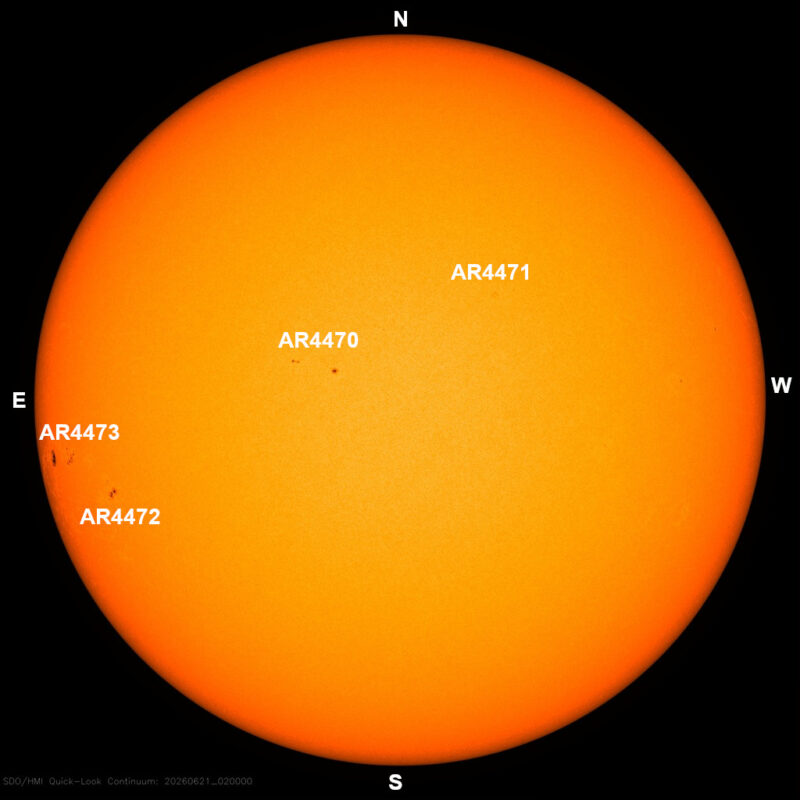
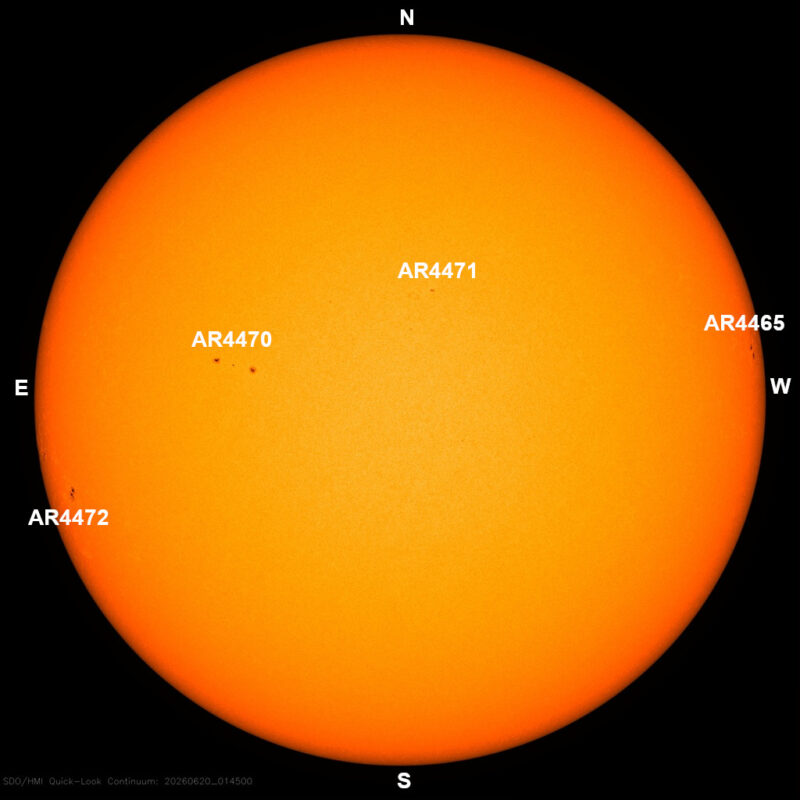
The sun in recent days
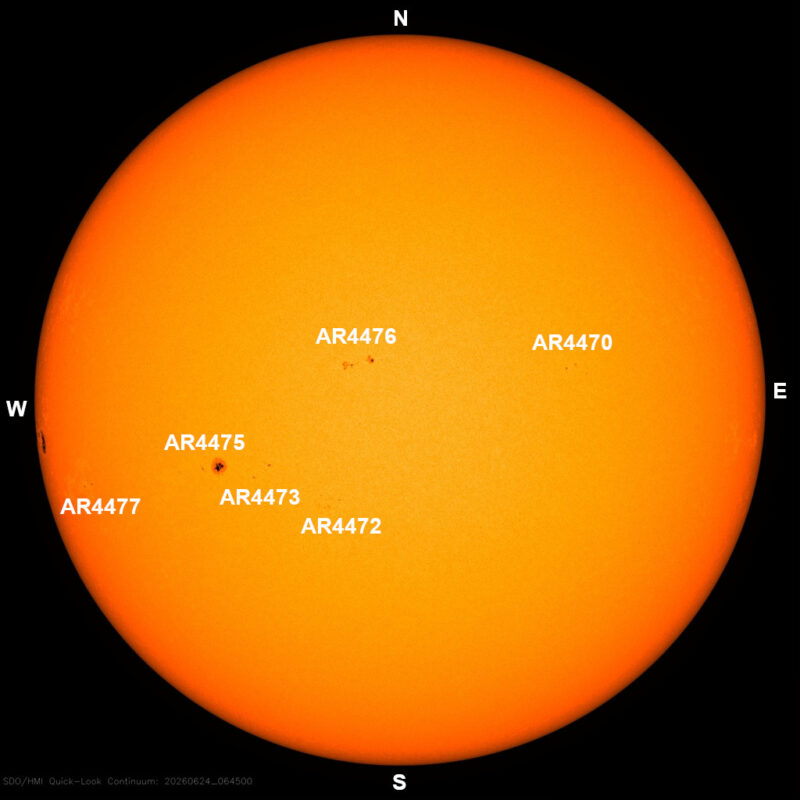
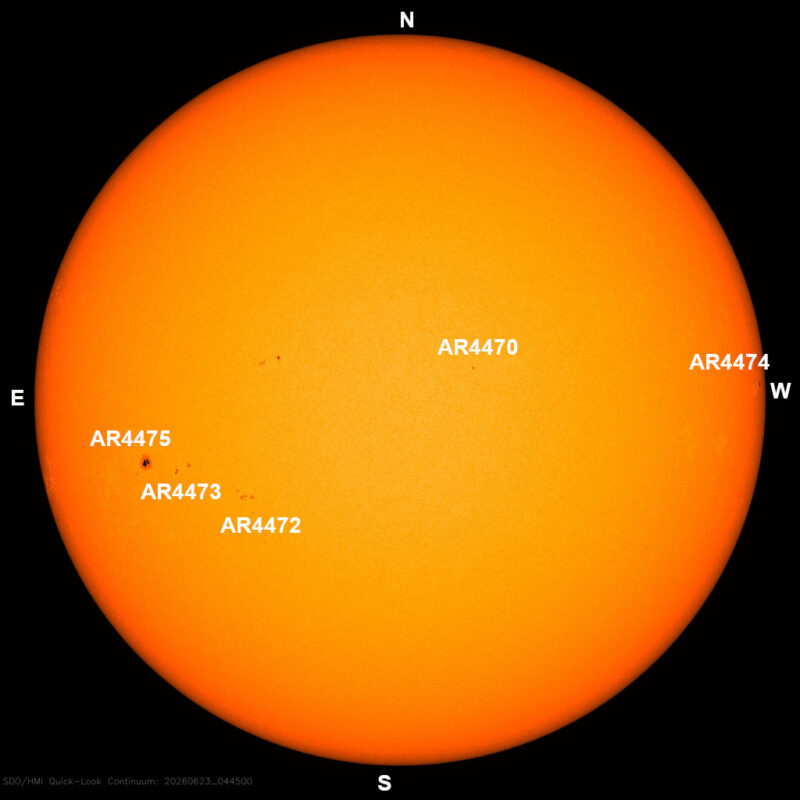
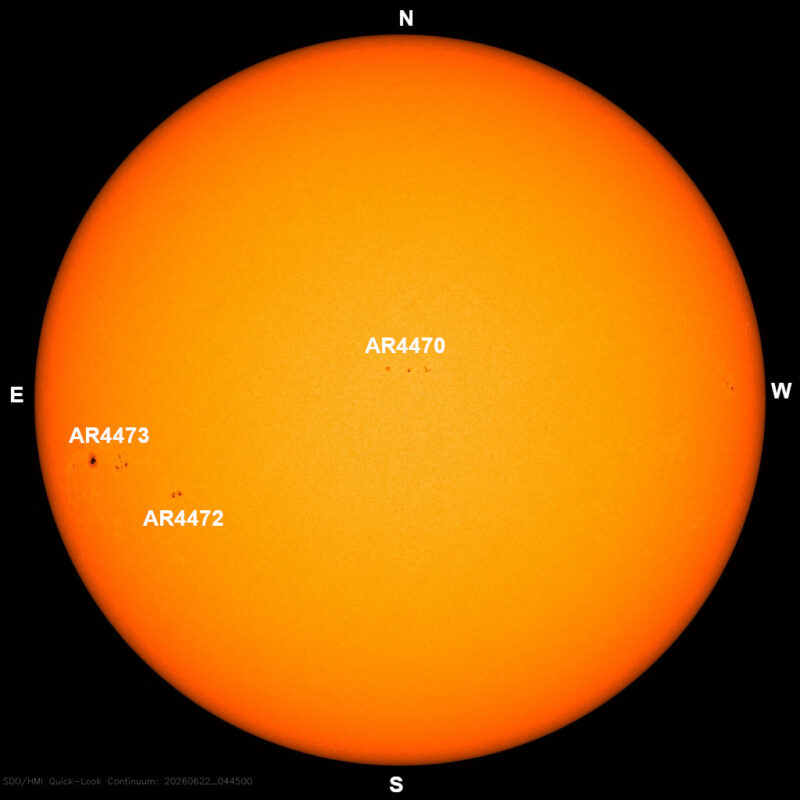
Earlier sun images
Sun images from our community
More sun images from our community
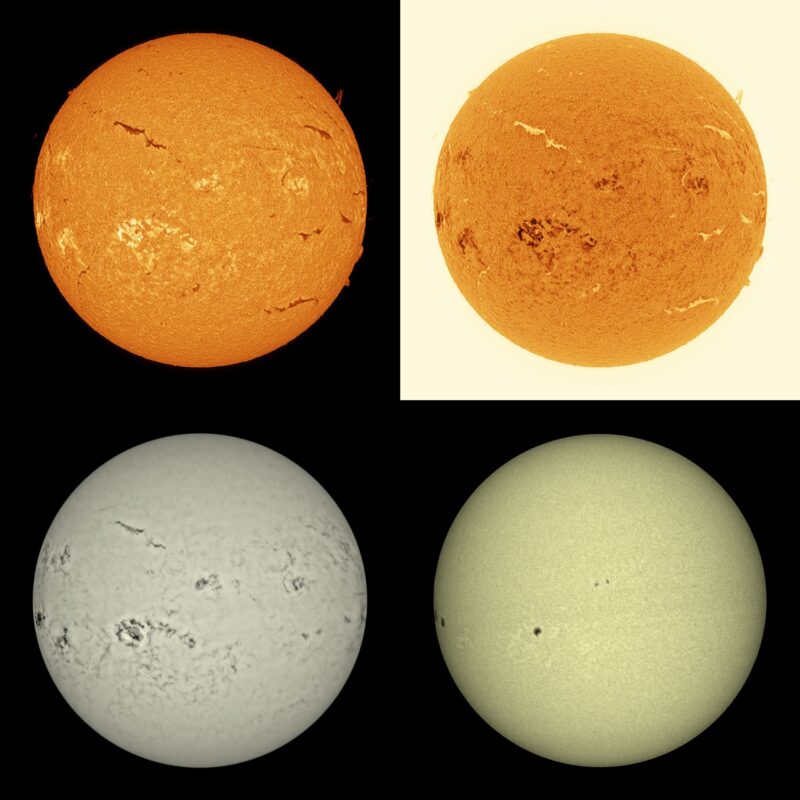
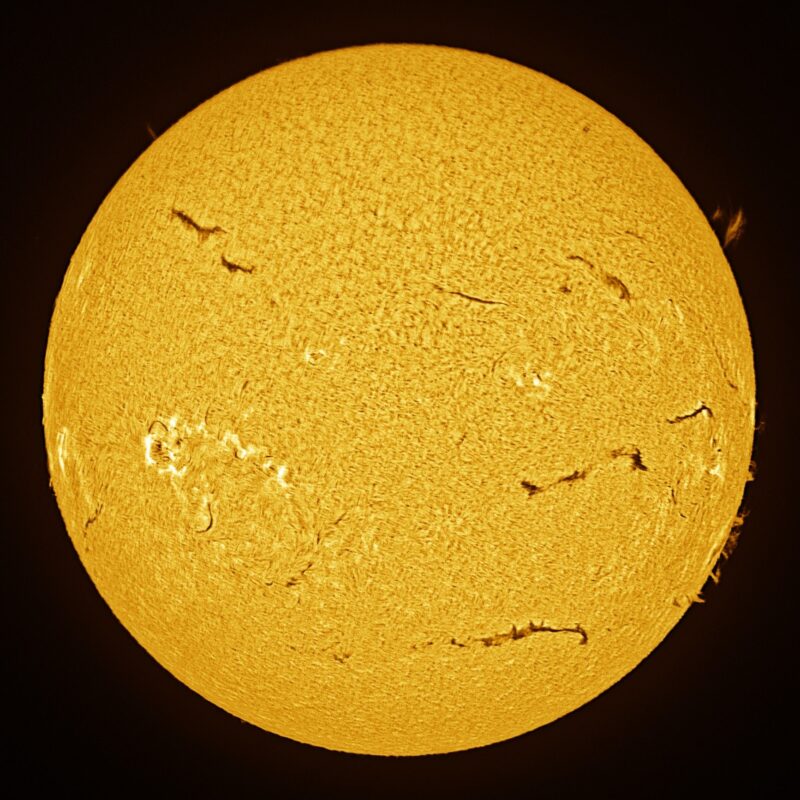
We sometimes feature sun images obtained using hydrogen-alpha filters. Read why.
Bottom line: Sun news for June 25, 2026: A surprise G1 (minor) geomagnetic storm hit overnight! With fast solar wind continuing to reach our magnetic field, more storming is possible through June 27.
Like what you read?
Subscribe and receive daily news delivered to your inbox.
More from
C. Alex Young


Sun activity archive for May 2026

Sun activity archive for April 2026
Sun activity archive for March 2026


