



NASA’s IMAP mission launched today! It’ll chart the boundaries of the heliosphere, the bubble-like region surrounding our solar system. It’ll analyze particles from the sun and interstellar space to understand the space weather that can affect our satellites in Earth orbit, and our electric grids on Earth’s surface. We livestreamed the IMAP launch at 5:40 a.m. CDT (10:40 UTC)! Watch again, above.
New missions to study the sun and space weather
In one of the last scientifically significant launches of 2025, NASA launched missions to study the sun and space weather today. The Interstellar Mapping and Acceleration Probe (IMAP) will study interactions between the solar wind and the local interstellar medium. The Space Weather Follow On – Lagrange 1 (SWFO-L1) mission will monitor space weather with real-time measurements. Lastly, the Carruthers Geocorona Observatory will capture views of Earth’s geocorona. The geocorona is the outer part of our atmosphere.
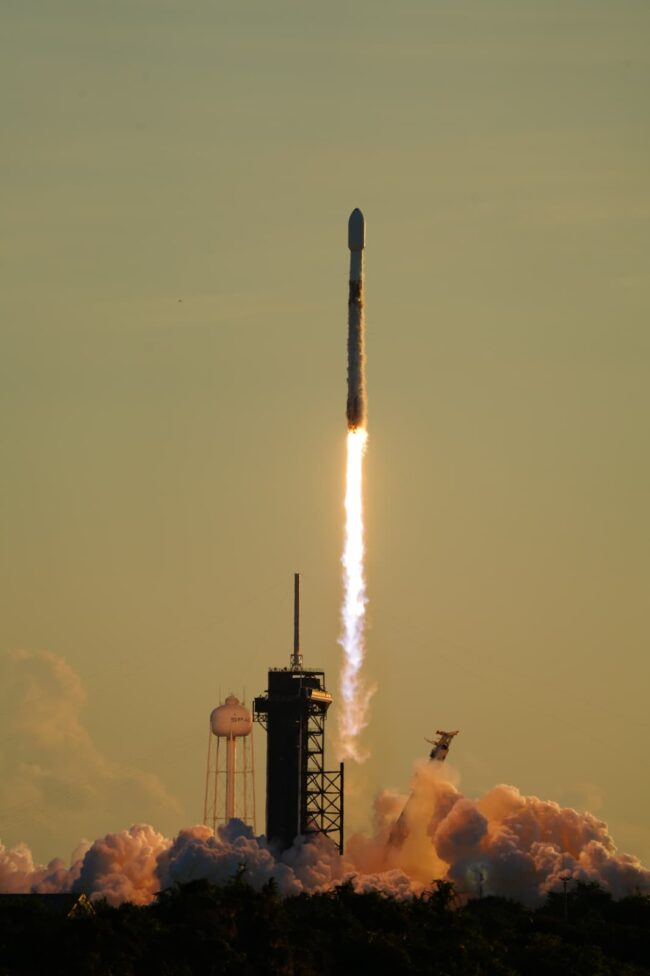
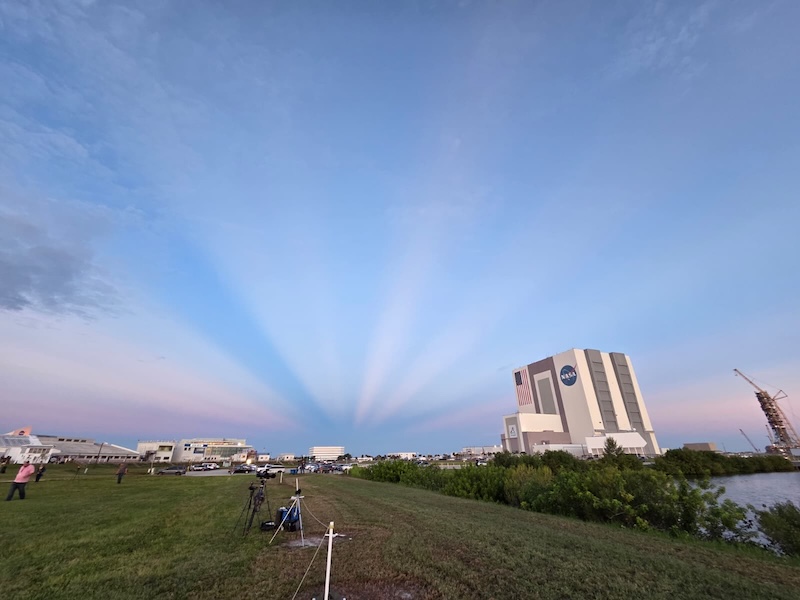
The launch took place this morning around 6:30 a.m. CDT (11:30 UTC) at NASA Kennedy Space Center Pad 39A. The payload launched on a SpaceX Falcon 9 rocket. And the booster returned and landed on an automated recovery barge in the Atlantic Ocean.
The IMAP mission
IMAP will keep track of the solar wind. The solar wind is a continuous stream of charged particles – primarily protons and electrons – that flows outward from the sun’s atmosphere into space.
Carrying a suite of 10 scientific instruments, IMAP will investigate the solar wind’s particles. It will look at how they are accelerated and determine their composition. Also, it will help advance space-weather forecasting models.
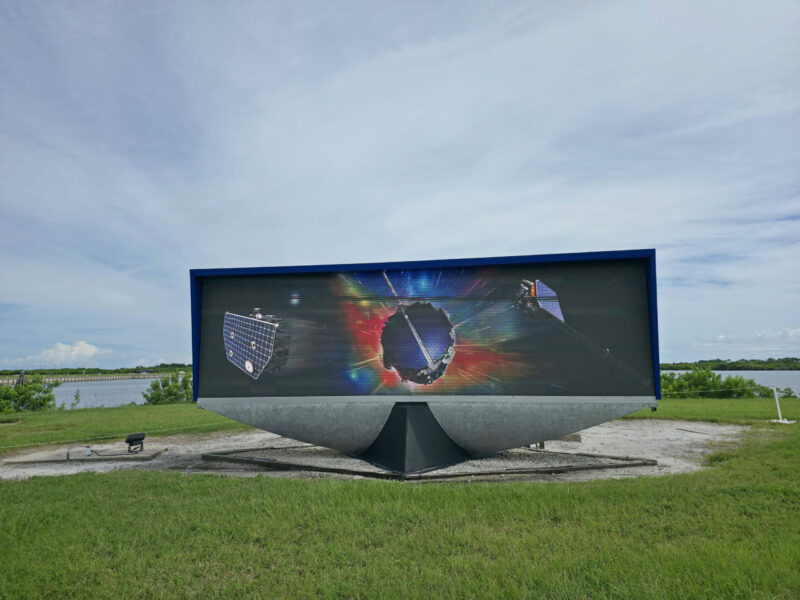
IMAP is a simple spin-stabilized spacecraft with 10 instruments. Engineers will make daily attitude maneuvers to keep the spin axis and top deck (with solar arrays) pointed in the direction of the incoming solar wind.
The other missions
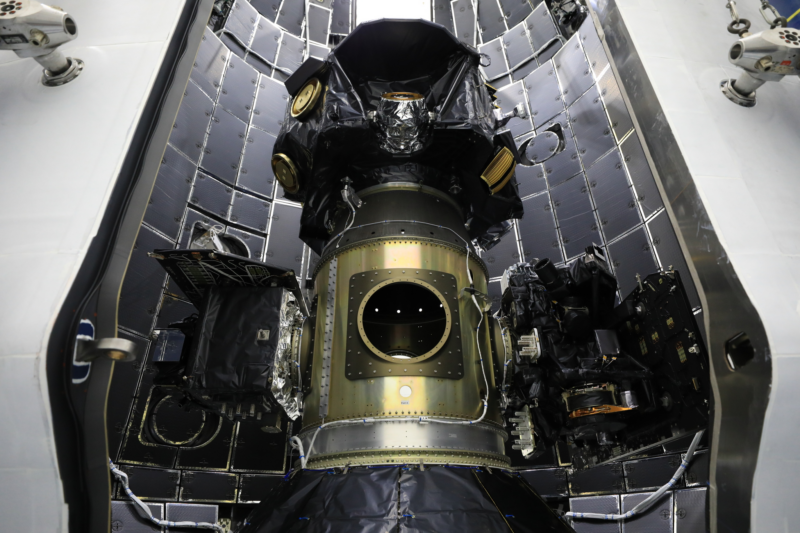
The launch also included the space weather satellite SWFO-L1 for NOAA. SWFO-L1 will provide important lead time for people on the ground and crew in space to take precautions should strong space weather threaten. And the Carruthers Geocorona Observatory will study far ultraviolet emission in the farthest reaches of Earth’s atmosphere. When the sun’s strong solar wind hits Earth, it first impacts Earth’s geocorona. Scientists want to know more about how that outer atmosphere functions as solar storms hit it.
Want to know when the next aurora will strike Earth? Read our daily sun news.
Bottom line: NASA is sending 3 missions – IMAP, SWFO-L1 and Carruthers Geocorona Observatory – into space today, September 24, 2025. These missions will study the sun and space weather.
It’s aurora season. Why more auroras at equinoxes?
See the year’s fastest sunsets and sunrises around equinoxes
Like what you read?
Subscribe and receive daily news delivered to your inbox.
More from
Greg Diesel Walck


NASA’s Crew-11 mission launches to the space station




