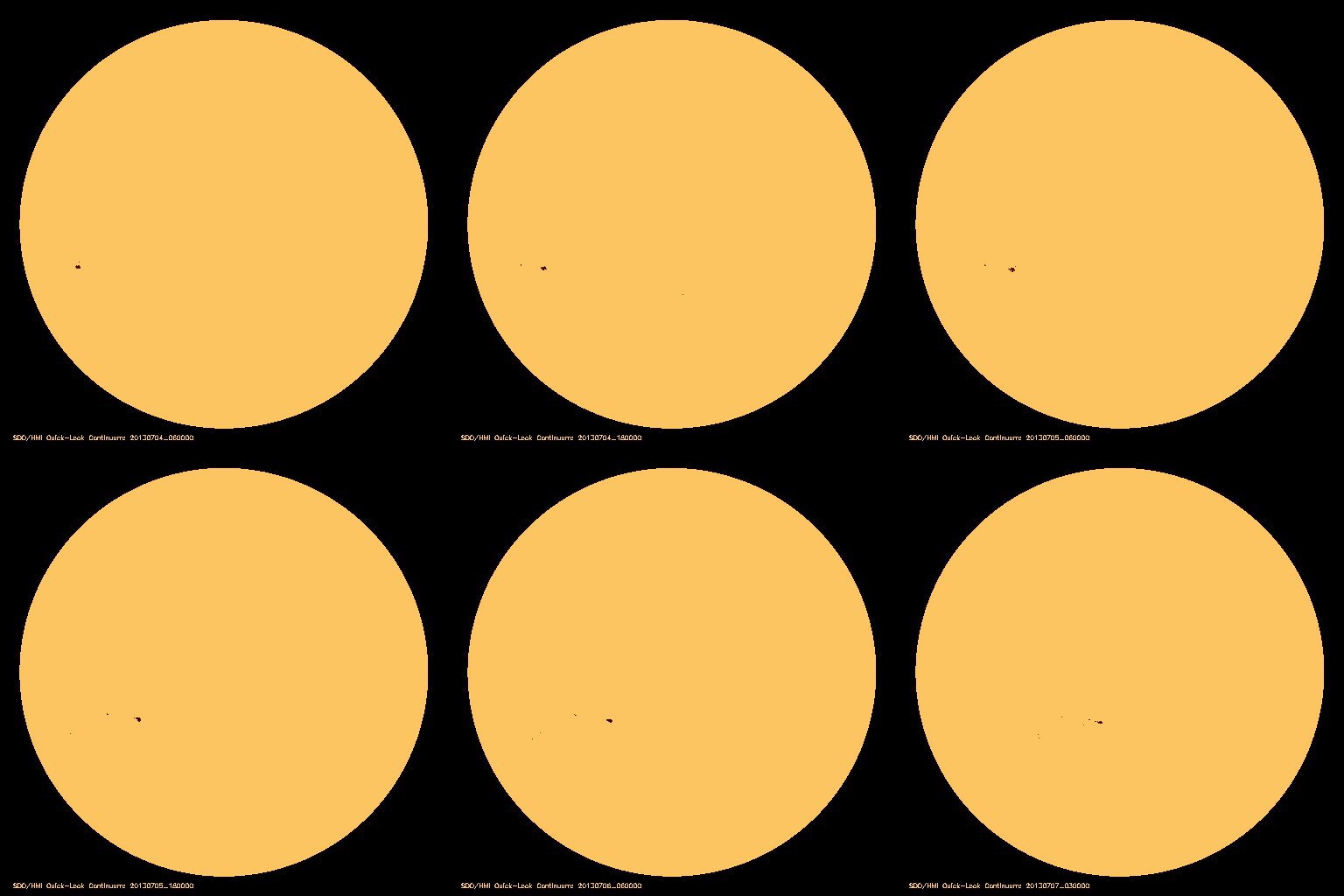
Two days ago, one of the biggest sunspot groups of Solar Cycle 24 stretched and lengthened to a size more than 11 times as wide as Earth. In the past couple of days, though, this massive group – consisting of AR1785 and AR1787 – has been surprisingly quiet, despite the fact that both sunspots are capable of producing strong flares. NOAA forecasters estimated a 55% chance of M-class solar flares on July 8, but that did not happen. Meanwhile, the grouping is so large that it’s been an excellent target for backyard astrophotographers. On July 9, EarthSky Facebook friend VegaStar Carpentier captured this beautiful image of this massive sunspot group. Thank you, VegaStar!
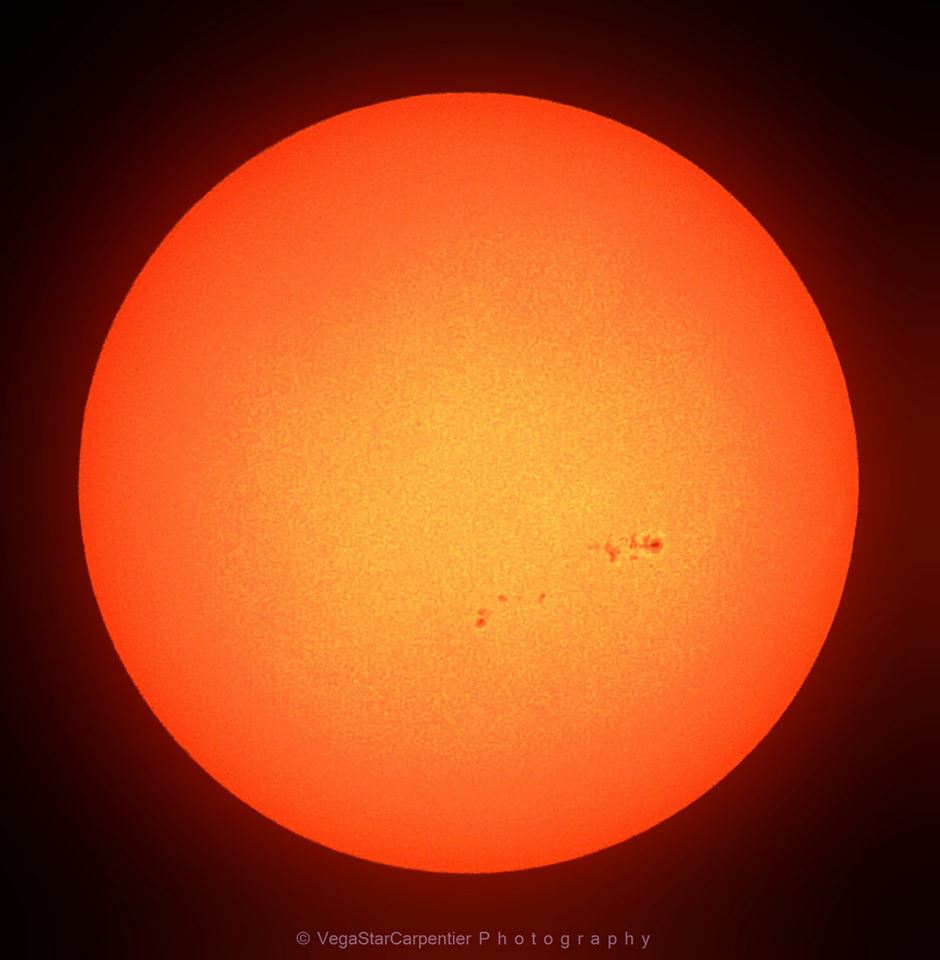
AR1785 could produce powerful X-class solar flares, but so far it has not. The active region trailing behind it, AR1787, is slightly less potent, but both sunspots still have the potential for smaller M-class solar flares. Spaceweather.com said:
These sunspots are a sign that the sun’s southern hemisphere is waking up. For most of the current solar cycle, the northern half of the sun has dominated sunspot counts and flare production. The south has been lagging behind–until now. June brought a surge in southern sunspots, and the trend is continuing in July. This “southern awakening” could herald a double-peaked Solar Maximum due in late 2013-early 2014.
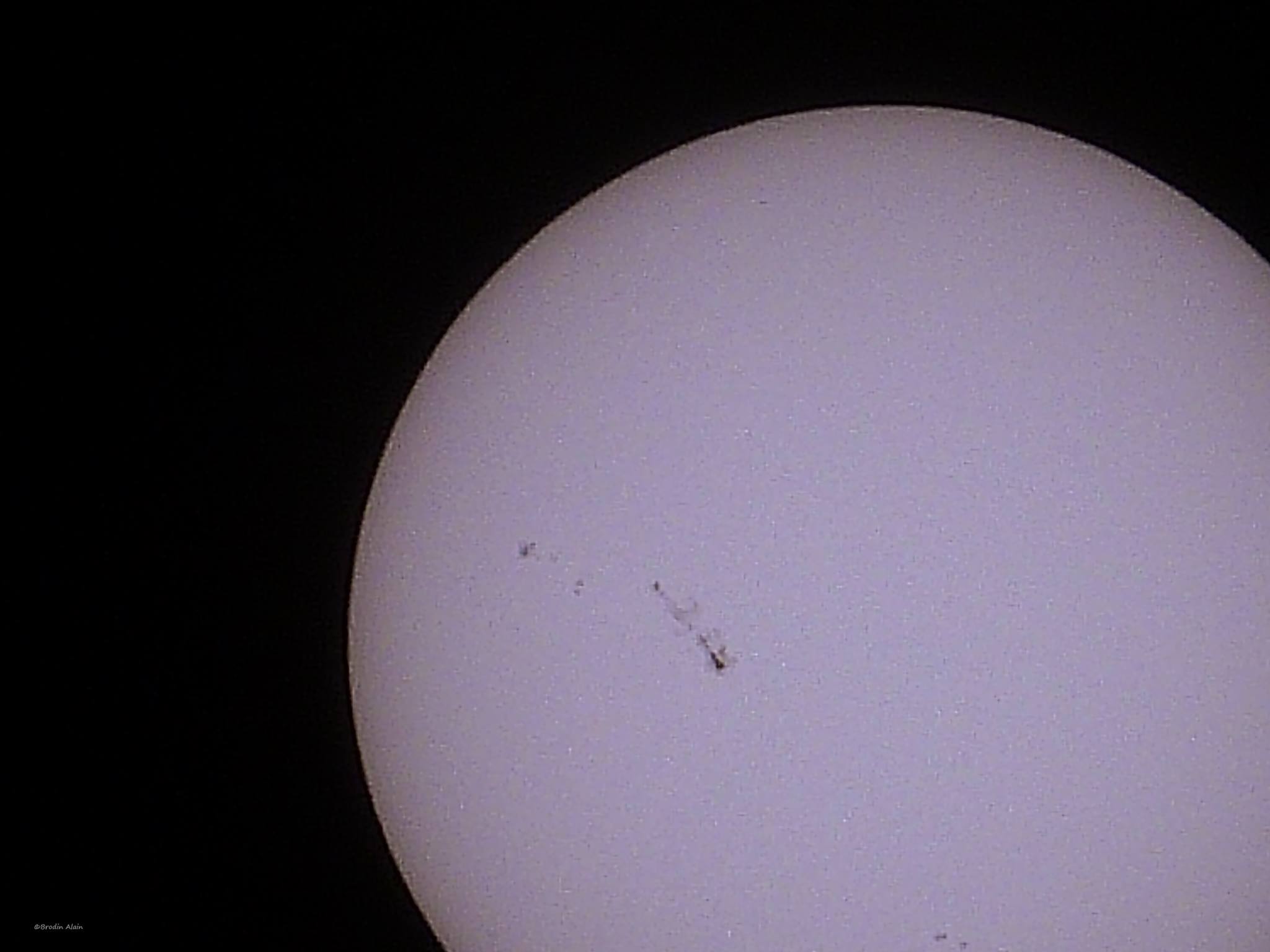
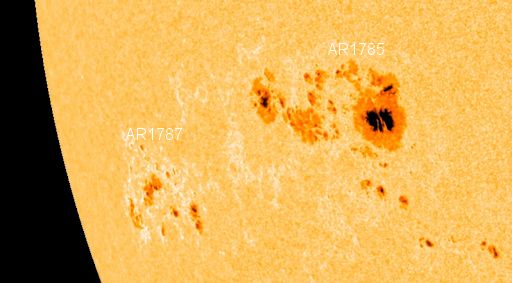
If you have a backyard telescope and a solar filter, you might be able to glimpse the largest of these sunspots, whose dark cores are as wide as Earth.
Bottom line: Large sunspot grouping AR1785-1787 emerged on sun’s southeastern limb several days ago. By July 6-7, 2013 it had lengthened to become some 11 times as wide as Earth.
Like what you read?
Subscribe and receive daily news delivered to your inbox.
More from
Deborah Byrd


Today in science: Neil Armstrong’s close call

1st American in space, 65 years ago today
Arcturus, brightest star of the northern sky
Happy May Day! Today is an astronomy holiday