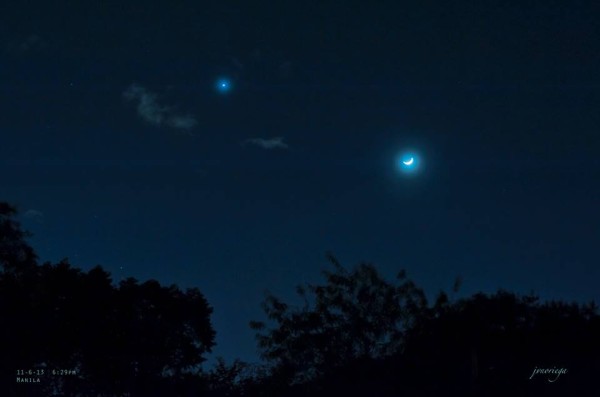
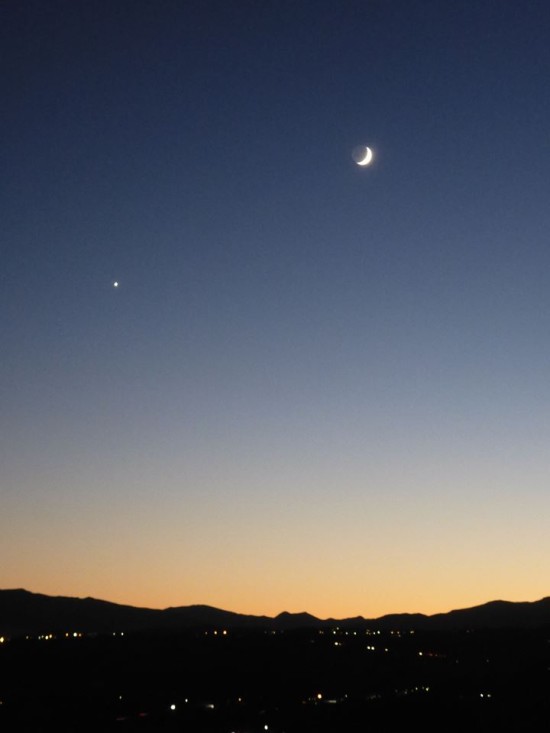
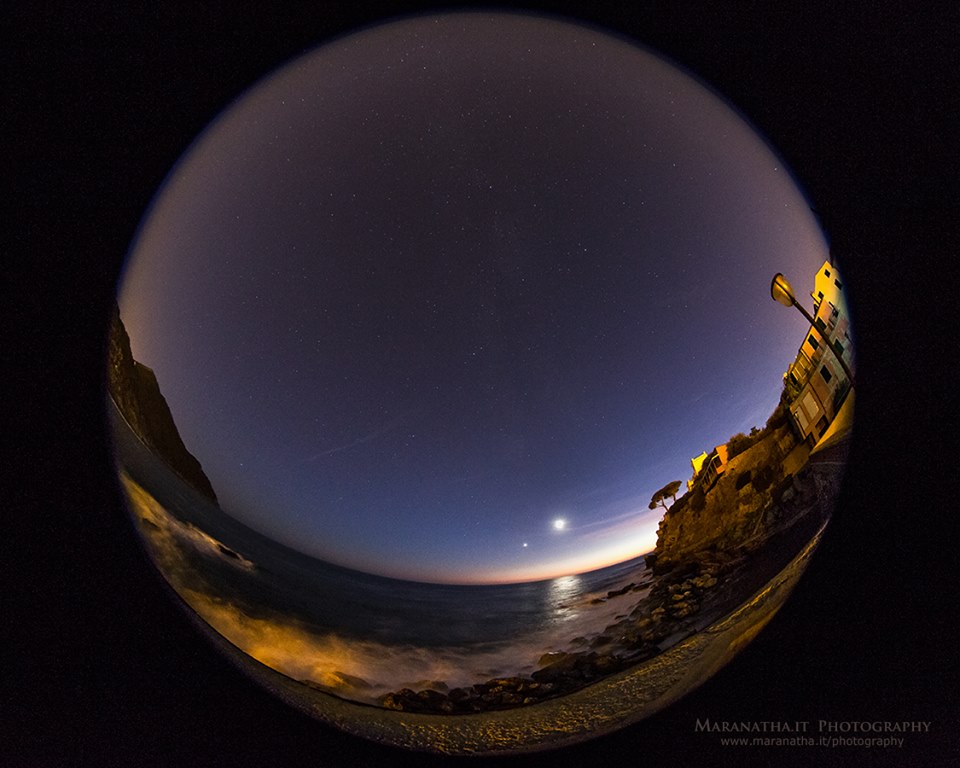
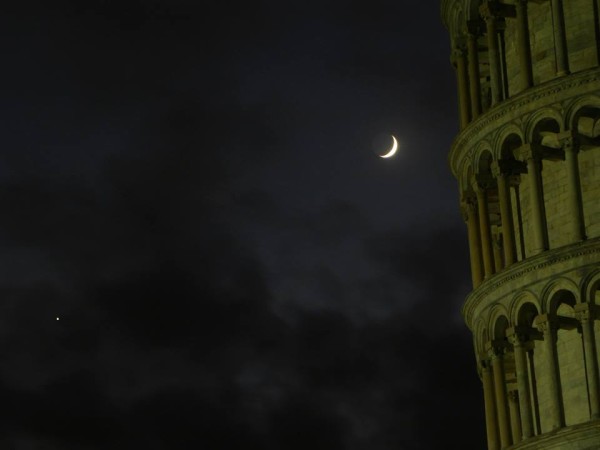
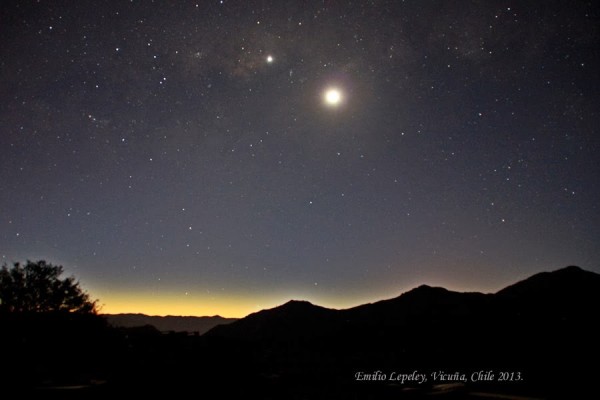
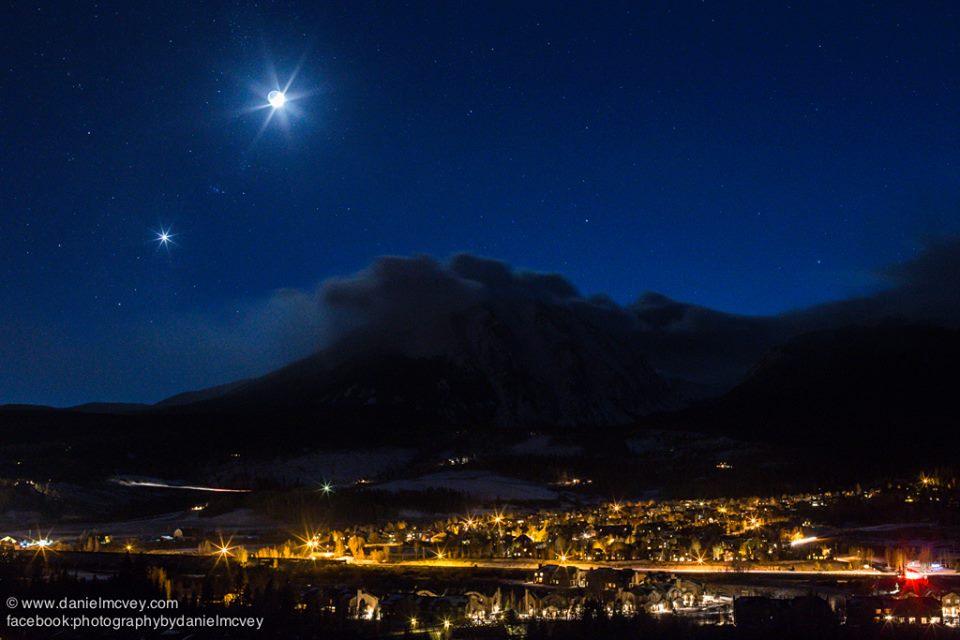
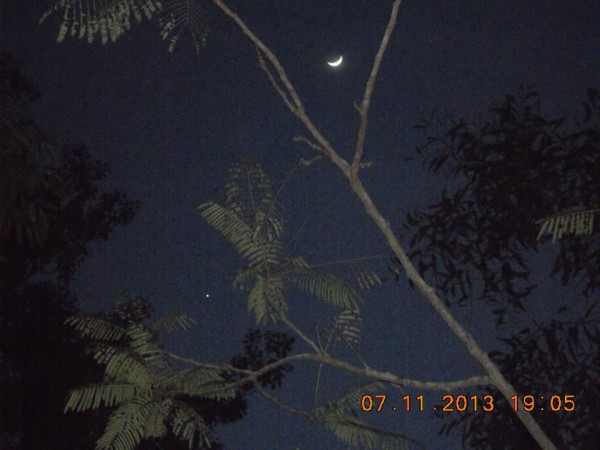
Early in the day of November 6, 2013, Jv Noriega in Manila captured this beautiful image of Venus and the moon. Note the moon’s location below Venus. As the day passes, the moon will move up past Venus. Why? Because the moon is moving in orbit around Earth. Thank you, Jv!Moon and Venus on November 6, 2013 as captured by Kat Baker in northern Italy. Thank you, Kat!Interesting view of last night’s moon and Venus – November 6, 2013 – over the Ligurian Sea, Sestri Levante, in Genoa, Italy. Photo by Maranatha.it Photography. View from Maranatha.it Photography here.Another cool photo from Italy of the moon and Venus on November 6 next to the Tower of Pisa. Photo by Giuseppe M.R. Petricca. Thank you, Giuseppe!Moon and Venus on November 6, 2013 as seen by Emilio Lepeley in Vicuna, Chile. The orientation here is different, because this photo is from the Southern Hemisphere. Thank you, Emilio!Venus and moon as seen on the U.S. East coast. Pamela Sam Withrow caught this image in Crawley, West Virginia on November 6. See how much the moon has moved? From the U.S. on November 6, the moon was far above Venus. Thank you, Pamela!Moon and Venus on November 6 as captured in Silverthorne, Colorado by Daniel McVey. Visit Photography by Daniel McVey here. Thank you, Daniel!November 6 moon and Venus as seen in twilight. See Venus in the lower left of the photo? Photo by Kim Sturch Ferguson in Simi Valley, California. Thank you, Kim!By the time we posted the November 6 photos, it was already the evening of November 7 in Asia. As you can see, the moon is now moving higher in the sky, away from Venus. Photo from Guwan Elder Panbil at Villa Batam in Batam, Indonesia. Thank you, Guwan!
Deborah Byrd (asteroid 3505 Byrd) helps edit EarthSky.org and is a frequent host of EarthSky videos. Deborah created the EarthSky radio series in 1991 and founded EarthSky.org in 1994. Prior to that, she had worked for the University of Texas McDonald Observatory since 1976, and created and produced their Star Date radio series. She has won a galaxy of awards from the broadcasting and science communities, including having an asteroid named in her honor in 1990, a Public Service Award from the National Science Board in 2003, and the Education Prize from the American Astronomical Society in 2020. A science communicator and educator since 1976, Byrd believes in science as a force for good in the world and a vital tool for the 21st century. "Being an EarthSky editor is like hosting a big global party for cool nature-lovers," she says.
Like what you read? Subscribe and receive daily news delivered to your inbox.
Thank you! Your submission has been received!
Oops! Something went wrong while submitting the form.