A daily update by email. Science news, great photos, sky alerts.
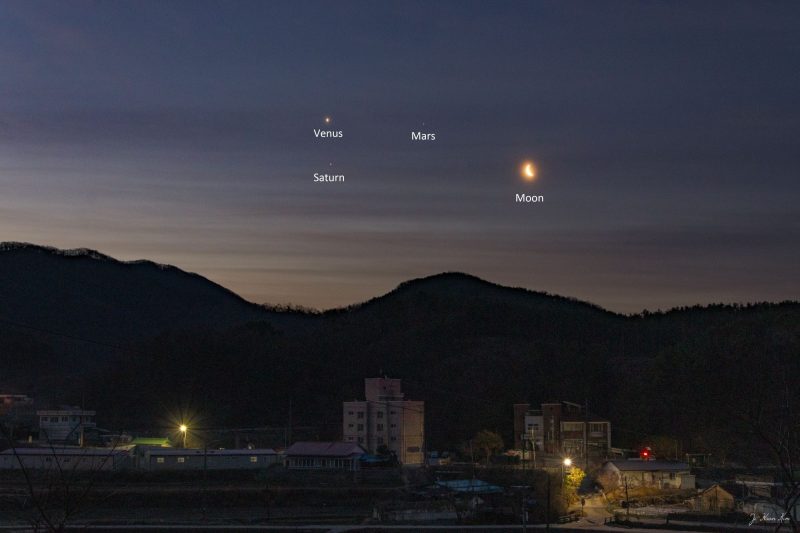
Have you seen the morning planets parade? The moon joined forces with Venus and Jupiter to put on a great show. Mercury, Uranus and Neptune were there too!
In late March of 2022, the dawn sky put on a spectular show of morning planets and the waning moon. See EarthSky community members' photos here.
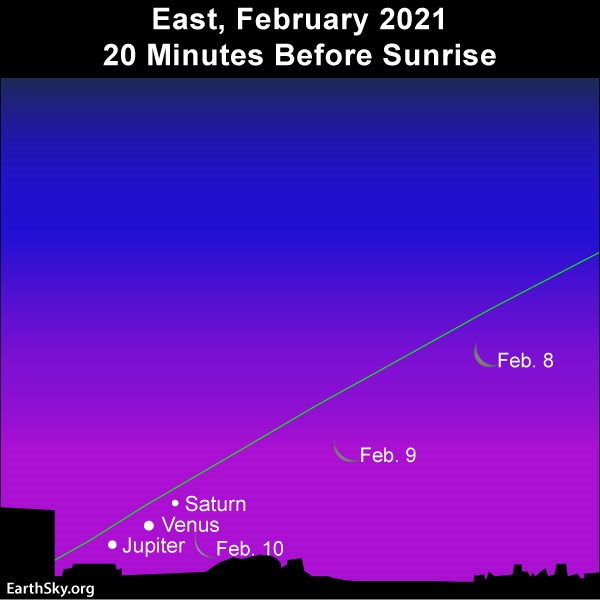
Before sunrise on February 8, 9 and 10, 2021, the old moon might guide you to 3 morning planets: Venus, Jupiter and Saturn. Fair warning. It won't be easy to spot the planets so near the sunrise glare!
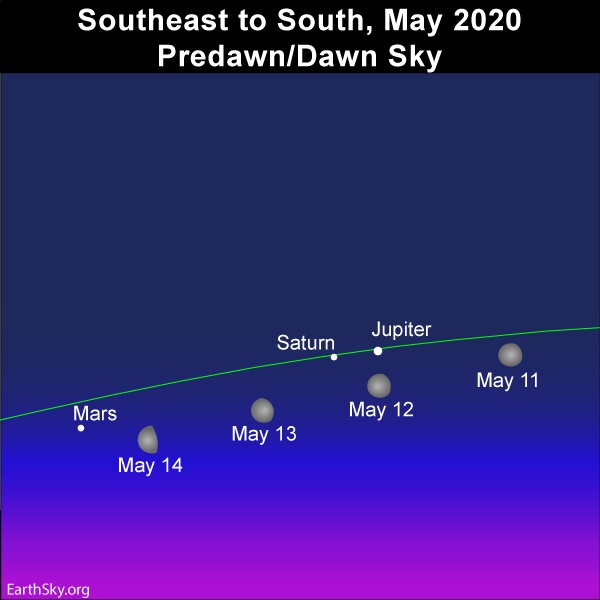
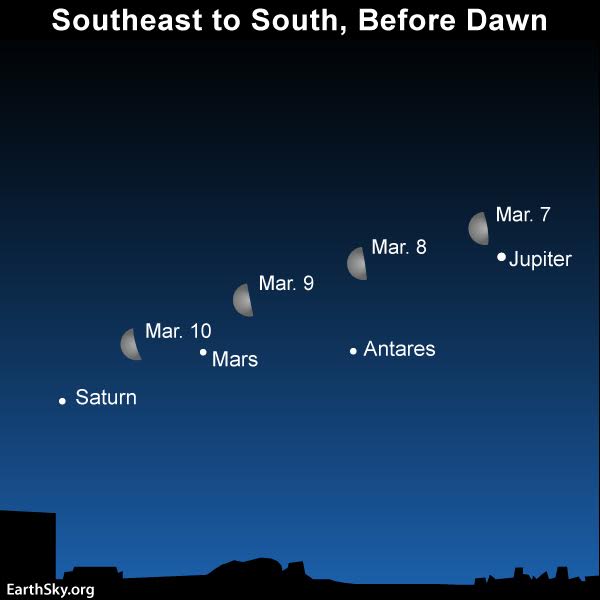
On the mornings of May 11, 12, 13 and 14, 2020, the waning moon will be sweeping past Jupiter, Saturn and finally Mars in the early morning sky. Great time to get acquainted!
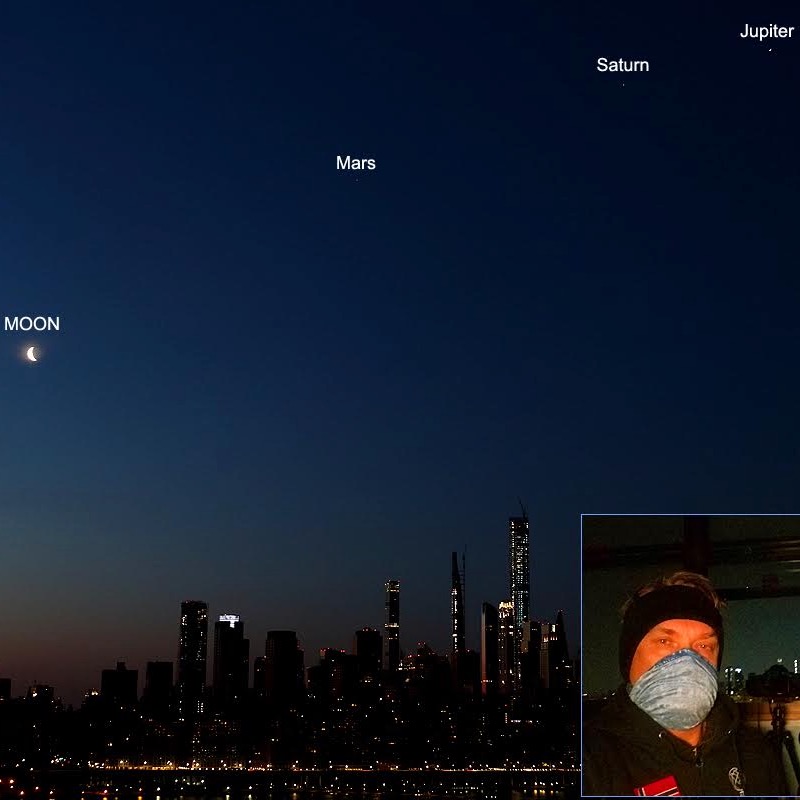
Photos from the EarthSky community of the moon's sweep past a trio of bright planets - red Mars, golden Saturn and bright Jupiter - over this past week.
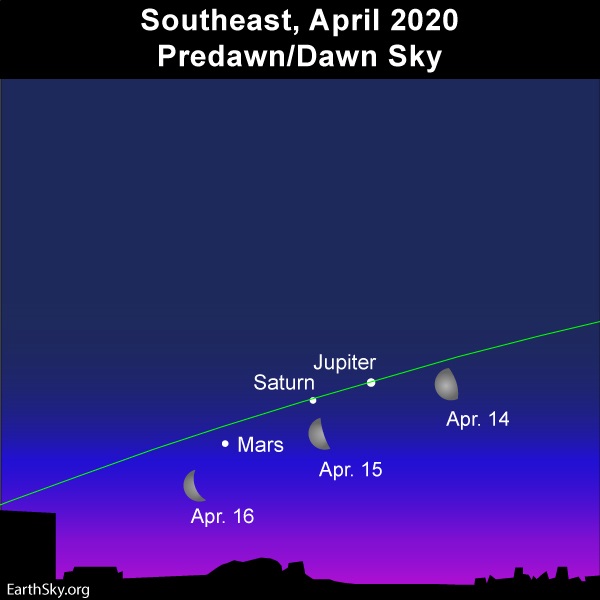
Before daybreak these next several mornings - April 14, 15 and 16, 2020 - watch for the moon to sweep near Mars, Saturn and Jupiter. All 3 planets are bright and easy to spot. They make a little line in the predaw sky.
The moon has swept past the planets that are up shortly before sunup this week. The EarthSky community caught the early morning sky scenes.
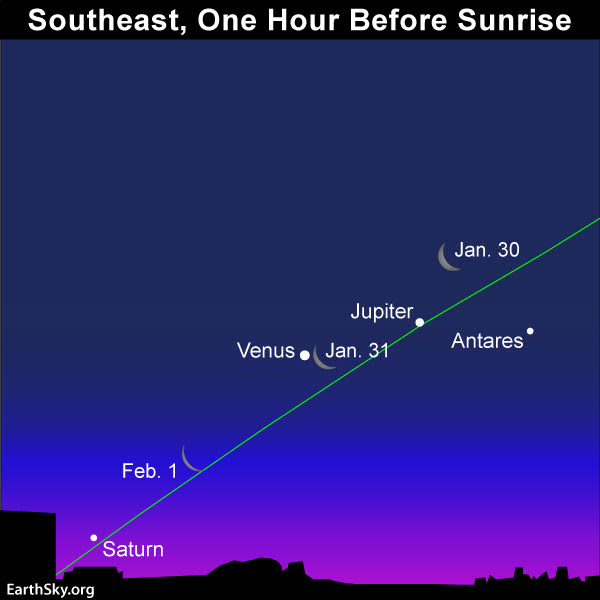
The brilliant planets Jupiter and Venus - and fainter Saturn, which is also closer to the sunrise horizon - will all be passed by the moon in late January and early February, 2019.
The waning moon has now swept past all 3 bright planets in the predawn sky. Photos here from the EarthSky community.
The moon has now swept past Jupiter and is headed for Mars, then Saturn. Don't miss them!
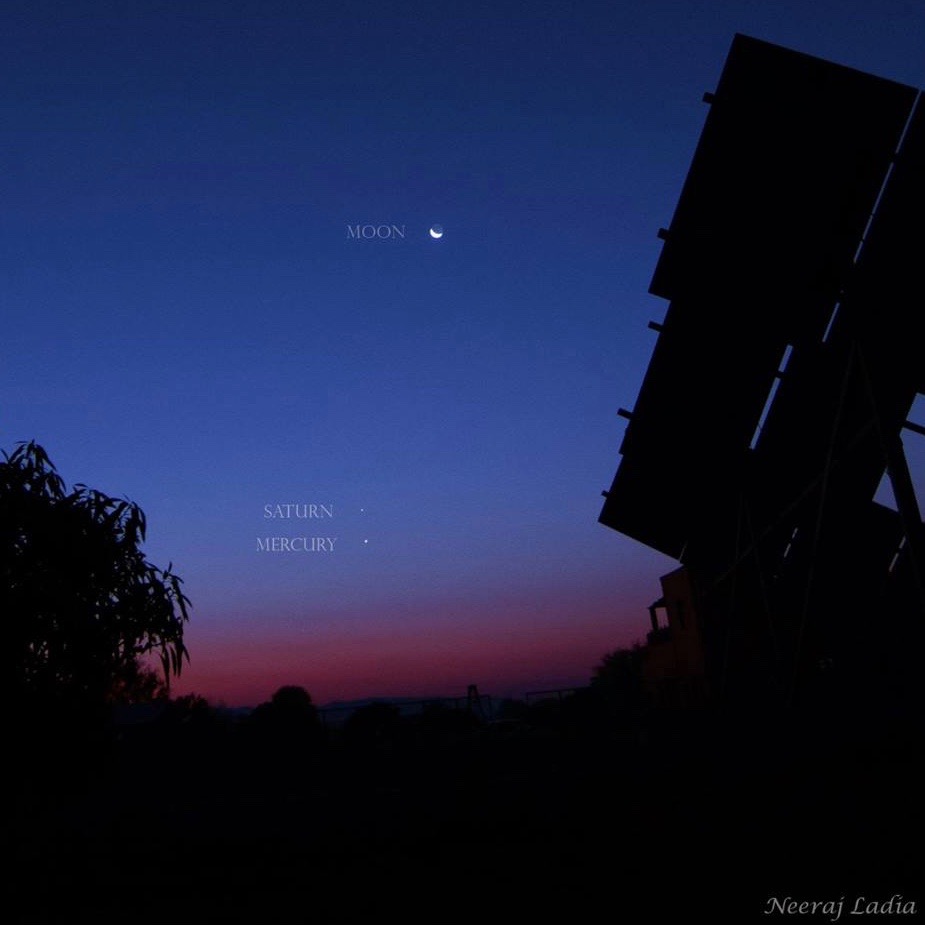
On Sunday morning, Jupiter and Mars were half a moon-diameter apart. Now the moon is sweeping past. Plus Mercury and Saturn are in conjunction this weekend. Photos here.
The planets are still striking before dawn in late November, 2015.
5 planets align on June mornings. But only two of them - Jupiter and Saturn - are easy to see. Learn more about the planetary lineup here.
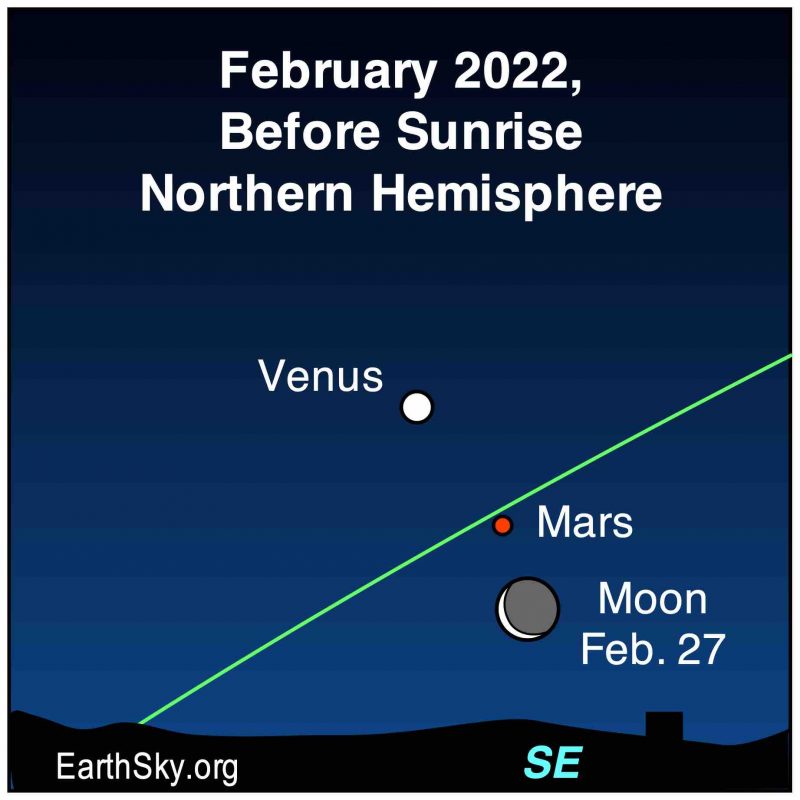
Early risers can spot pairs of planets and the moon on the mornings of February 27 and 28, 2022. Look in the sunrise direction, while it's still dark.
Visible planets and night sky guide. This evening, the crescent moon hangs between between Jupiter and the twin stars of Gemini, Castor and Pollux.
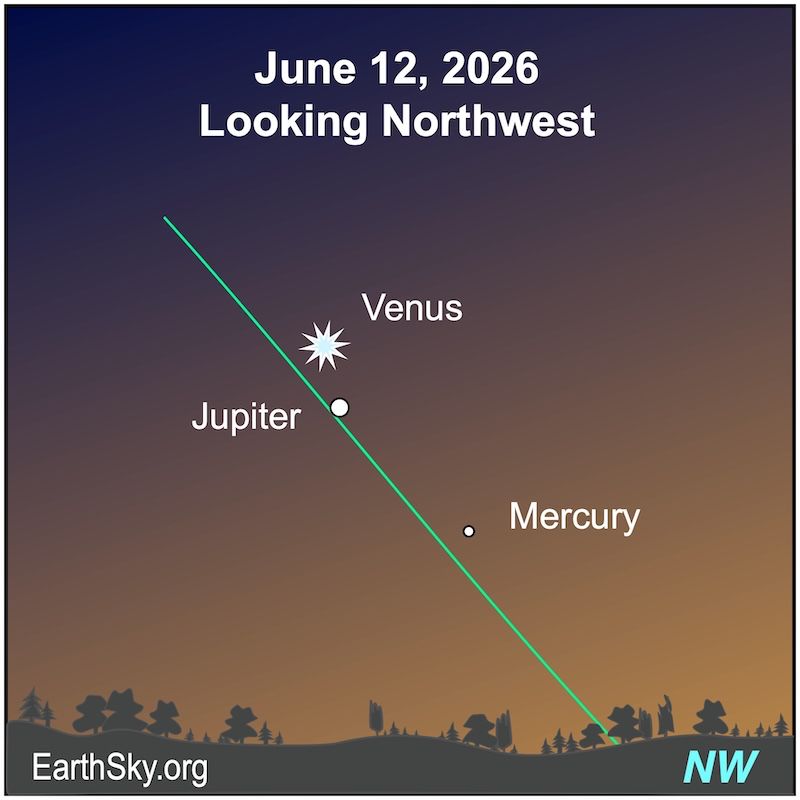
Mercury will reach its greatest elongation - greatest distance from the sun - on April 3, 2026. Look east at dawn. It'll disappear by late April.
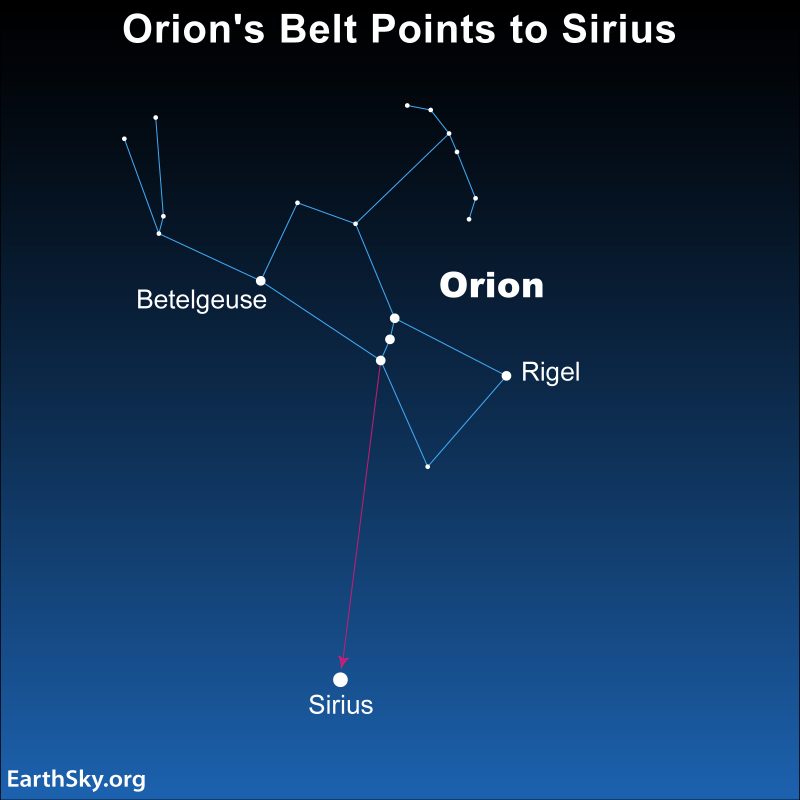
Sirius is the sky's brightest star. But sometimes bright planets outshine it. Orion's Belt is your ticket to identifying Sirius.
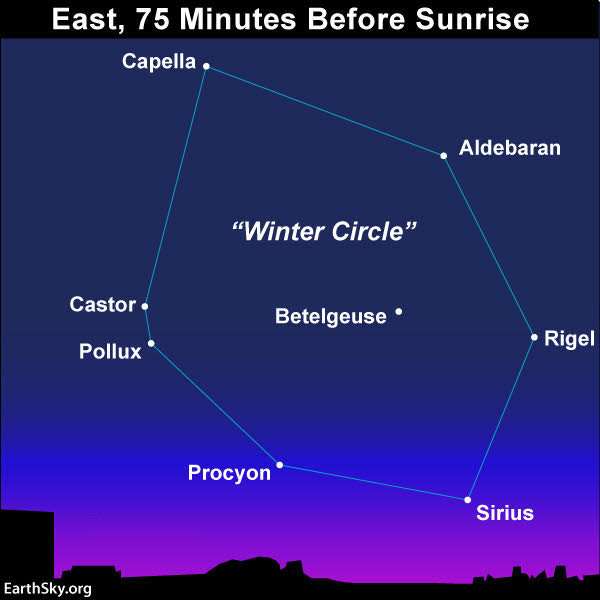
The majestic Winter Circle isn't a constellation. It's an asterism, a giant circle - or hexagon - figure made up of bright stars from several constellations.
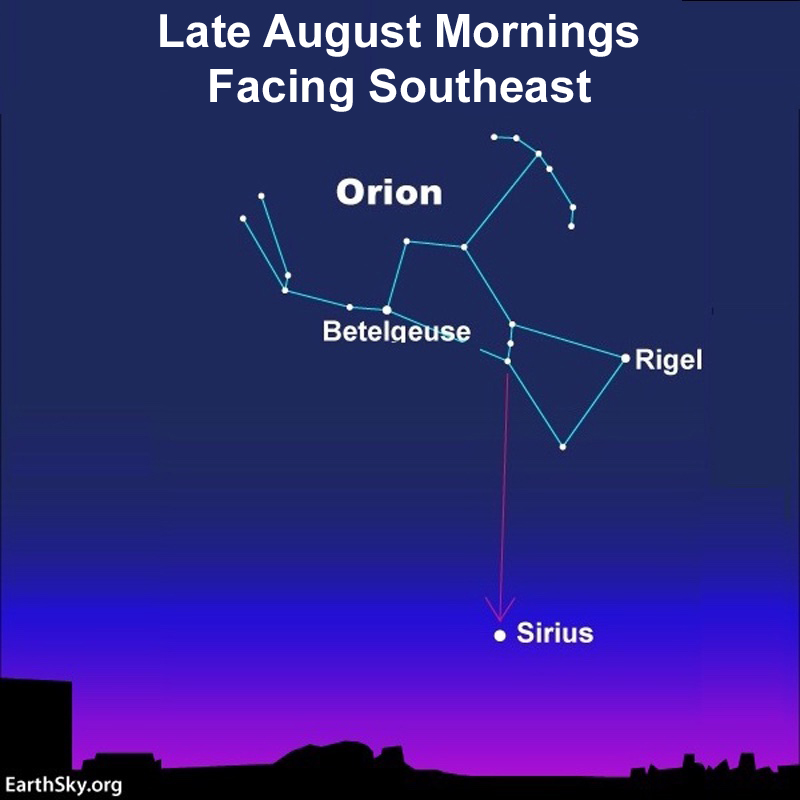
A sign of the changing season is the return of Sirius before sunup. Want to make sure you've spotted Sirius? The 3 stars in Orion's Belt point to it.
Did you see a smiley face moon on April 25, 2025? Get accurate information here and check out community photos of the triple conjunction.
EarthSky Newsletter
Nearly half a million daily subscribers love our newsletter. What are you waiting for? Sign up today!
Join now to receive free daily science news delivered straight to your email.