A daily update by email. Science news, great photos, sky alerts.
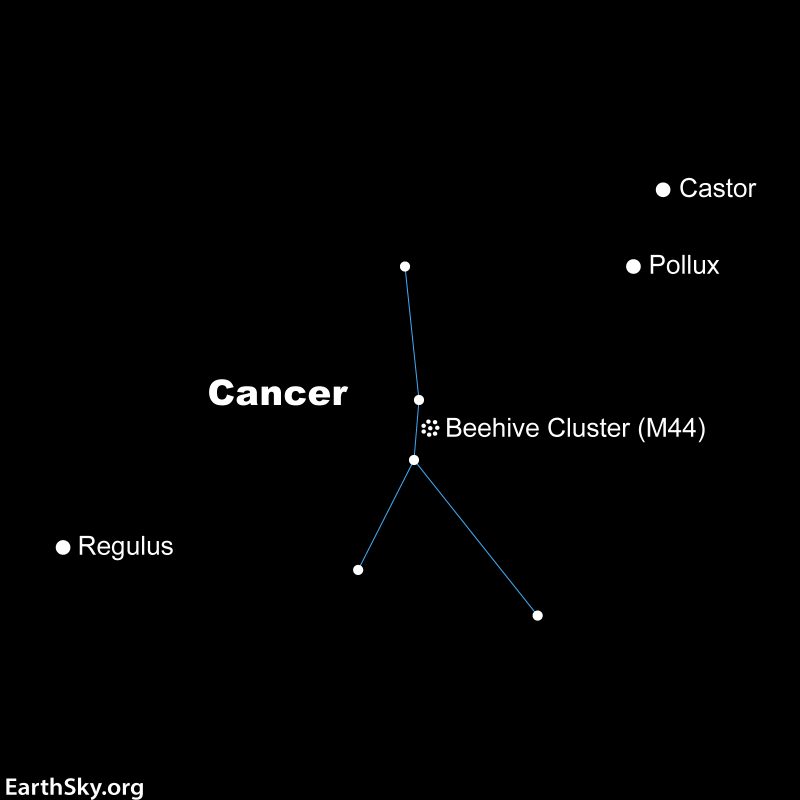
Cancer the Crab is one of the 12 constellations of the zodiac. Learn how to find it in your sky, plus learn about its star cluster, mythology and more.
The Beehive Cluster is an open star cluster that lies near the center of the constellation Cancer the Crab. It goes by many names, including Praesepe and M44.
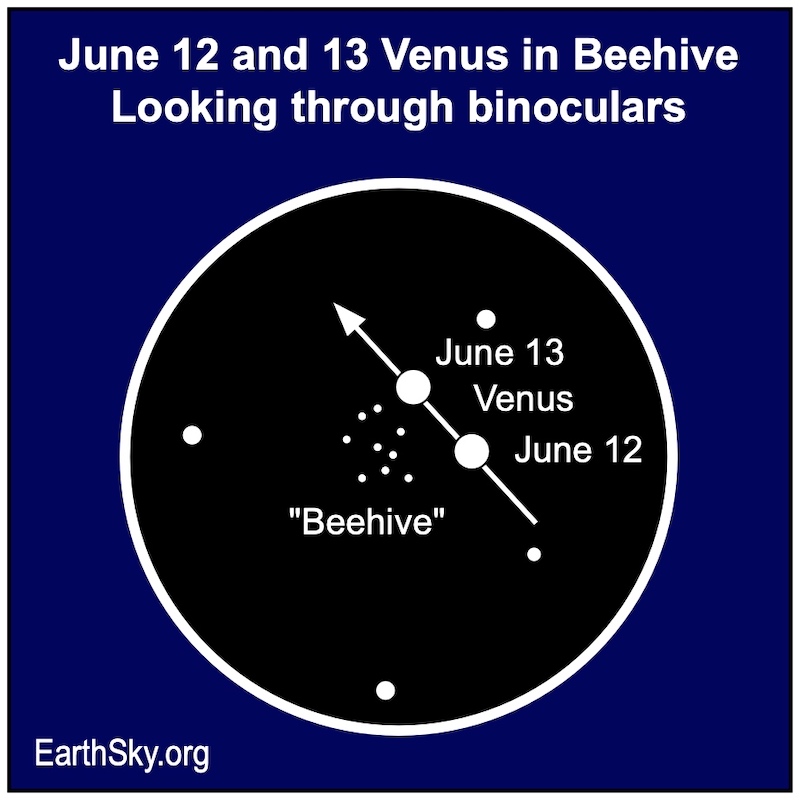
Spot Venus and the Beehive star cluster together on June 12 and 13, 2023. Use binoculars to get a good view of the starry cluster and dazzling Venus.
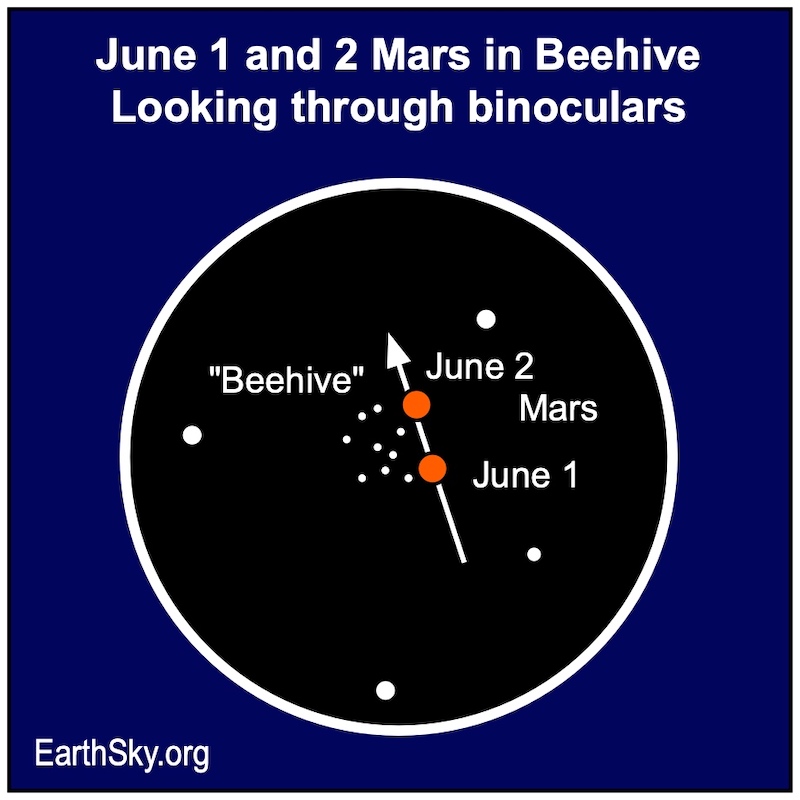
Spot Mars and the Beehive cluster together on June 1 and 2, 2023. Use binoculars to see the starry cluster making a sparkling background for the red planet.
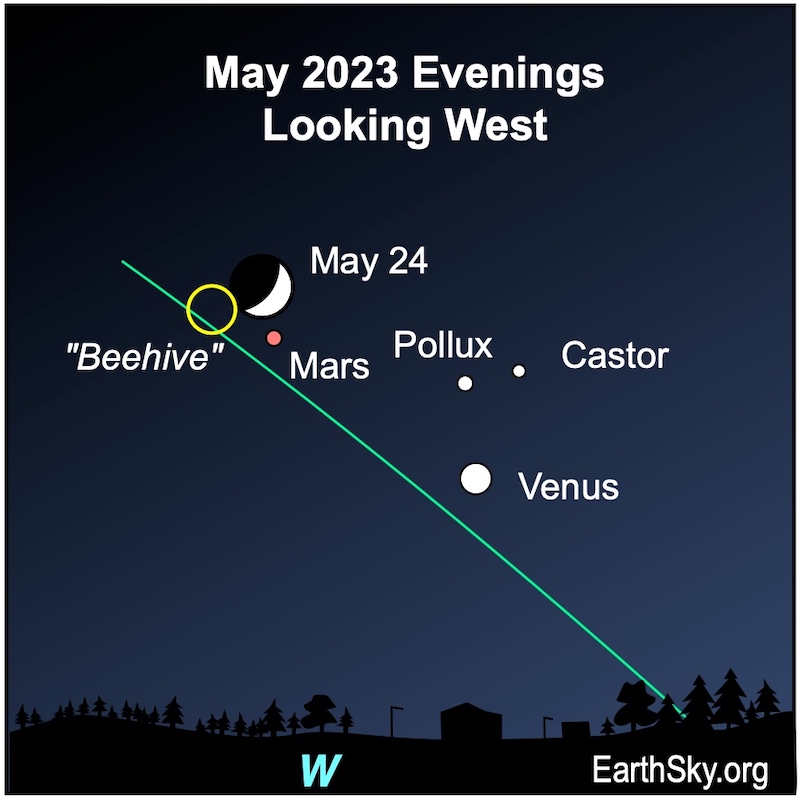
Watch for the waxing crescent moon near Venus, Castor, Pollux, Mars, and the Beehive star cluster on the evening of May 24, 2023. Beautiful!
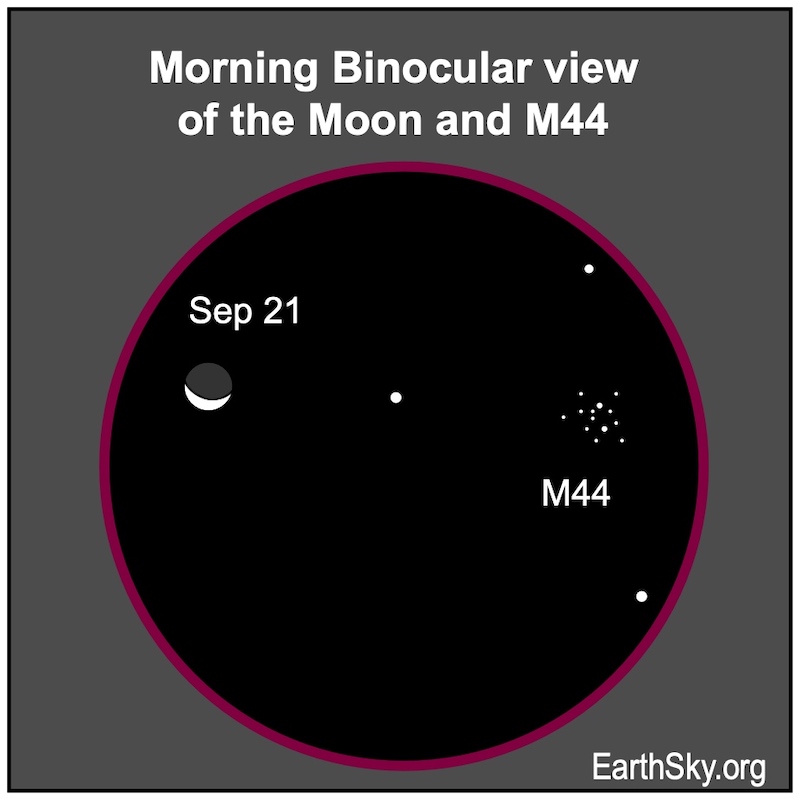
You can see the Beehive Cluster, M44, on the morning of September 21, 2022. The waning crescent moon will fit in the same binocular field of view.
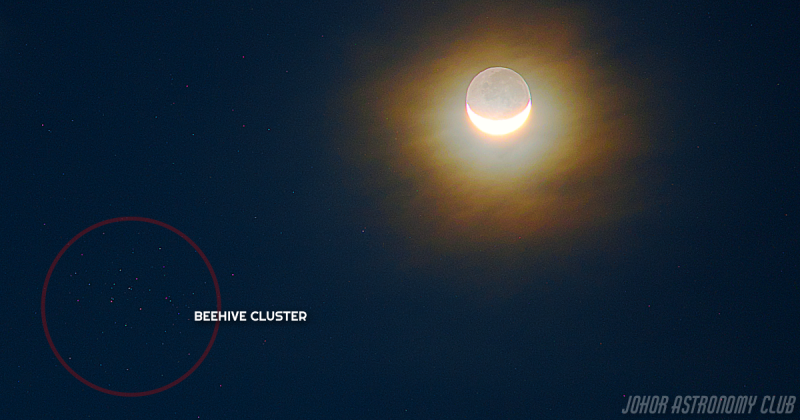
Photographers on opposite sides of Earth captured images of the moon and the Beehive star cluster as they paired up in mid-June 2021.
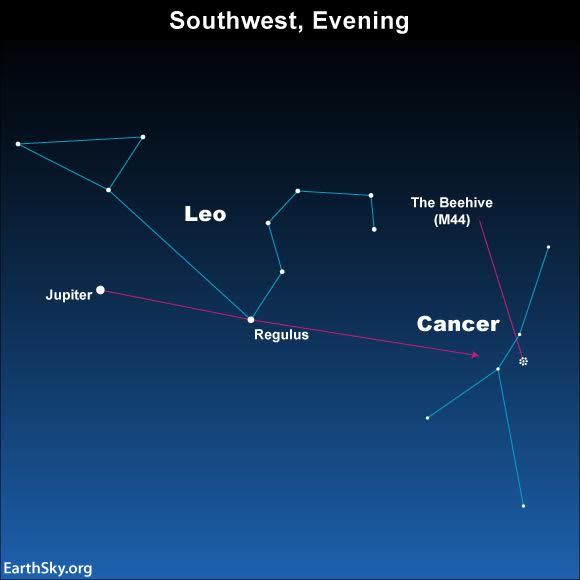
Look for Jupiter tonight, and note its location. Then - when the moon drops out of the evening sky - use Jupiter to find the famous Beehive star cluster.
Use the planet Jupiter and the star Regulus to find the Beehive star cluster tonight and for many nights to come!
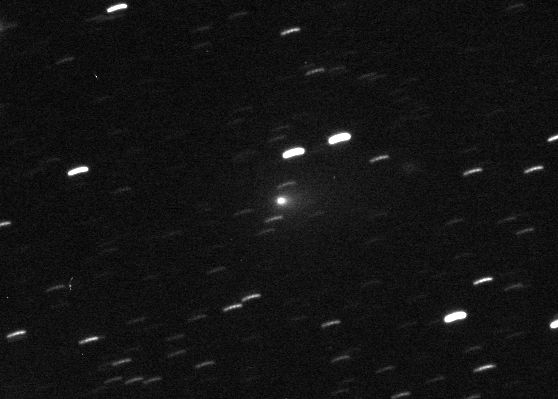
Comet Lovejoy has been visible with binoculars in the predawn sky, near the famous Beehive star cluster. How to spot it, plus best photos, here.
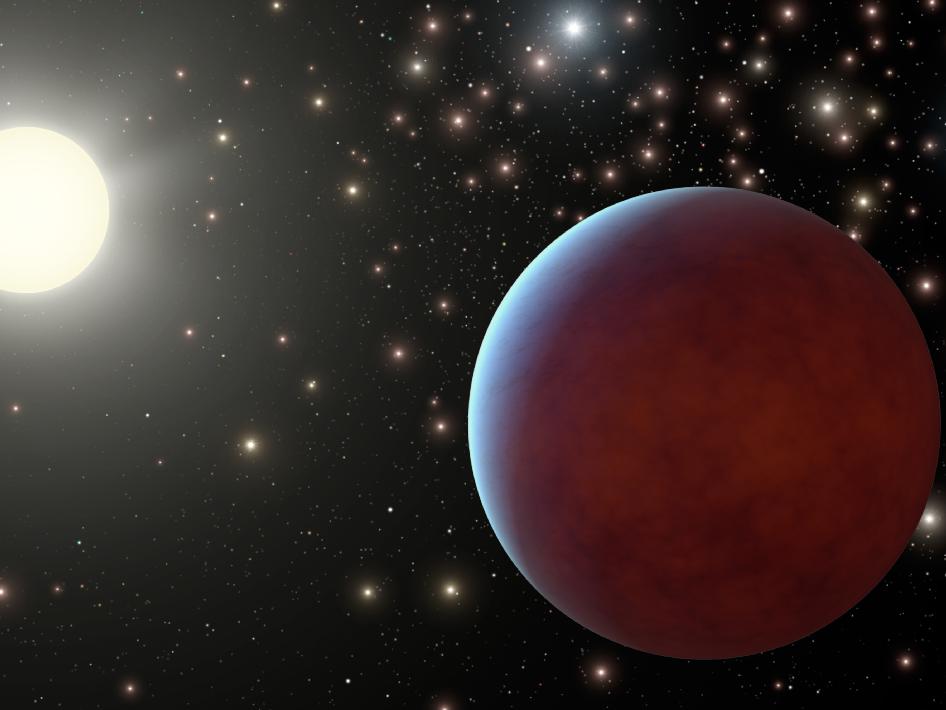
The planets in the Beehive are the first ever found around sun-like stars in a cluster of stars.
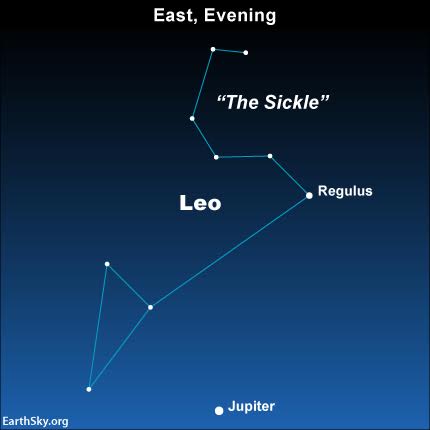
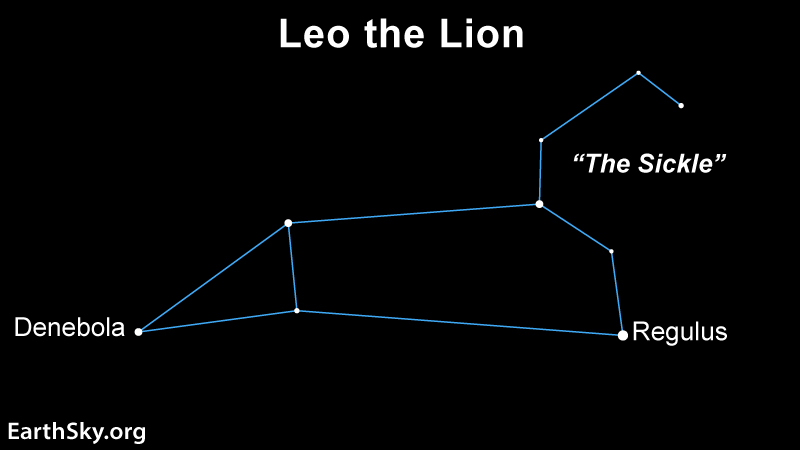
Leo the Lion - one of the zodiacal constellations - is a prominent fixture from April through June in the evening sky. It’s easy to spot by finding the Sickle.
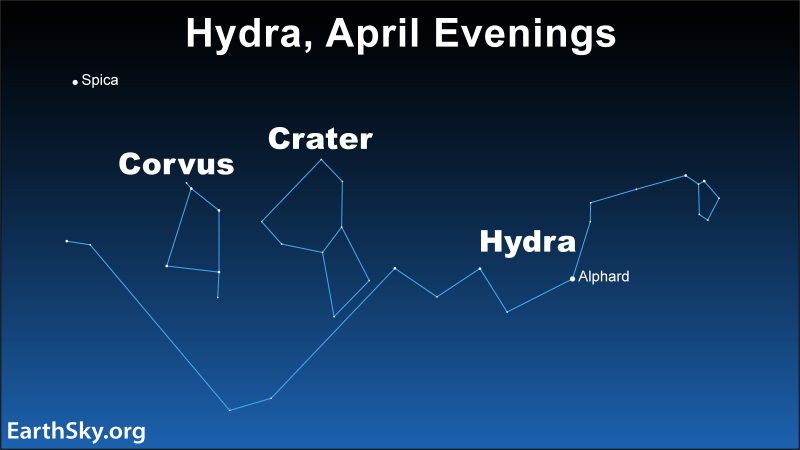
Hydra the Water Snake is the largest of the 88 constellations. On April evenings, the entire constellation snakes along the southern horizon.
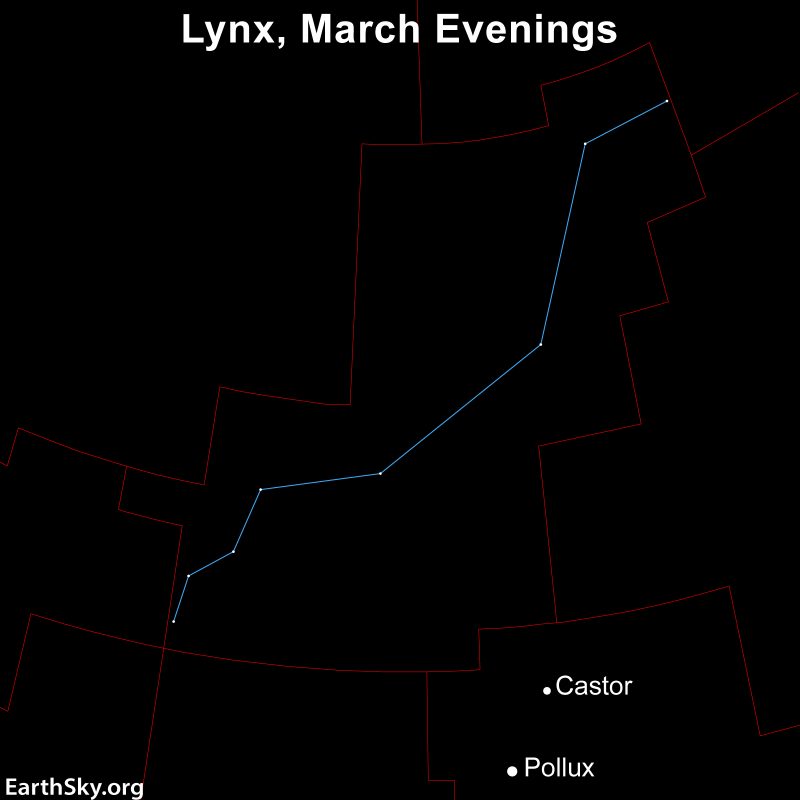
The constellation Lynx represents a wild cat and passes high overhead in March skies for the Northern Hemisphere. Learn its stars and deep-sky objects.
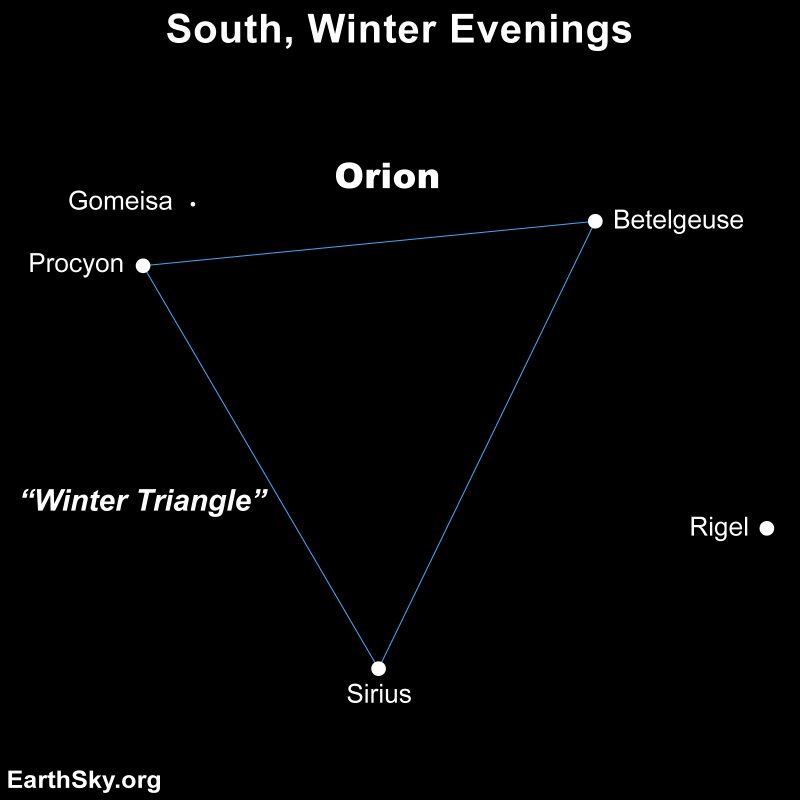
The Winter Triangle is a distinct pattern of stars in the night sky formed by 3 of the brightest stars: Sirius, Betelgeuse and Procyon.
The constellation Gemini the Twins is home to Castor and Pollux. Learn more about these bright stars, visible on northern winter nights.
The best targets for binoculars in the night sky are the moon, planets, star clusters and nebulae. You can even catch the smudge of distant galaxies in them.
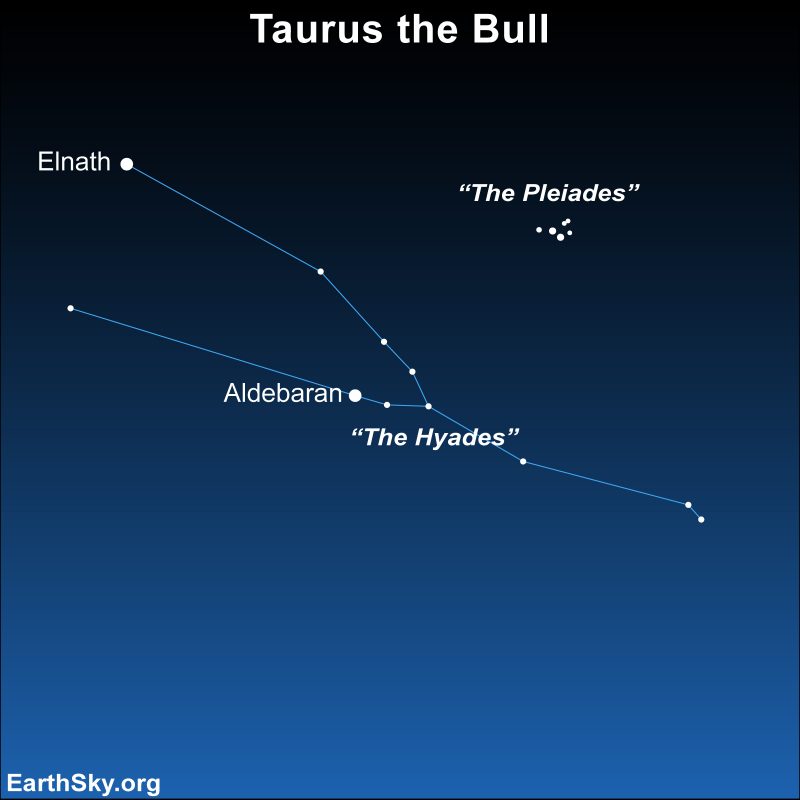
Look for the V-shape Hyades star cluster in Taurus the Bull in the evening sky. It represents the Face of the Bull and it's beautiful in binoculars.
Deep-sky objects - including bright and dark nebulae, star clusters and distant galaxies - are favorite targets for amateur stargazers.
New observations of the Butterfly nebula reveal a dust torus, energetic jets, and PAH formation, providing insight into how rocky planets like Earth assemble.