Sign Up for Our Amazing Newsletter!

A daily update by email. Science news, great photos, sky alerts.

Your email address will only be used for EarthSky content.
Privacy Policy
Thank you! Your submission has been received!
Oops! Something went wrong while submitting the form.

EarthSky
One Earth. One Sky. EarthSky.
Tonight Space Sun Earth Human Best Places to Stargaze EarthSky Community Photos About Store Donate Contact Us
Subscribe
Tonight
Tonight Brightest Stars Astronomy Essentials Moon Phases Clusters Nebulae Galaxies Favorite Star Patterns Constellations
Astronomy Essentials
Tonight
Visible planets and night sky guide for May
Marcy Curran
May 2, 2026
Moon Phases
May 1 full moon is a Flower Moon and micromoon
John Jardine Goss
May 1, 2026
Astronomy Essentials
Human World
Happy May Day! Today is an astronomy holiday
Deborah Byrd
May 1, 2026
Space
Sun
Earth
Human
Human Spaceflight
Best Places to Stargaze
Community Photos
View Community Photos Trending Submit a Photo
About
Store
Donate
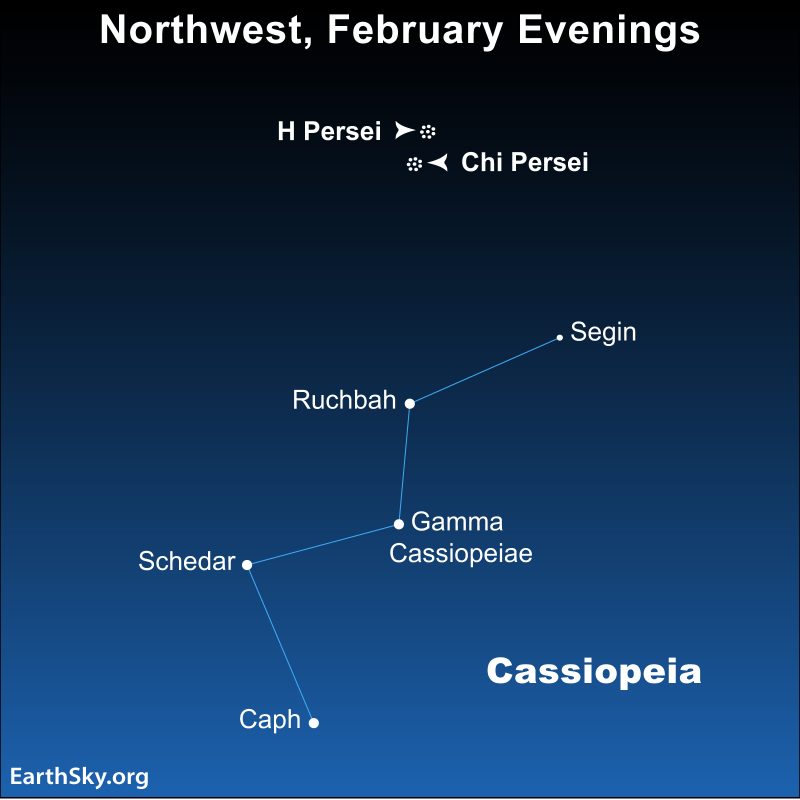
Star chart: 5 labeled stars in the shape of a W and two tiny, labeled clusters above, on blue background.

Cassiopeia the Queen reigns in the February sky

Cassiopeia the Queen is an easy-to-find constellation. It has the shape of a W or M. Look in the northwest, on the evenings, in late winter and early spring.

Read More
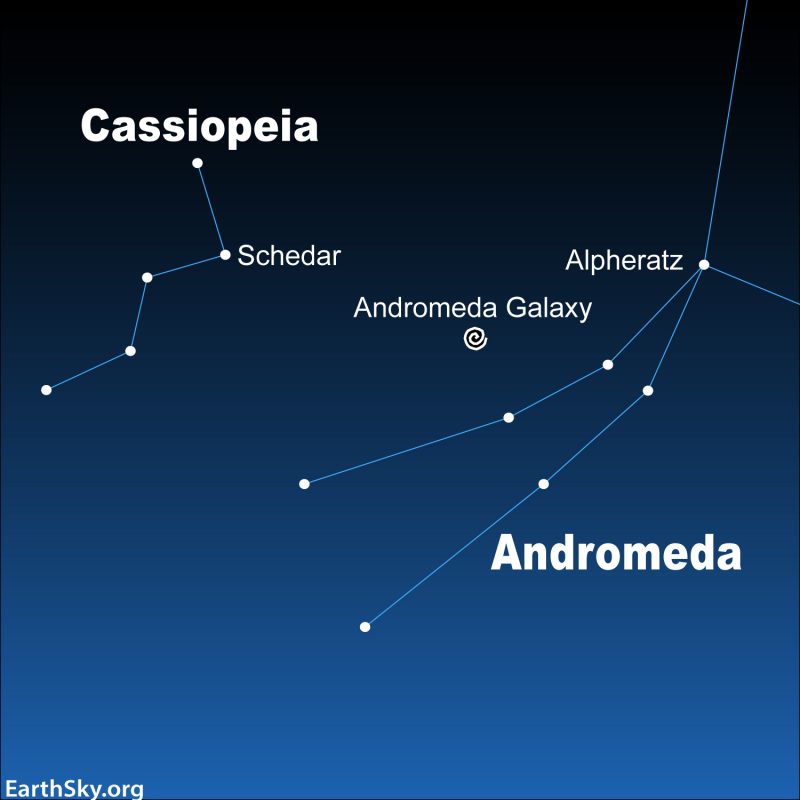
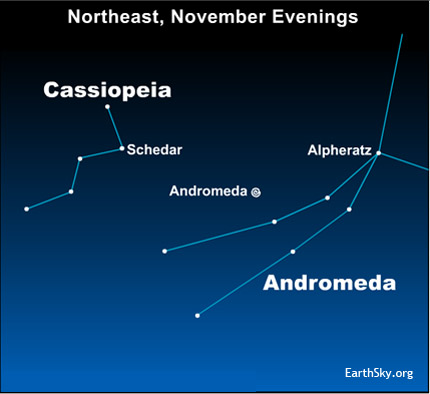
Star chart of constellations Cassiopeia and Andromeda with labeled Andromeda galaxy between them.

Find the Andromeda Galaxy using Cassiopeia

Leave the city behind this weekend, and go galaxy-hunting! Cassiopeia - one of the easiest constellations to identify - points the way to the Andromeda Galaxy.

Read More
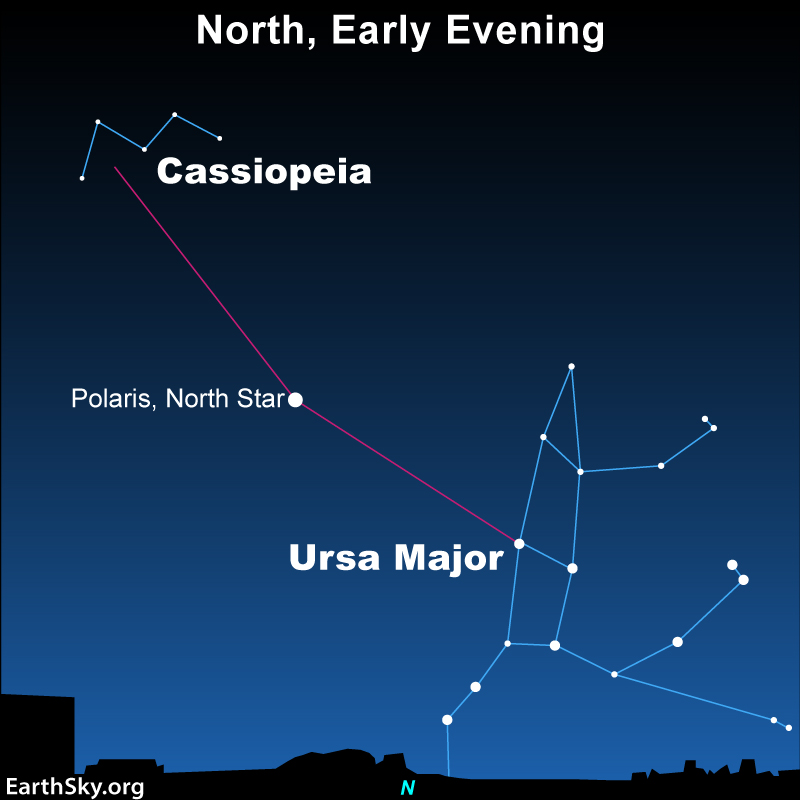
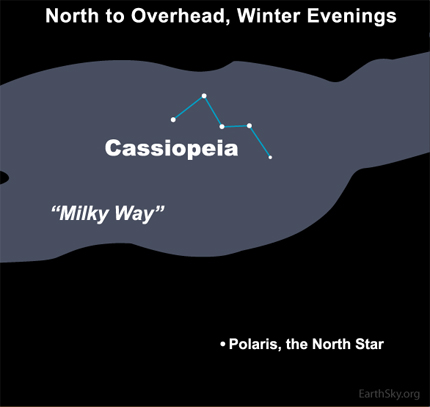
Sky chart: 2 labeled constellations with a purple line from each leading to Polaris in the middle.

Cassiopeia and the Big Dipper in January skies

Watch the celestial clock and its 2 great big hour hands - Cassiopeia and the Big Dipper - as they swing around the North Star each and every night!

Read More
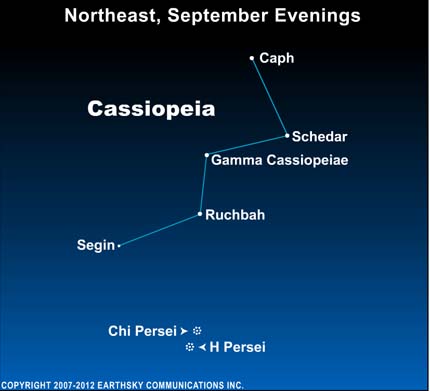
Star map of Cassiopeia the Queen.

Cassiopeia the Queen ascends in September and October

Cassiopeia the Queen is an easy-to-find constellation. It has the shape of a W or M. Look in the north-northeast sky on September and October evenings.

Read More
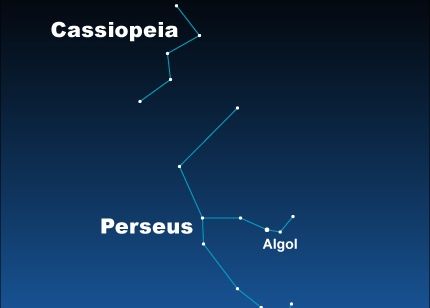
Star chart showing Cassiopeia and Perseus.

Cassiopeia and Perseus on October evenings

Cassiopeia and Perseus are neighbors in the fall sky. Use Cassiopeia's distinctive W or M shape to locate the dimmer Perseus on autumn and winter evenings.

Read More
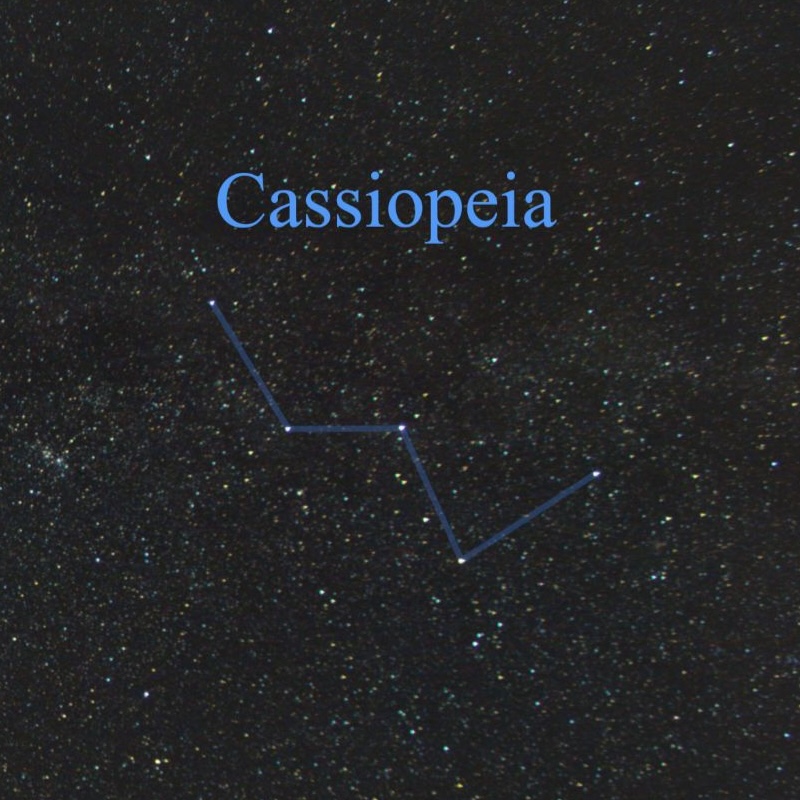
Photo of Cassiopeia with the constellation lines drawn in to show W shape.

Cassiopeia the Queen is overhead on autumn evenings

Spot the constellation Cassiopeia the Queen somewhere in the northern sky during much of the year, and throughout much of the night. It's high overhead now.

Read More

Cassiopeia, Queen of the north

Cassiopeia - sometimes called The Lady of the Chair - is famous for having the shape of a telltale W or M.

Read More

Cassiopeia to Andromeda galaxy

One half of the W of Cassiopeia is more deeply notched than the other half. This deeper V is your "arrow" in the sky, pointing to the Andromeda galaxy.

Read More

Use Cassiopeia to find Andromeda galaxy

Many use the constellation Cassiopedia - which is easy to find, shaped like an M or W - as a jumping off point for locating the near-nearest large galaxy to our Milky Way.

Read More

Watch for Cassiopeia the Queen

Find the constellation Cassiopeia the Queen in the northeastern sky after sundown. Depending on your perspective look for the telltale shape W or M.

Read More

Meteor shower guide 2026: Up next … the Eta Aquariids

Up next is the Eta Aquariid meteor shower. Watch for them before dawn on May 5. Your 2026 meteor shower guide here.

Read More
A light blue sphere with a large disk around it siphoning off to a smaller sphere with disk and fountain.

Strange star mystery solved after 50 years

For 50 years, astronomers have puzzled over a strange star in Cassiopeia bright in X-rays. But new data from XRISM revealed the culprit: a hidden companion.

Read More
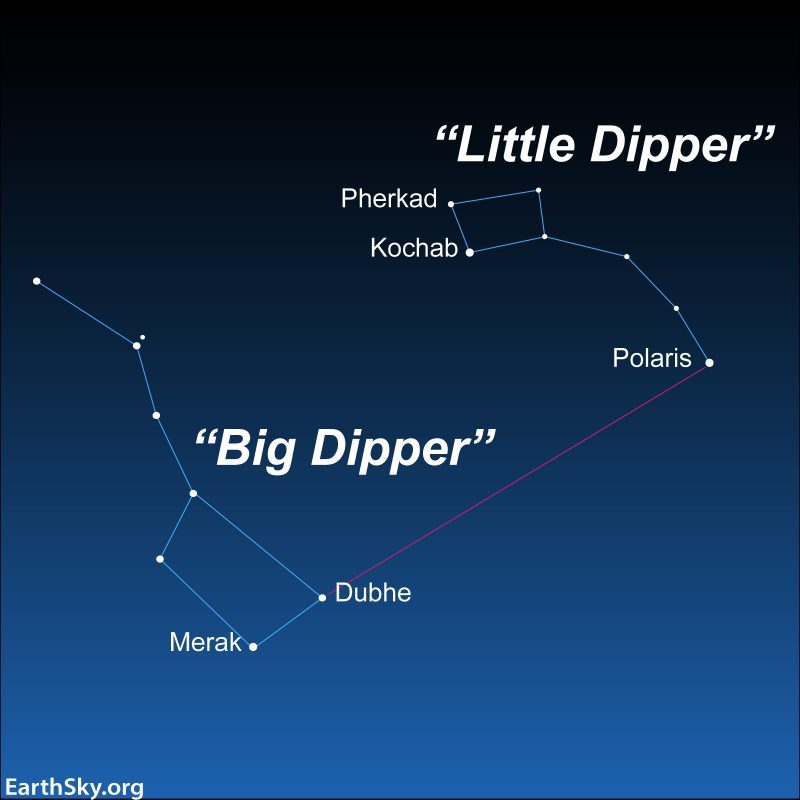
Sky chart linking 2 stars in the Big Dipper to Polaris with an arrow, with 5 stars labeled.

Use the Big Dipper to find Polaris, the North Star

Do you know how to find the North Star? The 2 outer stars in the bowl of the Big Dipper point to Polaris, the North Star. It's quick and easy!

Read More
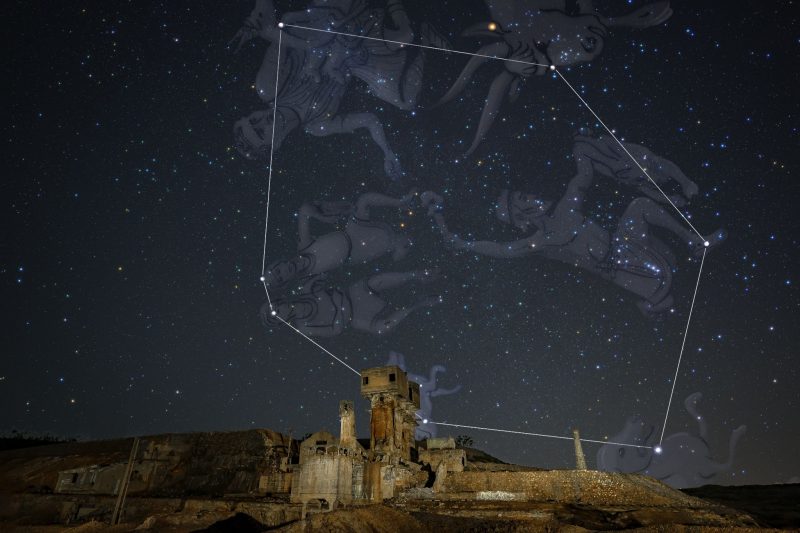
Night sky scene with hexagon and figures of constellation superimposed over stars.

What’s a constellation? What’s an asterism?

Constellations and asterisms are patterns of stars. Some asterisms consist of stars from different constellations, and some are part of 1 constellation.

Read More
Silhouetted bare tree with claw-like branches and many thin, concentric colorful streaks creating circles behind it.

Circumpolar stars never rise or set and depend on latitude

Circumpolar stars stay above the horizon all hours of the day, every day of the year. Although you can’t see them, they’re up even in the daytime.

Read More
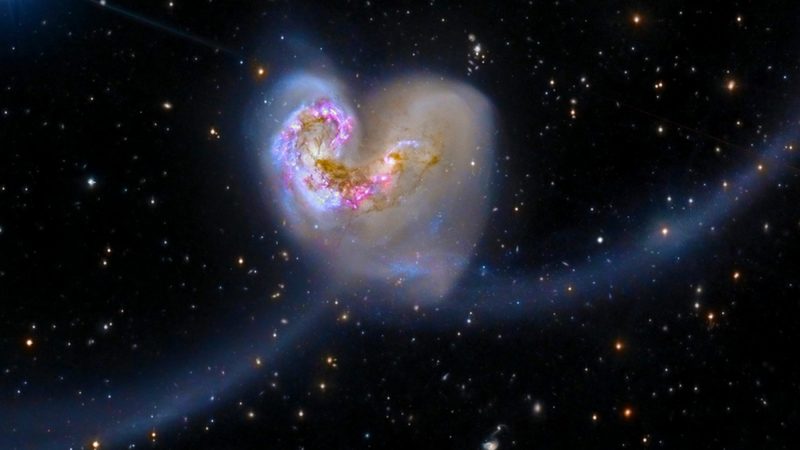
Two galaxies swirling together in a heart shape.

For you, Valentine. Heart photos from nature

This Valentine’s Day, we find so much to love in the many heart shapes right here on Earth and all the way out in remote spots of the universe.

Read More
Bright bluish line streaking through clouds near the stars of Cassiopeia. It is reflected in a body of water.

Spring fireball season is underway! Watch for them

Spring fireball season is now! The rate of fireballs (bright meteors) often goes up in the Northern Hemisphere by as much as 30% from February through April.

Read More
Telescopic image of a large, more than half-lit moon with distinct craters and darker blotches.

What are the best targets for binoculars?

The best targets for binoculars in the night sky are the moon, planets, star clusters and nebulae. You can even catch the smudge of distant galaxies in them.

Read More
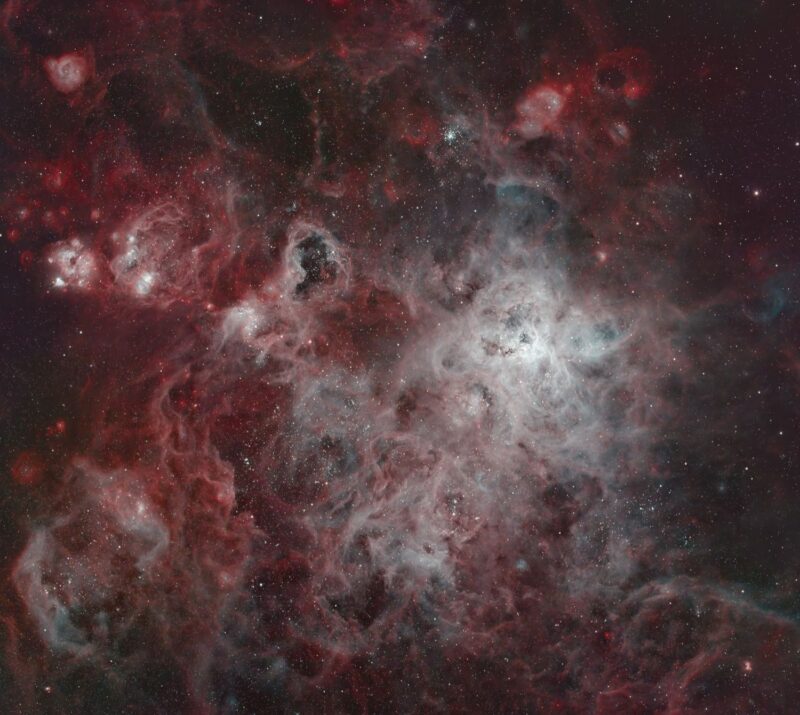
A complex structure of red and pink gas overlaid with dark nebulae, with numerous background stars.

See the best deep-sky photos of December 2025 here

Enjoy this gallery of deep-sky photos for December 2025 from our EarthSky community. If you have a great photo to share, send it in, too. We love to see them!

Read More
Lone person standing on top of rock, pointing towards the vivid cloudy Milky Way and the vast expanse of universe.

Best stargazing of 2026: Top events not to miss

Here's the best stargazing of 2026! Read about the top celestial events not to miss in the coming year, and mark them on your calendar.

Read More
EarthSky YouTube Channel
YouTube
Twitter
Facebook
Instagram
Store
Donate
© 2025-2029 Earthsky Communications Inc.
WEbsite by Milkyway.co
About
Contact Us
Terms & PRivacy