



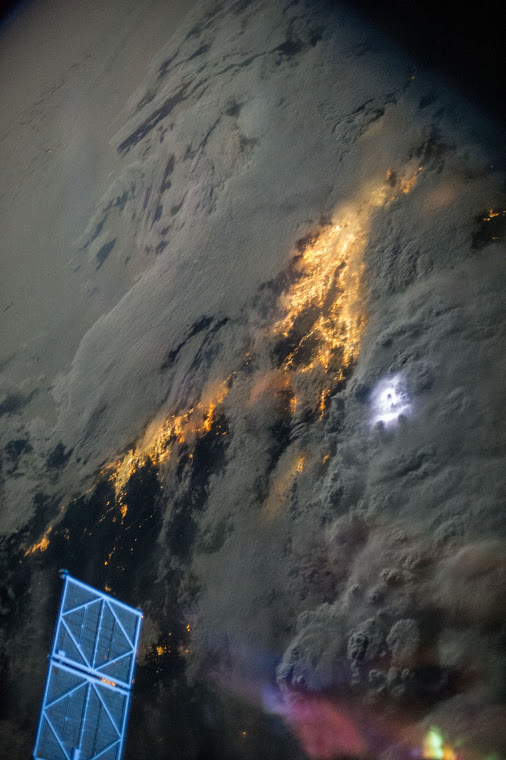
Researchers at NASA’s Marshall Space Flight Center in Huntsville, Alabama, began studying lightning from space in 1997, with a sophisticated piece of flight hardware called a Lightning Imaging Sensor launched into space as part of NASA’s Tropical Rainfall Measuring Mission (TRMM). The sensor had a three-year baseline mission and delivered data used to improve weather forecasts. It continues to operate successfully aboard the TRMM satellite today. Now these scientists are going to launch a second lightning sensor to space aboard a SpaceX rocket, this time to the International Space Station. The flight is scheduled for early 2016. Once mounted to ISS, the lightning sensor will have at least a two-year baseline mission.
Like what you read?
Subscribe and receive daily news delivered to your inbox.
Thank you! Your submission has been received!
Oops! Something went wrong while submitting the form.
More from
Deborah Byrd
View All


Visible planets and night sky guide for October

October 23, 2026
Cassiopeia and Perseus on October evenings
October 22, 2026
Orionid meteor shower 2026: All you need to know
October 20, 2026
See brightest star, Sirius, in your morning sky
October 20, 2026



