Was an ancient Amazon civilization home to millions?
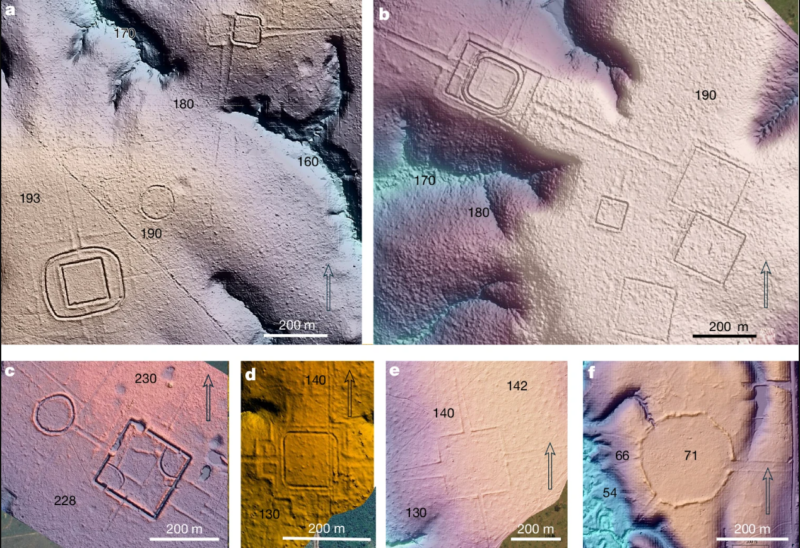
Researchers have used laser scanning in the Amazon to discover hundreds of ancient earthworks hidden in the jungle. Much of the Amazon is thickly covered in vegetation. But researchers from the University of Helsinki said on July 29, 2026, that using Light Detection and Ranging Imaging (lidar) helped them peer through forests to reveal earthworks created by people who lived here from 600 BCE to 850 CE. During this approximately 1,500 year time span, researchers said up to 3 million people might have lived in southwestern Amazonia.
The researchers published their peer-reviewed study on July 29, 2026, in the journal Nature.
Earthworks by the Aquiry people
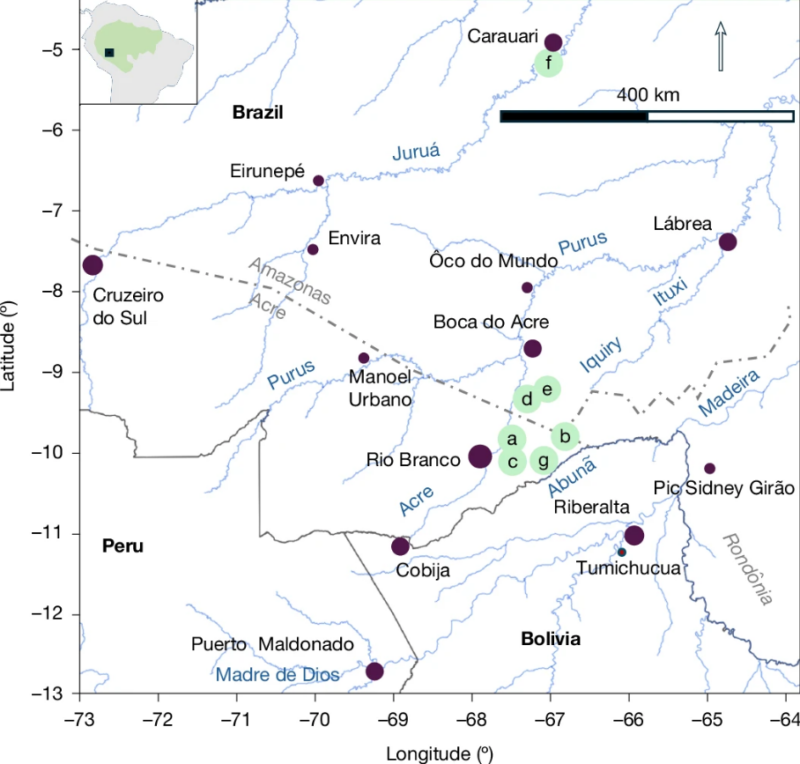
The area the researchers studied was the southwestern region of the Amazon. This area includes portions of present-day Brazil, Bolivia and Peru. The ancient peoples who lived here did not leave behind a record of what they called themselves. Researchers refer to them as the Aquiry civilization, taken from the name indigenous people used for the Acre River.
Also, this was not one large civilization but many communities of people. Co-author Pirjo Kristiina Virtanen of the University of Helsinki said:
This was not a single realm but a network of many different communities.
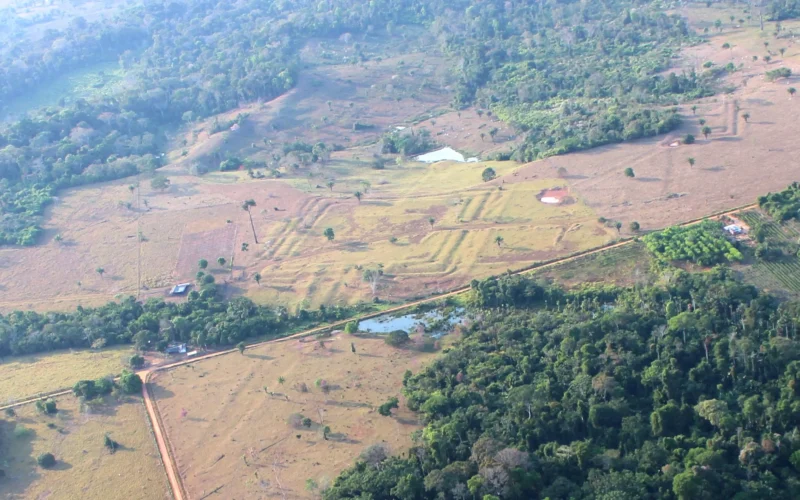
Because there isn’t stone in this region, the artifacts the population left behind are in the form of earthworks. Earthworks are artificial changes in the land formed by digging ditches and mounds, for example.
What happened to cause the civilization’s rapid collapse around 850 CE? This is still a mystery. And it might be related to the abrupt collapse of the Maya civilization in Central America around the same time.
Scanning the Amazon from above
Lidar technology allows scientists to “see” through the vegetation in order to map features on the ground. The team surveyed about 4,500 square kilometers (1,700 square miles) of rainforest. Co-author Juha Hyyppä of the Finnish Geospatial Research Institute said:
We flew long, roughly 450-kilometer (280-mile) straight transects, mapping a strip about one kilometer (.6 mi) wide every 10 kilometers (6 miles). This allowed us to cover as large a continuous area as possible.
What they found was more than 400 earthworks. These earthworks were monumental geometric structures of a ceremonial nature, along with some later settlement sites. Researchers then undertook an analysis, extrapolating these discoveries to a larger territory. Their conservative finding was that some 20,000 earthworks may exist. And these could have been formed by and home to some 3 million people.
Lead author Martti Pärssinen of the University of Helsinki said:
Our findings overturn our understanding of the Amazon region’s past. The research shows that the human impact on the Amazon’s environment has been far greater than previously believed.
Modifying the land
It appears the Aquiry people not only dug earthworks but also cleared the land for certain crops and managed tree species they considered valuable.
The civilization, which reached its peak between 100 and 300 CE, burned bamboo trees to make way ceremonial centers. But they also burned them to make room for maize, squash, sweet potatoes, chili peppers, beans, peanuts and other crops. In addition, they cleared wide roads leading from one center to another.
It appears the Aquiry also favored protein-rich tree species. These species include the Brazil nut tree, the peach palm with its edible heart and other fruit trees. Pärssinen said:
This has direct implications for our understanding of the region’s biocultural history. The civilization also affected ancient Amazonia’s carbon production and carbon balance, which should be better accounted for in future climate models.
So far, reseachers have only surveyed a small fraction of the southwestern Amazon. Thus, many more archaeological sites might still lie hidden beneath the forest canopy.
Bottom line: Researchers used laser surveys to reveal hundreds of earthworks across southwestern Amazonia. They estimate that the ancient Amazon civilization could have supported as many as 3 million people at its peak.
Source: Over 20,000 precolonial earthworks in the Southwest Amazonia
Like what you read?
Subscribe and receive daily news delivered to your inbox.
More from
Kelly Kizer Whitt


The MMX mission launches to Mars’ moons on Monday

Visible planets and night sky guide for October
No more leap seconds! Timekeeping is officially changing
Space is getting crowded. Here’s the latest satellite report