



New record for oldest impact crater on Earth
We have a new record holder for the oldest-known impact crater on Earth. The previous record holder was the 2.2-billion-year-old Yarrabubba impact structure in Australia. The new record holder is also in Australia and dates back a whopping 3.5 billion years. Researchers from Curtin University in Perth said on March 6, 2025, that the new discovery:
could significantly redefine our understanding of the origins of life and how our planet was shaped.
The researchers published their study in the peer-reviewed journal Nature Communications on March 6, 2025.
The 2025 EarthSky lunar calendar makes a great gift. Get yours today!
Shatter cones
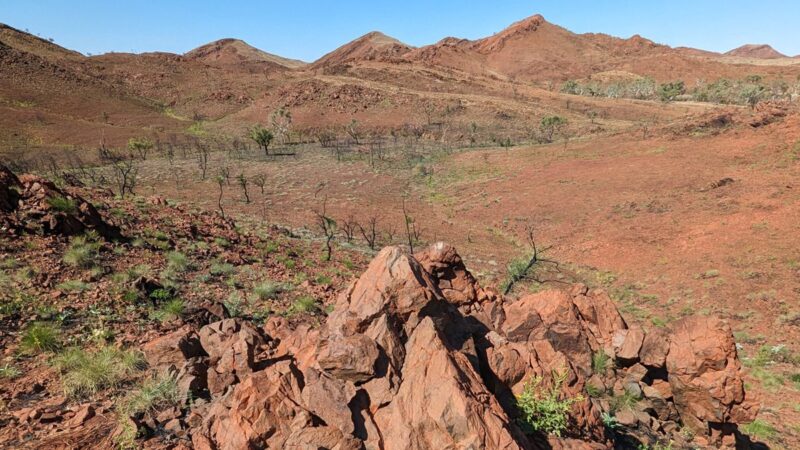
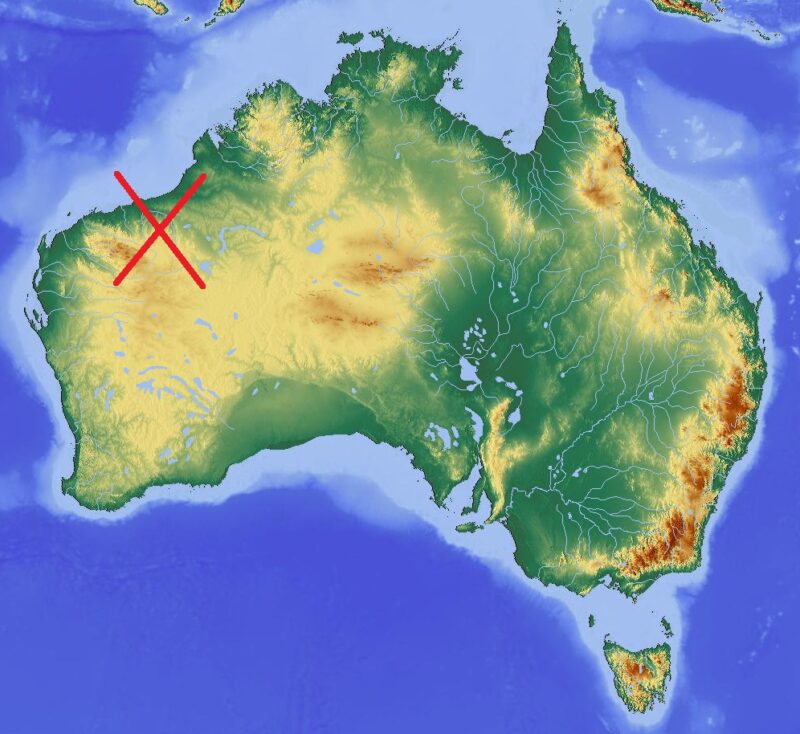
The researchers discovered shatter cones in an area of Western Australia called the North Pole Dome.
Shatter cones are rare rocks that show evidence of huge impacts in the form of striations. When a meteorite strikes Earth, the shockwave travels into the rock below, leaving a branching pattern with cone-shaped pieces. These pieces point back toward the impact location.
This particular space rock barreled into Earth at more than 22,000 miles per hour (36,000 km/h). The scientists said it would have been a major event. The resulting crater would have been more than 60 miles (100 km) wide, with debris from the impact flying around the globe.
A missing part of our history
We can see from objects like the moon and Mercury that the inner solar system took a heavy bombardment at some early period in time. But just what role the impacts had on the early modification of Earth’s crust has largely been a matter of debate. That’s because Earth has gone through extensive changes in its history. Billions of years of volcanism, plate tectonics, ice ages and more mean the craters from early impacts are not easy to discover.
Co-lead author Tim Johnson of Curtin University said:
We know large impacts were common in the early solar system from looking at the moon. Until now, the absence of any truly ancient craters means they are largely ignored by geologists. This study provides a crucial piece of the puzzle of Earth’s impact history and suggests there may be many other ancient craters that could be discovered over time.
The oldest impact known and its effects on early Earth
So what kind of an “impact” might this meteorite have had on early Earth? Co-lead author Chris Kirkland of Curtin University said:
Uncovering this impact and finding more from the same time period could explain a lot about how life may have got started, as impact craters created environments friendly to microbial life such as hot water pools.
It also radically refines our understanding of crust formation: the tremendous amount of energy from this impact could have played a role in shaping early Earth’s crust by pushing one part of the Earth’s crust under another, or by forcing magma to rise from deep within the Earth’s mantle toward the surface.
It may have even contributed to the formation of cratons, which are large, stable landmasses that became the foundation of continents.
Bottom line: Researchers in Australia have discovered a new record holder for the oldest impact crater on Earth yet known. It suggests a large meteorite smashed into Earth some 3.5 billion years ago.
Source: A Paleoarchaean impact crater in the Pilbara Craton, Western Australia
Like what you read?
Subscribe and receive daily news delivered to your inbox.
More from
Kelly Kizer Whitt


Visible planets and night sky guide for October

Why does anything exist? New theory emerges
Euclid was mapping the universe. Then it found a comet
Auriga the Charioteer and bright Capella on October evenings



