August 29 View from space: California Rim Fire update
August 28, 2013 4 a.m. CDT (9 UTC): California’s Rim Fire is now said to be 20% contained; that’s slightly better than yesterday. There are now 184,481 acres burned, and 4,081 firefighters battling the blaze according to Inciweb. NASA has released more photos of the fire, which yesterday was said to be the 11th largest in California’s history. The fire is threatening the western edge of Yosemite National Park, a beautiful and beloved area and also home to San Francisco’s water supply. NASA released the top image most recently: the fire at night over a period of days. The other images are from the past several days, showing the awesome power of this drought-fueled fire.
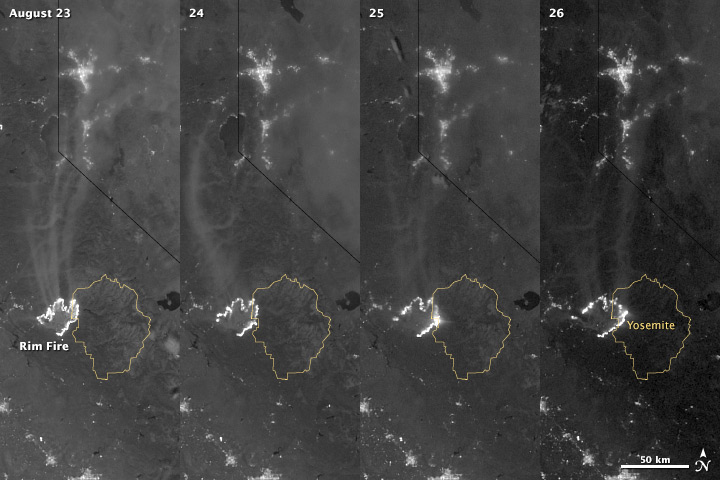
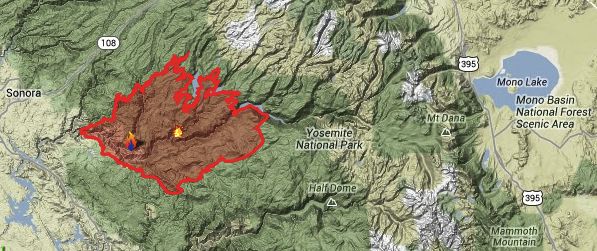
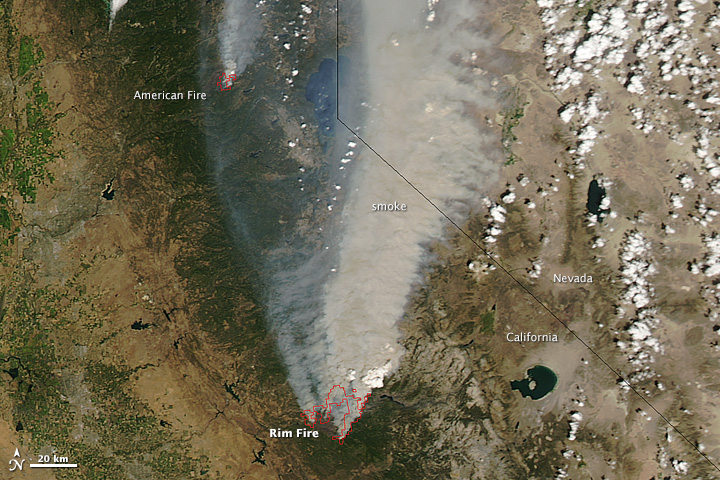
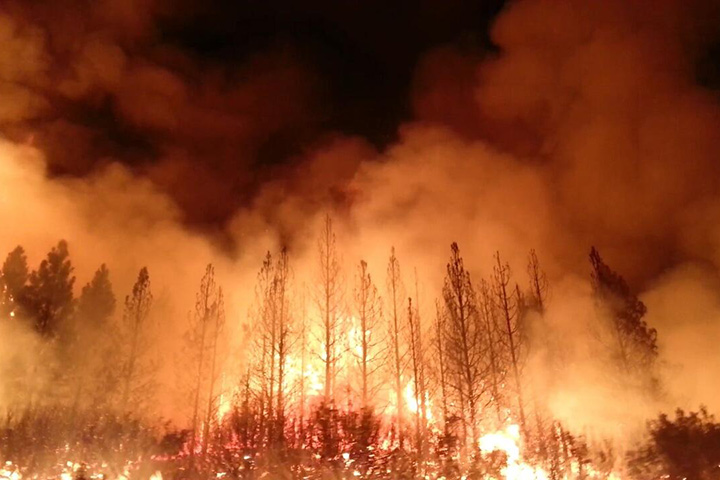
Bottom line: As of August 28, the Rim Fire in central California is said to be 20% contained. Thousands of firefighters are still battling the blaze, which has burned at least 184,481 acres on the western side of Yosemite National Park.
Like what you read?
Subscribe and receive daily news delivered to your inbox.
More from
Deborah Byrd


Visible planets and night sky guide for October

Hera mission hits the brakes to arrive at asteroid
Flashing star in autumn? Here are 3 candidates
Stargazing tips! 10 great tips for beginning astronomers