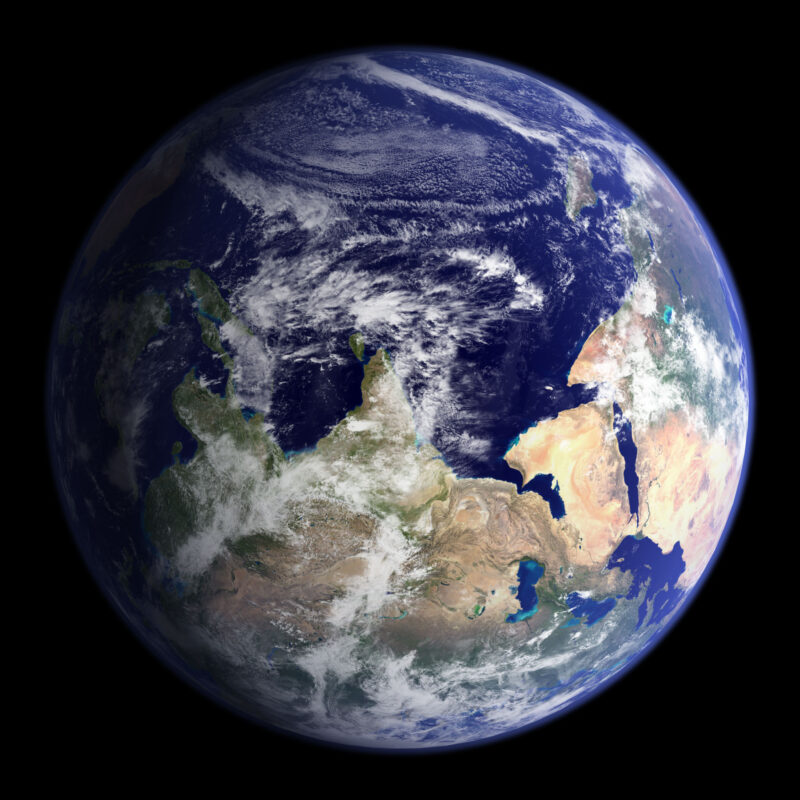
Artemis astronauts on the moon will see Earth upside down
In 2028, the astronauts of Artemis 4 are scheduled to end a more than 50-year absence of humans on the moon’s surface. How will their experience compare with that of the Apollo astronauts? For one thing, Artemis astronauts will see Earth comparatively “upside down.”.Plus, they’ll walk in shadows that stretch for miles.
Apollo astronauts visited six different sites that were on the moon’s northern hemisphere or close to the equator. In contrast, Artemis astronauts will be near the south pole, taking advantage of the low angle of the sun, where craters can be in permanent shade and possibly harbor stores of water ice.
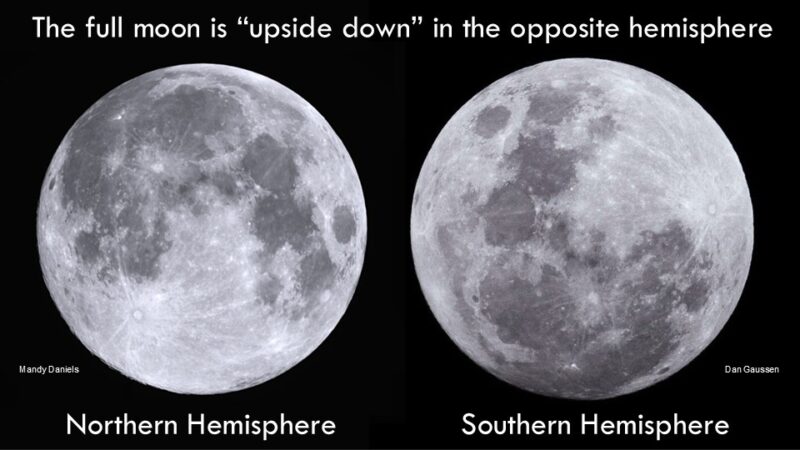
Of course, there’s no single correct orientation for Earth, or any celestial body for that matter. But Earth will look upside down to Artemis astronauts compared to the typical perspective of a globe with north at top. We experience the same thing viewing the moon from Earth. When those of us in the Northern Hemisphere look at the moon, we see more lunar maria (dark plains) at the top, while Southern Hemisphere observers see those features at the bottom of the moon.
Plus, the view of Earth “upside down” will be more pronounced than viewing a full moon on Earth. Since Earth is of course larger than our moon, our planet will appear to loom more than 3 1/2 times bigger in the moon’s sky than a full moon looks to earthlings.
The moon’s southern hemisphere
In the 60s and 70s, Apollo astronauts aimed for the big volcanic plains — or maria — for their landings and explorations. Artemis astronauts will be exploring a different landscape. If we’re ever to establish a moon base, we’ll need water, and the best place to find that is in deep shadows in the southern hemisphere. The southern hemisphere is more rugged than the north, with craters, towering ridges and permanently shadowed regions.
At the Apollo landing sites, the sun climbed relatively high in the sky. At the lunar south pole, it will barely rise. At some of the targeted landing locations, the sun will never climb more than about 7 degrees above the horizon.
That low angle will cast extraordinarily long shadows across the desolate lunar landscape. A mountain or crater rim many miles away could cast a shadow across the astronauts’ path. This could affect astronaut’s ability to navigate, because they might have trouble judging depths and spotting hazards.
The differences in light and shadow can also create great contrasts in temperature. Areas that sit in permanent shadows can have temperatures as low as -334 F (-203 C). Meanwhile, areas in nearby sunshine can be much warmer. The moon’s near-complete lack of atmosphere contributes to this stark temperature difference.
The strange view from the lunar surface
Because the moon is only about 1/4 the size of Earth, the horizon appears much closer. So, on the lunar surface, the horizon appears only about 1.5 miles (2.4 kilometers) away when on flat terrain.
Astronauts on the moon don’t get to see colorful sunsets. Again, because there’s no real atmosphere, the sunlight doesn’t scatter air particles. So there isn’t a blue sky, either. The sky will always be black. This also means astronauts can see stars in the daytime, but only if they stand in a shadow to lessen the glare of the sun and the reflective lunar surface. Although stars don’t appear in photos taken from the moon’s surface (why?), the Apollo astronauts said that when they stood in the shadow of the lunar lander, they were able to see stars.
The lack of an atmosphere also means the moon is incredibly quiet. You can’t hear your own footsteps … or footsteps of anyone sneaking up on you. The surface also doesn’t experience weathering like we’re used to. So if an astronaut wanders too far and gets lost, they can just follow their footprints back to where they started.
Bottom line: Artemis astronauts will explore the moon’s south polar region, so Earth will appear “upside down” to them. Here are more strange things the astronauts will experience on the moon.
Like what you read?
Subscribe and receive daily news delivered to your inbox.
More from
Kelly Kizer Whitt


Tucana the Toucan is home to the Small Magellanic Cloud

T. rex babies were the size of kittens, new study says. Aw!
What do baby stars sound like? Listen to them here!
Visible planets and night sky guide for November