



Extreme heat impacting millions in eastern U.S.
More than 74 million people in the United States are currently under heat alerts, according to the National Weather Service (NWS). And there’s more extreme heat in the forecast through this week and into the 4th of July holiday weekend.
A strong ridge of high pressure is settling over the Mississippi and Ohio river valleys. It’s expected to strengthen over the coming days, bringing a risk for high temperatures climbing into the lower 100s F (37 degrees Celsius). Plus, heat index values – or what it will feel like when the humidity is factored in – will be as high as 115 F (46 C) later this week from the Ohio Valley out toward the East Coast. This heat is extremely dangerous and will increase the risk of heat-related illnesses for millions of people.
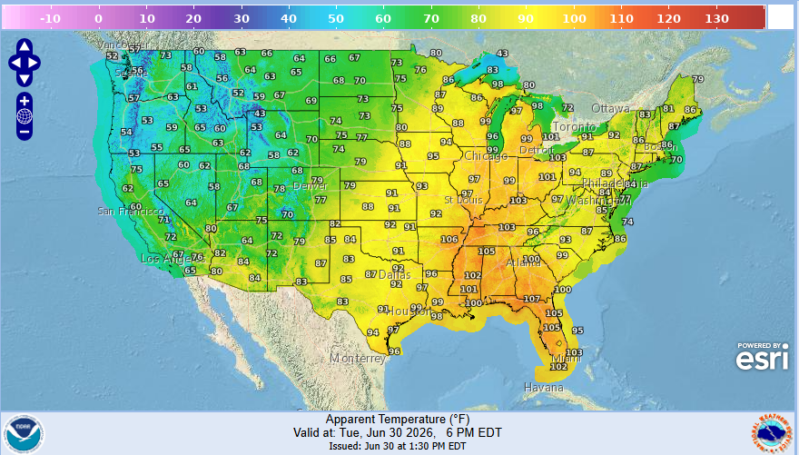
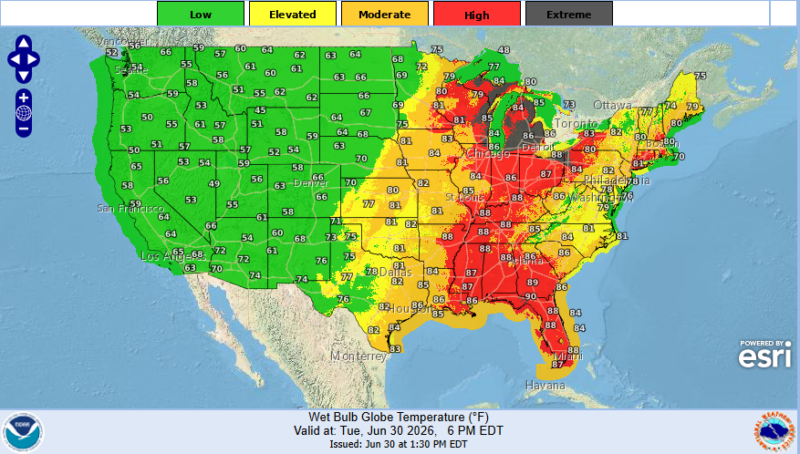
Forecast maps
Here are the forecast maps for June 30, 2026. The apparent temperatures map is a feels like temperature that takes into account both the temperature and the humidity. The second map shows the wet bulb globe temperature. Wet bulb globe temperature takes even more factors into consideration, including temperature, humidity, wind speed, sun angle and solar radiation. Wet bulb globe temperatures of 90 F (30 C) and above are considered extreme.
Understanding Heat Alerts
During the heat wave, the local National Weather Service offices will issue different heat alerts. These alerts let people know the severity of the heat they need to prepare for. The three main alerts are: Heat Advisory, Extreme Heat Watch and Extreme Heat Warning.
A Heat Advisory is when dangerous heat is forecast for your area in a way that you need to rethink your daily routine. That’s especially true if it involves being outside for extended periods of time. During a Heat Advisory, avoid being outside during the hottest part of the day and try to reschedule any outdoor activities for early morning or late evening. If you have to be outside during a Heat Advisory, drink lots of water and find cool places for breaks as often as possible.
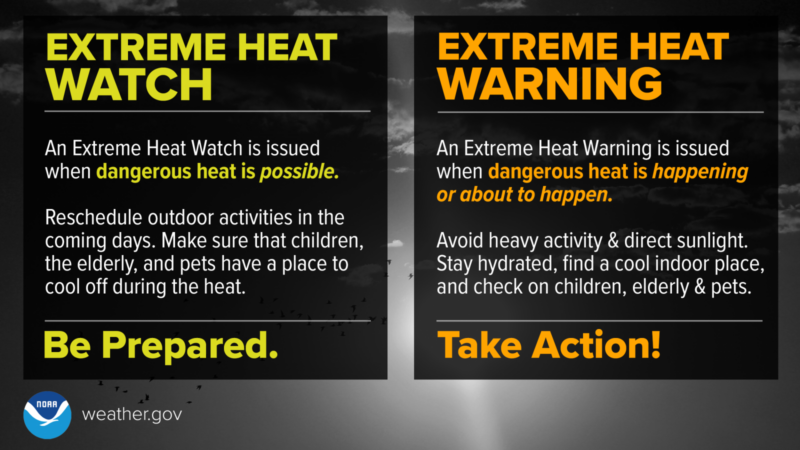
An Extreme Heat Watch is issued when extreme, dangerous heat is likely, and typically expected in the next few days. When the NWS issues an Extreme Heat Watch, you must start making plans to stay safe. So avoid being outside during the heat wave. If you do not have air conditioning, cannot afford to run it or know someone who does not have air conditioning, locate the cooling shelters in your community. Because this is a holiday weekend in the United States, make sure the cooling center closest to you will be open.
An Extreme Heat Warning is when extreme, dangerous heat is imminent or actively happening. Again, avoid being outside for the duration of the heatwave, especially during the day. Even though overnight temperatures might cool down some, it can stay very warm, making it harder for the human body to recover. To avoid heat illness, spend as much time in air conditioning as much possible (even at night), drink lots of water and do not over exert yourself. Make sure you are checking on the people in your community who do not have proper ways to stay cool.
Extreme heat and heat illness
Extreme heat is so dangerous because it impacts your body’s ability to cool down. This is especially true with high humidity, which results in a high heat index.
Your body sweats in an effort to naturally cool down. The sweat on your skin evaporates in an attempt to regulate your body temperature. But when the humidity is high, your sweat can’t evaporate as easily, so your body can’t cool down. This makes you more vulnerable to heat illness. Heat illness can come on quickly, which is why it’s important to not just pay attention to your body, but to everyone around you.
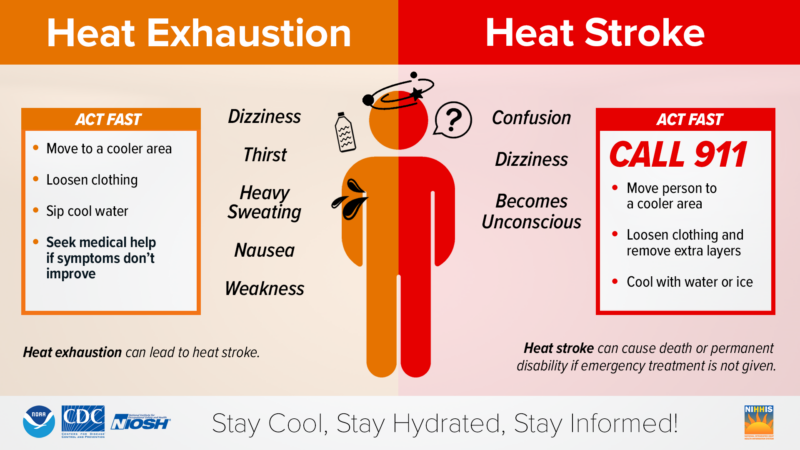
Heat cramps – painful cramps usually in the legs or belly – are typically the first symptom of heat illness, especially when paired with a lot of sweating. You should apply pressure or gently massage the cramping areas and take small sips of water.
If the cramps and sweating continue along with more symptoms like nausea, dizziness and weakness, heat exhaustion is likely setting in. Continue taking small sips of water, rest in a cool place, ideally a place with air conditioning, loosen clothing and apply cool, wet cloths to the body.
If these symptoms do not improve within an hour, the body temperature gets higher than 103 degrees F (39 degrees Celsius), and there are signs of confusion or even a loss of consciousness, the exhaustion has progressed to heat stroke. Get medical help immediately! Do not give water to the person suffering from heat stroke. Instead, try to cool their body with cool cloths or a cool bath until medical help arrives. Heat stroke can be deadly.
People especially vulnerable to extreme heat
Everyone is vulnerable to extreme heat, but certain people are even more vulnerable, including pregnant women, babies, young children and the elderly. In addition, those with chronic illnesses and on certain medications, as well as the homeless, lower income and underserved communities are particularly vulnerable.
It’s also important to keep cool and take care of all the animals in your life. A heatwave typically lasts for days at a time. Plus, they can have impacts on infrastructure, such as the power grid and water resources. It’s best to have a plan on how to stay safe and know where to go. To learn more about heat risks and staying safe, you will find many helpful resources at heat.gov.
Bottom line: A dangerous, extreme heat wave is forecast for the Midwest and East Coast of the United States this week into the holiday weekend. High temperatures will climb into the triple digits for multiple days.
Like what you read?
Subscribe and receive daily news delivered to your inbox.
More from
Rachel Duensing


Severe weather threat upgraded today for Midwest

Severe weather, tornadoes possible Sunday and Monday
What is a derecho? And when is derecho season?


