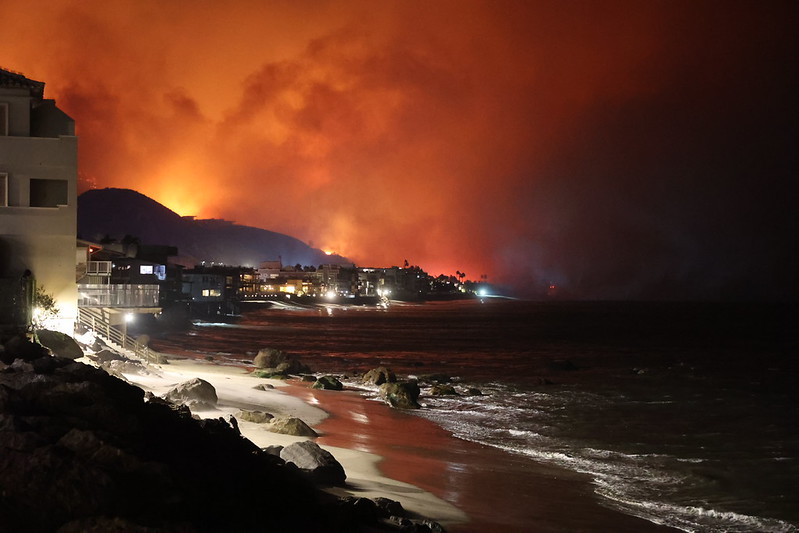
- Wildfires in the western U.S. are becoming less frequent, a new study says.
- But the wildfires that do occur are getting worse. They’re burning larger areas and causing more damage.
- Humans appear to be driving these changes. Human-driven climate change is making wildfires more destructive, while human behavioral change seems to be making them less frequent.
A new study on US West wildfires
Here’s the good news: The number of wildfires in the western U.S. has gone down. Wildfires in this region are down about 28% over the past 30 years. That’s a lot! And it’s in large part due to a 40% decline in fires accidentally started by humans.
Now, the bad news: The wildfires that do occur in the U.S. West are having a larger impact. They are burning larger areas, and so fire damages are increasing. The cause, according to a recent study? Human-driven climate change making these regions hotter and drier.
The findings of the new study were published in the peer-reviewed journal Earth’s Future on April 30, 2026. The study examined fire frequency and human influence in the western United States.
The role of humans in wildfires?
The researchers also identified a pattern relating to human habitation. In areas with lots of people, there are fewer fires. Meanwhile, in areas with fewer people, the frequency of fires went up as the population density of that region rose. Unfortunately, there are also exceptions to these population trends. Los Angeles, Phoenix and Denver have been seeing more frequent fires, despite their high population densities.
The researchers said studying human demographics and wildfire frequency together could help predict future patterns. But it’s still early to draw too many conclusions, the researchers said. Gavin Madakumbura, an atmospheric and oceanic scientist at UCLA and leader of the study, said:
It would be premature to talk about informing fire management [based on] these results. But the main implication is that we can incorporate these results into projections of future fire activity.
Modern wildfires pack a punch
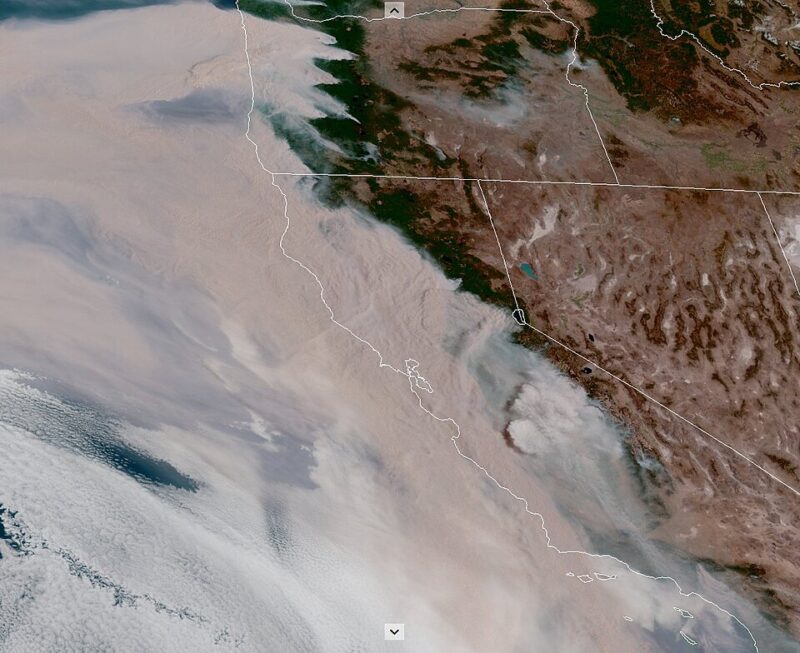
Even though the total number of wildfires in the western U.S. has gone down, it might not seem like it. That’s because the impacts of the wildfires are going up. The fires may be fewer in number, but they are burning more land. Between 1992 and 2020, 4% more land burned each year. Case in point: In 2020, wildfires across California, Oregon and Washington burned more than 9 million acres (36,400 square kilometers). That’s larger than the state of Maryland.
But in the new study, the researchers did find that the number of fires per year in the West is going down. In 1992, they counted 25,000 fires. And by 2020, it was down to 18,000 fires. So that’s 305 fewer fires each year. Their study looked at 11 western states, from Montana, Wyoming, Colorado, New Mexico and westward.
Fires in sparsely populated areas
The decline of human-started fires was not consistent across all states. While California and Arizona saw fewer fires started by people, Wyoming saw more. Part of this could be due to public resources.
The researchers looked at a number of factors, including changes in population density and fire protection and management expenditures for each state. The higher the population density, the more the state spent on fire protection. For example, California spends 7 billion dollars more a year on fire protection than Wyoming.
Scientists call the link between population density and fires pyric transition. As the press release explained:
In sparsely populated regions, the idea goes, adding more people leads to more fires accidentally sparked by human activity. But past a certain threshold of population density, more people also means more coordinated fire prevention and public awareness efforts to tackle the rising risk. This, coupled with the fragmented, patchwork nature of more populated landscapes, can end up making fires less frequent.
So the scientists are seeing a correlation between population density and fires. But is there a causation as well? Madakumbura said:
We know that with increasing human activity, we get more accidental human ignitions. But at the same time, a lot of regions are spending so much money on fire prevention and fire awareness, so we should see this in the data. The data definitely seem to indicate that this is a possible causative relationship.
What about the big-city outliers?
Los Angeles, Phoenix and Denver have some of the largest population centers in the western U.S., but they still have frequent fires. But it could be a difference in fire reporting practices, said Madakumbura. These areas might have more reports of small fires, whereas a lower-population area might not have these reports. Sparsely populated areas might focus more on wildland fires.
The role of climate change
So why is a larger area burning even though there are fewer fires? Madakumbura said human-driven climate warming is to blame. As these regions get hotter and drier, the conditions encourage the development of larger fires.
But climate change may both be triggering a rise in fires and suppression as well. As the West grapples with the threat of fire due to the heat and low humidity, places with adequate resources increase their prevention efforts.
So while human-caused climate change is a factor in fires, the human demographics of an area also appears to be a factor. The researchers are hoping to help predict future fire patterns more accurately by looking at all possible factors. Madakumbura concluded:
Even though we have been able to reduce the number of fires through fire preparedness, fire awareness, and spending a lot of money on protective measures, there is a disconnect. We haven’t been able to reduce the damages.
Bottom line: Researchers looked at western U.S. wildfires over the past 30 years and found that while they are becoming less frequent, modern wildfires are larger and more damaging.
Source: Evolving Fire Frequency in the Western United States and Its Links to Human Influence
Read more: This Is Wildfire: Tips on preparing yourself and your home
Like what you read?
Subscribe and receive daily news delivered to your inbox.
More from
Kelly Kizer Whitt


The MMX mission launches to Mars’ moons on Monday

Visible planets and night sky guide for October
No more leap seconds! Timekeeping is officially changing