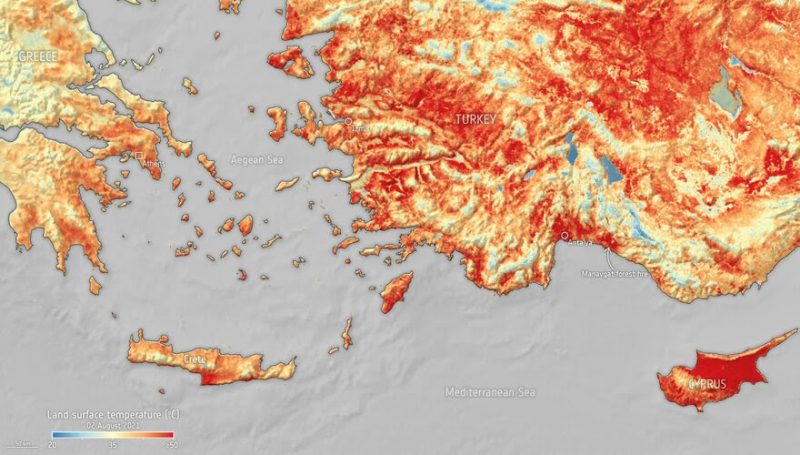
Mediterranean heatwave
The European Space Agency (ESA) released this map today (August 3, 2021). It shows the temperature of the land surface around the Mediterranean Sea on August 2. That measurement is in contrast to weather forecasts, which speak in terms of air temperatures. And, ESA said, the map looks very similar to one released a month ago, on July 2. ESA said:
It is clear to see that surface temperatures in Turkey and Cyprus have reached over 50 C [122 F] again … The Mediterranean has been suffering a heatwave for some weeks, leading to numerous wildfires. Turkey, for example, is reported to be amid the country’s worst blazes in at least a decade.
Read more from The Guardian: Turkey battles coastal wildfires, in pictures
As for air temperatures, yes, they are high, too. The high air temperatures set records in both Greece and Turkey earlier this week. Reuters reported late last week, for example, that Greek authorities were warning the public against unnecessary work and travel, as air temperatures hit 40 C (104 F) in Athens. The high today (August 3) in Athens was also 104 F, according to Accuweather. The Acropolis, Athens’ most visited monument, has been closed due to the high heat.
Bottom line: The Mediterranean heatwave is featuring land surface temps of over 50 C (122 F) and air temps in triple digits as well.
Like what you read?
Subscribe and receive daily news delivered to your inbox.
More from
Deborah Byrd


Visible planets and night sky guide for October and November

How to understand moon phases: 4 tips!
Hunter’s Moon falls on October 25-26, with Saturn nearby
Cassiopeia and Perseus on October evenings