



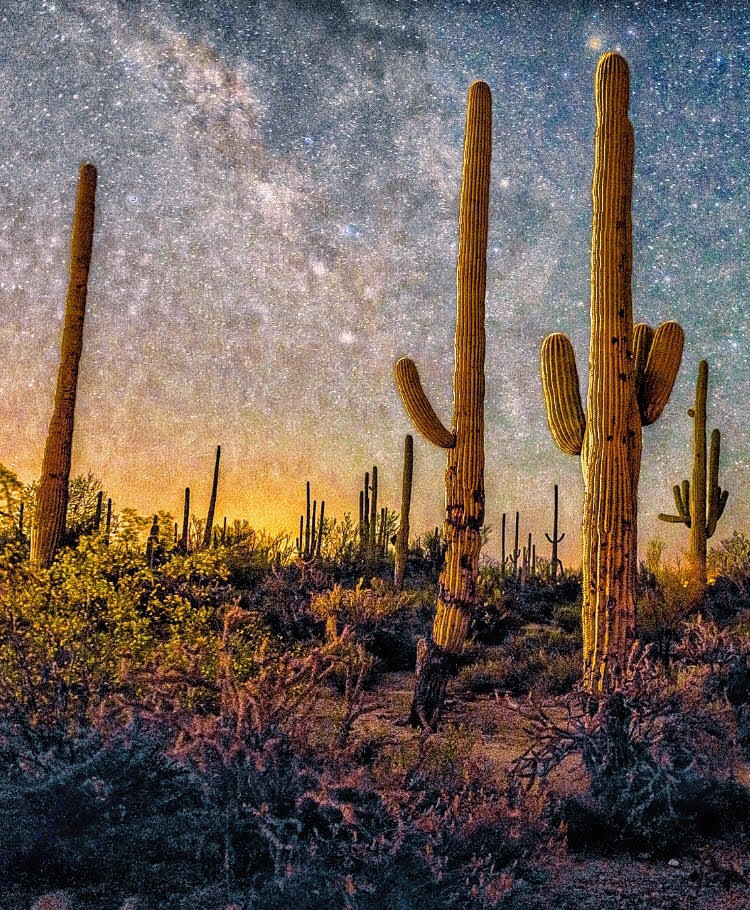
Gary Peltz captured the image above in Saguaro National Park – near Tucson, Arizona – at around 4 a.m. on the morning of April 11, 2018. He wrote:
We were out poking around the park looking for good foregrounds to go with the Milky Way in the West Section of Saguaro National Park. I think this one was the best. The cactus are illuminated from a vehicle’s headlights that lit things up just long enough to make it interesting, so I guess you can say I lucked out! The yellow glow is from light pollution of south Tucson.
Despite being portrayed in many illustrations and old movies about the American West, saguaros are found in a relatively small area. You’ll see these iconic cacti growing naturally only in the Sonoran Desert in Arizona, and also in parts of southern California, Baja California and half of the state of Sonora, Mexico. According to the National Park Service, the average saguaro has about five arms and is about 30 feet (9 meters) tall. Some live to be well over 200 years old.

Bottom line: Milky Way over saguaro cacti on an April morning, 2018.
Like what you read?
Subscribe and receive daily news delivered to your inbox.
More from
Deborah Byrd


Visible planets and night sky guide for October

Stargazing tips! 10 great tips for beginning astronomers
Mars calendar year begins September 30: Happy New Year, Mars!
Alpha Cephei, or Alderamin, is a fast-spinning star



