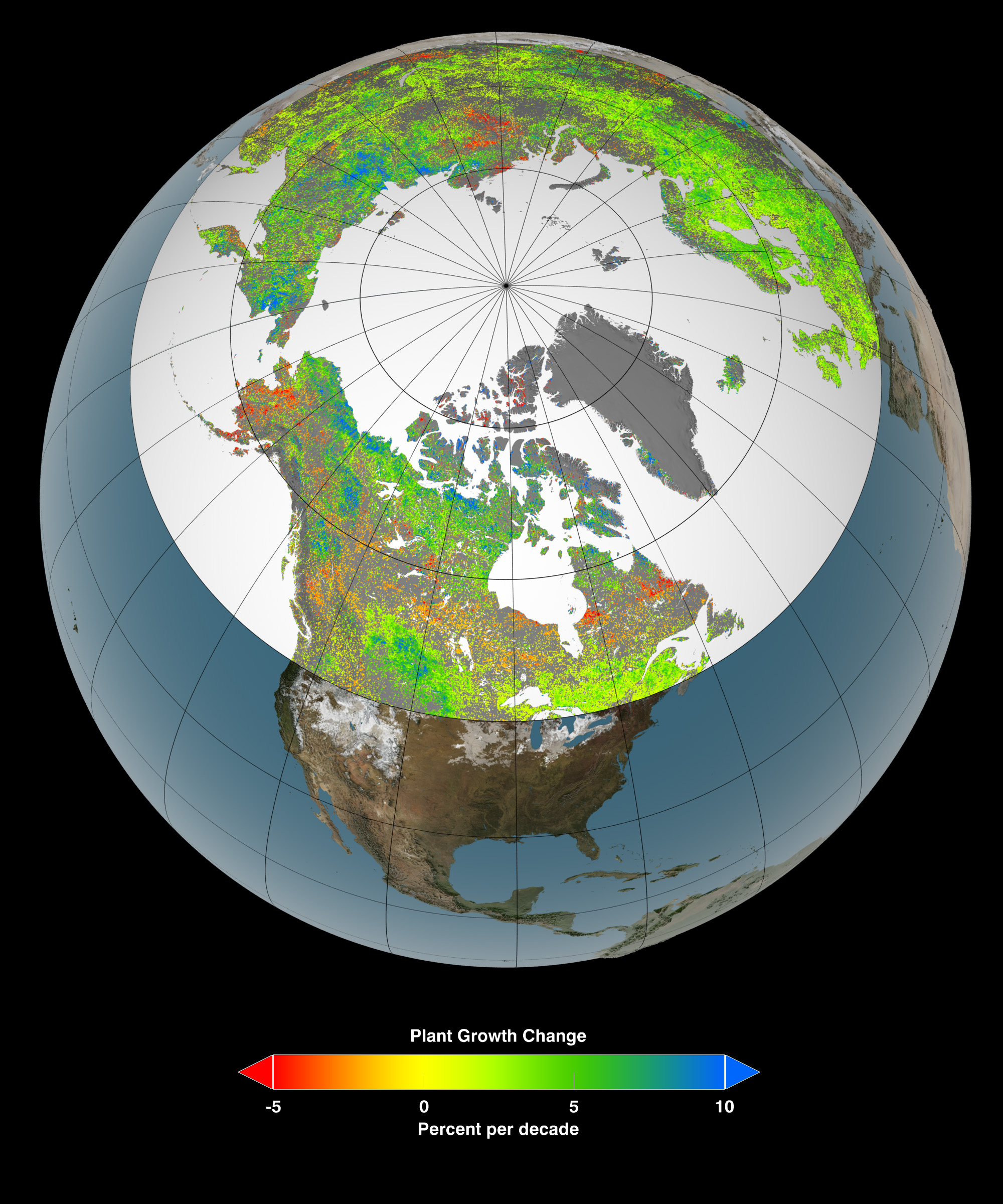
The map above illustrates the results of a new 30-year NASA study, published in the journal Nature Climate Change earlier this week (March 10, 2013). The study suggests that – of the 10 million square miles (26 million square kilometers) of northern vegetated lands – 34 to 41 percent showed increases in plant growth (green and blue). Meanwhile, 3 to 5 percent showed decreases in plant growth (orange and red), and 51 to 62 percent showed no changes (yellow) over the past 30 years.
Read more: Amplified greenhouse effect shifts northern latitude growing seasons
Bottom line: Over the past 30 years, 34 to 41 percent of vegetated lands at Earth’s northerly latitudes have gotten greener over the past 30 years, according to a NASA study published March 10, 2013 in Nature Climate Change.
Like what you read?
Subscribe and receive daily news delivered to your inbox.
More from
Deborah Byrd


Visible planets and night sky guide for October

Hera mission hits the brakes to arrive at asteroid
Flashing star in autumn? Here are 3 candidates
Stargazing tips! 10 great tips for beginning astronomers