A boom year for the legendary Draconid meteors in 2011?

09oct06_430

Tonight for October 7, 2011

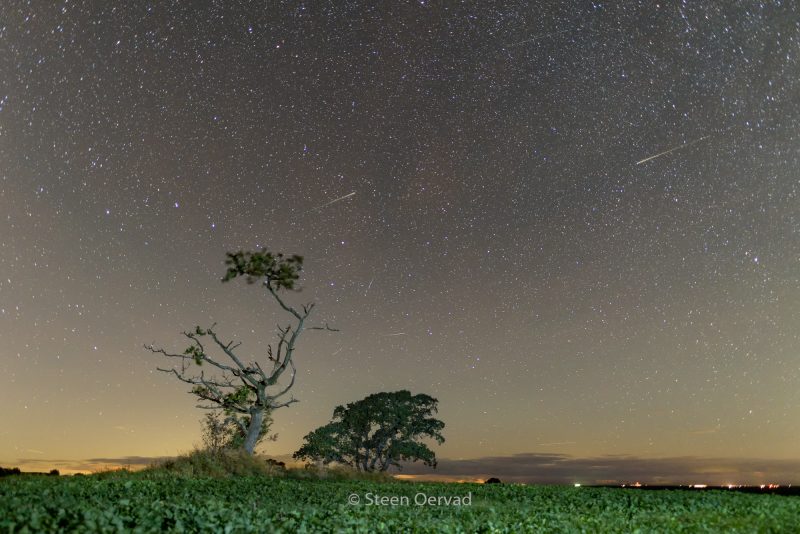
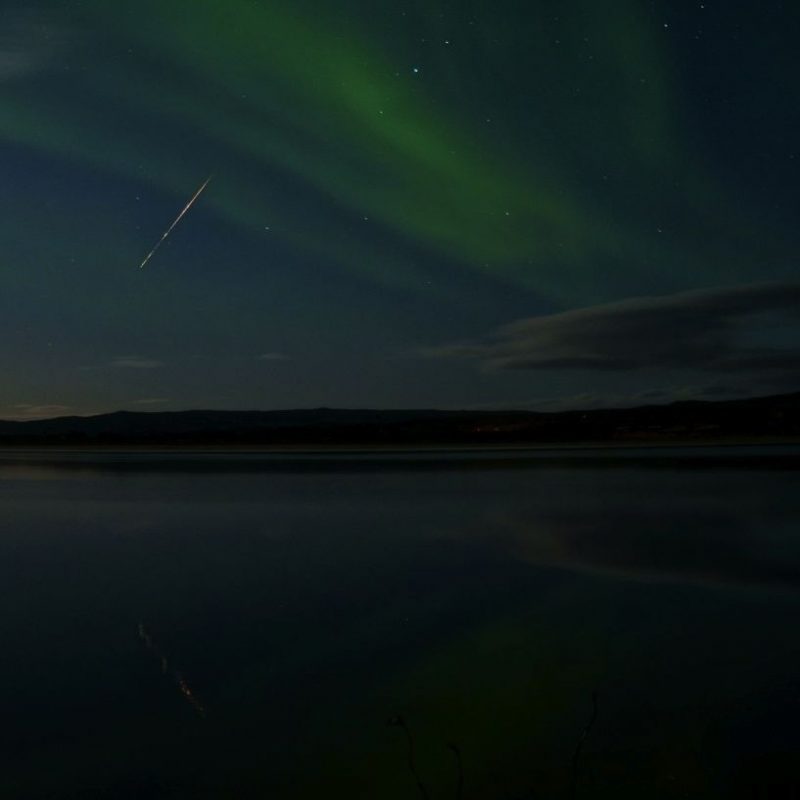
For the next few nights, Draco the Dragon will be spitting out “shooting stars,” also known as meteors. The Draconid shower is predicted to produce the greatest number of meteors on the night of October 8, 2011. Watch for them starting at nightfall. Unfortunately, the waxing gibbous moon will wipe many of these meteors from view. What’s more – in many years – the hard-to-predict Draconid shower doesn’t offer much more than a handful of languid meteors per hour.

Astronomer predicts dramatic Draconid meteor shower for October 2011

This shower produced major displays in 1933 and 1946 – with thousands of meteors per hour seen in those years. However, since then it has been so spotty that the tried-and-true Observer’s Handbook – source of so much wonderful sky info – lists a “?” for the rate of meteors expected at the peak of the Draconids. This year, however, some astronomers are calling for a Draconid meteor shower to burst into storm in 2011, with rates of 1,000 meteors per hour.

The forecast calls for the peak to occur between 17:00 and 18:00 Universal Time on October 8, 2011. If the prediction holds true, that means Europe, northern Africa and the Middle East will get to watch the Draconids at their peak. But keep in mind that meteor showers are notorious for defying predictions, either surpassing or falling shy of expectation, so you never know for sure. Even if the storm materializes, the bright moon will undoubtedy wash out many of these meteors.

If you live at middle and far northern latitudes, though, it’s well worth a try. Unlike many major showers, the radiant for the Draconids is highest up at nightfall, so watch for these meteors as soon as darkness falls.

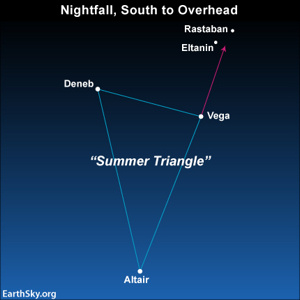
Locate Dragon’s Eyes and radiant point for Draconid meteors

Most meteor showers are named for the constellation from which the meteors radiate on the sky dome. The Draconids, however, are sometimes also called the Giacobinids, to honor the man who first sighted the comet that spawned this meteor shower.

Michel Giacobini discovered this comet on December 20, 1900. Another sighting in 1913 added Zinner to the name of the comet: 21P Giacobini-Zinner. It is a periodic comet, which returns every six years and four months. Tracking this comet, and noting this October meteor shower, helped astronomers figure out in 1915 how to predict meteor showers. The great Draconid/Giacobinid meteor storms occurred in 1933 and 1946. The comet returned in 1998 as well, and the Draconids picked up that year, but only to a rate of about 100 per hour.

Coming up in our lifetimes, in the year 2013 – approximately two years after the comet approaches perihelion (closest approach to the sun) – there might be another meteor storm around the time of this shower’s peak. Or there might not be.

There might be a meteor storm this year, in 2011. Perhaps the rates could go up to hundreds of meteors per hour in North America. Or we might see only a handful of meteors per hour. Under normal conditions, when astronomers speak of a meteor shower peaking, it is similar to a weather forecaster saying, “The heaviest rain/snow is predicted for such-and-such hour.” In other words, the prediction might not be precise, since nature is always unpredictable to a degree. But the rate of the meteors is higher during the peak of a meteor shower than on any other night.

For tips on viewing meteor showers, read this EarthSky article.

For a taste of history related to this shower, go to the Astronomy Abstract Service from the Smithsonian and NASA and find a 1934 article called “The Meteors from Giacobini’s Comet” (scroll down) by C.C. Wylie. It is an account of the famed meteor storm of 1933.
Bottom line: If you want to try your luck with the Draconid meteor shower on October 8, 2011, lie down on a reclining chair with your feet pointing northward. Find as much open sky as possible. How many Draconid meteors will be seen in the moonlit skies these next few evenings? No one knows the answer to that question, but – in light of a prediction earlier this year by an astronomer that the Draconids might produce 1,000 meteors per hour – the shower is worth getting outside to see. Just remember – the moon is nearly full, and its light will drown many of the meteors from view.

Understanding waxing gibbous moon

October 2011 guide to the five visible planets

Share your comments on Facebook

7 Responses to A boom year for the legendary Draconid meteors in 2011?

  1. odell jackson says:

    Dargon is a name used to describe a God of the spirit world so should we expect the return of of him /her and other God’s

  2. Paul Felix Schott says:

    This will be a very close call i pray it is only that. Discovered on December 28, 2005 by Robert McMillan of the Spacewatch Program A potentially hazardous Asteroid known as 2005 YU55. This Asteroid some what Large 400 meter-sized type – C, will pass by the Earth right between our moon and Earth. On November 8, 2011.

    The people on Earth have not seen a Asteroid of this size in advance. One this big Has not impacted Earth in over at least 4 thousand years. Most Objects that have a diameters over 45 meters or 147.637 ft strike the Earth approximately once every thousand years or so. Lying flat everything for hundreds of miles. Like the TUNGUSKA 1908 SIBERIA, RUSSIA CRASH OR Tunguska Explosion. This one did not even hit the Earth with its full Impact, it burst high in the air above the ground plowing it apart into many smaller parts. Making thousands of very deep holes in the Russian forests. Many of them in dense forest far from any roads or towns.

    One 400 Meters 1,312.3 ft in diameter like this one YU55 would if impacted Earth on land would darken all of the Earth not for just days but much longer. It would change the weather not seen on Earth in over thousands of years a massive climate change to say the least.

    The World and NASA will watch this one very closely.

    The Lord’s Little Helper
    Paul Felix Schott

  3. Bill Blair says:

    Hiya — I don’t see where you mention anywhere that the moon will be nearly full and this will certainly take the edge off viewing for most folks. Predicting rates like 1000 per hour is really misleading as the vast majority will be very faint and lost in the bright moonlit sky. –Bill the astronomer

  4. Deke Holley says:

    Well alright then.

  5. Britt Ponset says:

    The fall of the Christer Richard Perry is marked, and the rise of the Rom begins.

    The Sons of Dan are riding, and all the nations shall kneel and pay homage.

    Joseph Smith, in His Name!

  6. Eskil Garner says:

    Looking from Denmatk it looked allright the moon took out most of the weak light meteorites but there was still pretty much to look at….

    but the was no recon center at the dragon.

    to the reigious nutcases out there, stop that loony behavior and enjoy every gift fron the lord. if u are afraid talk to a priest insted of blabering all over the place its annoying.

    Regards Eskil

Share your comments on EarthSky

Your email address will not be published. Required fields are marked *

*

You may use these HTML tags and attributes: <a href="" title=""> <abbr title=""> <acronym title=""> <b> <blockquote cite=""> <cite> <code> <del datetime=""> <em> <i> <q cite=""> <strike> <strong>