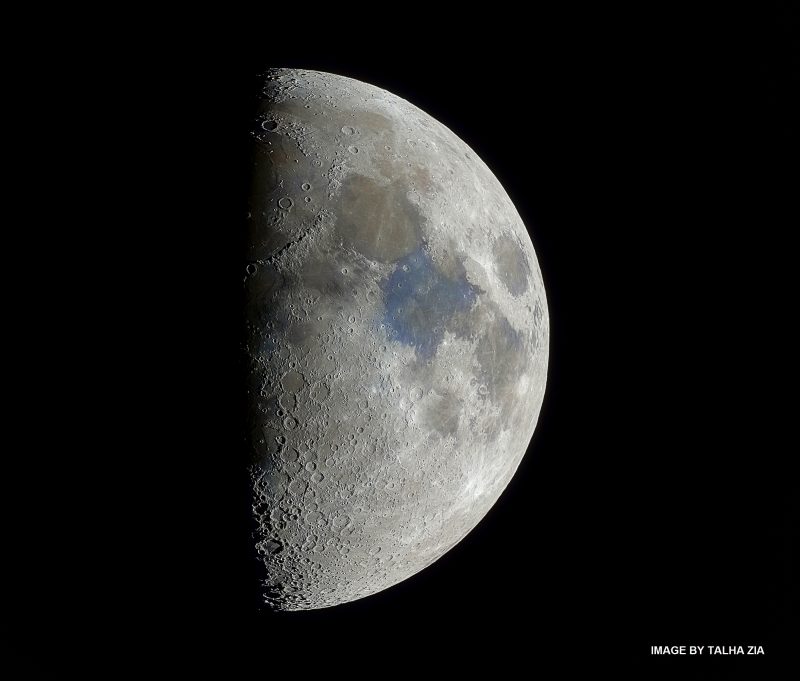
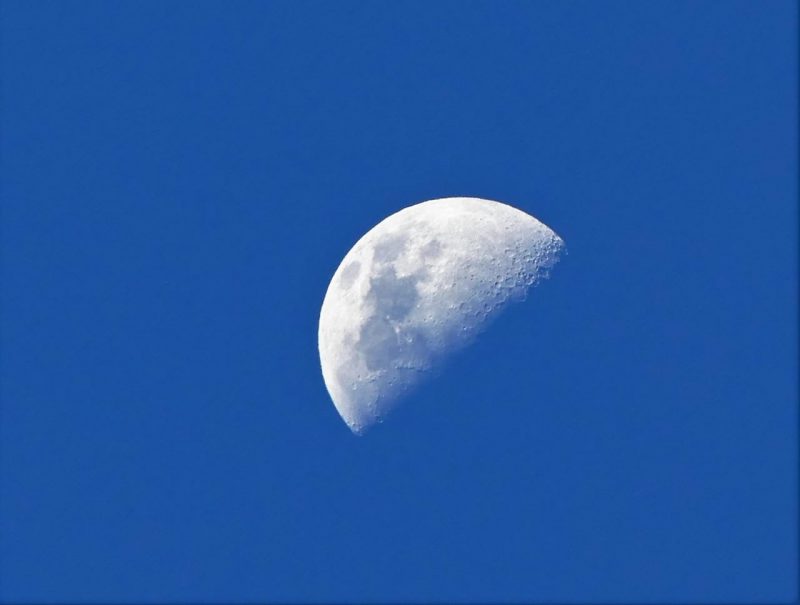
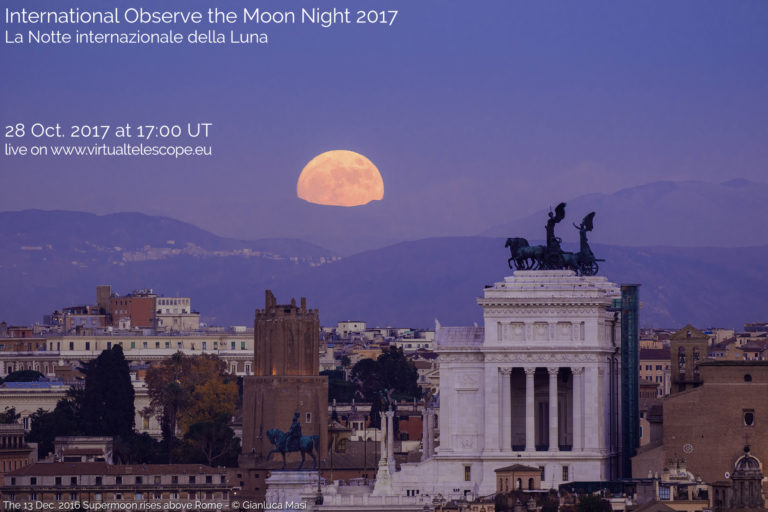
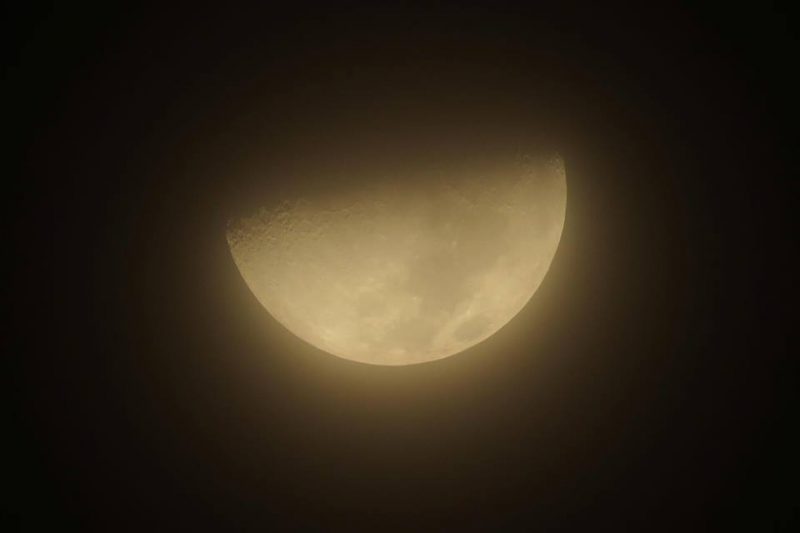
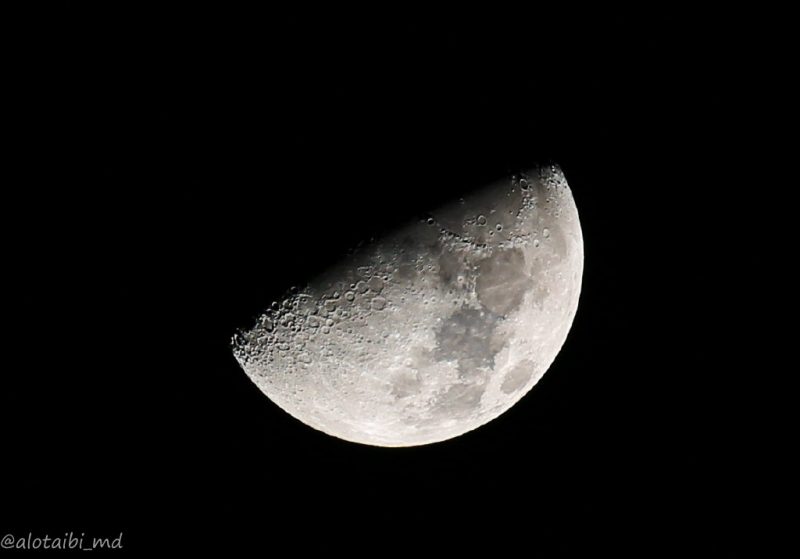
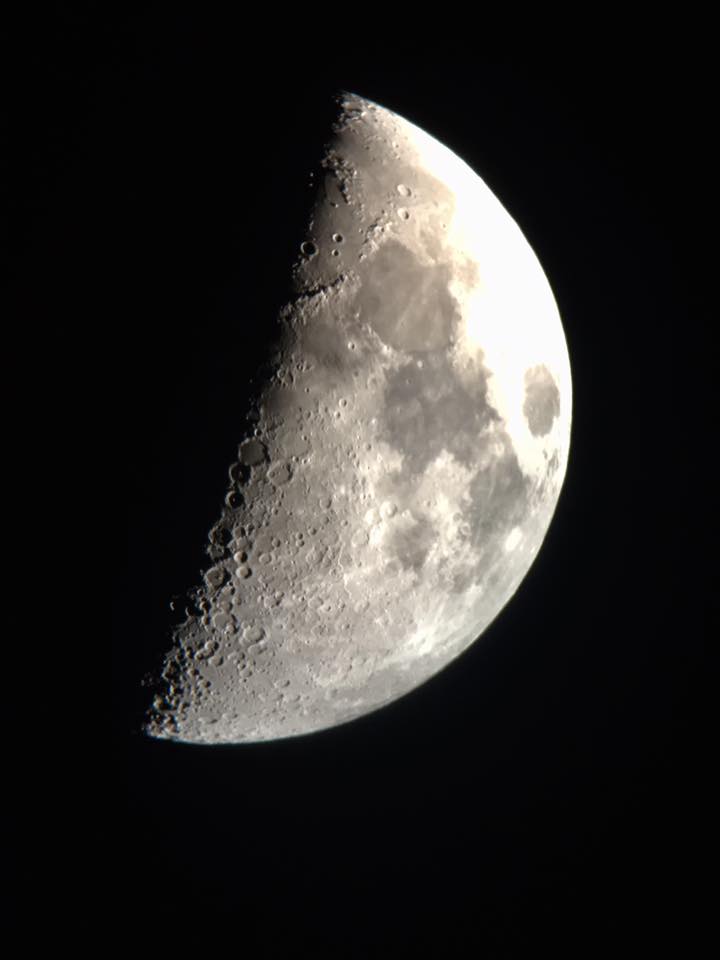
Talha Zia of Karachi, Pakistan captured this image of the October 28 moon. Actually, this is 34 images, cropped and stacked. Thank you, Talha!October 28 moon from Nanarup, Western Australia via Andrea Deegan. Notice the change in orientation from Northern Hemisphere photos on this page. Andrea wrote: “Tonight’s moon for International Moon observing. A group from the local camera club planned an evening of star-gazing and moon-watching, but unfortunately the weather was not co-operating. This was a fleeting image at about 6:30 p.m., just before sundown, between the fast-moving clouds.” Thank you, Andrea.Our friend Gianluca Masi of the Virtual Telescope Project in Rome wrote: “The International Observe the Moon Night (InOMN) 2017 was an amazing success at the Virtual Telescope Project. Our live event made possible to many thousands of people to celebrate the moon, even if they were far from any physical venue.” Read more from the Virtual Telescope Project.October 28 moon via Jenney Disimon in Sabah, North Borneo. From her location, she wrote, “The moon was 56.2% illuminated at 9:30 p.m.” In other words, the moon is in a waxing gibbous phase now, heading toward full moon on November 3-4. Thanks, Jenney!October 28 waxing gibbous moon from Mohammad AlOtaibi in Saudi Arabia. The word “gibbous” means “hunch-backed,” and a waxing gibbous moon appears more than half lighted, but less than full. Thanks, Mohammad!Paul Phiambolis caught the October 28 moon over Reading, Pennsylvania. One sky … one moon.
Bottom line: Photos from International Observe the Moon Night 2017.
Eleanor Imster has helped write and edit EarthSky since 1995. She was an integral part of the award-winning EarthSky radio series almost since it began until it ended in 2013. She and her husband live in Tennessee, where they enjoy guitar playing and singing. They have 2 grown sons.
Deborah Byrd (asteroid 3505 Byrd) helps edit EarthSky.org and is a frequent host of EarthSky videos. Deborah created the EarthSky radio series in 1991 and founded EarthSky.org in 1994. Prior to that, she had worked for the University of Texas McDonald Observatory since 1976, and created and produced their Star Date radio series. She has won a galaxy of awards from the broadcasting and science communities, including having an asteroid named in her honor in 1990, a Public Service Award from the National Science Board in 2003, and the Education Prize from the American Astronomical Society in 2020. A science communicator and educator since 1976, Byrd believes in science as a force for good in the world and a vital tool for the 21st century. "Being an EarthSky editor is like hosting a big global party for cool nature-lovers," she says.
Like what you read? Subscribe and receive daily news delivered to your inbox.
Thank you! Your submission has been received!
Oops! Something went wrong while submitting the form.