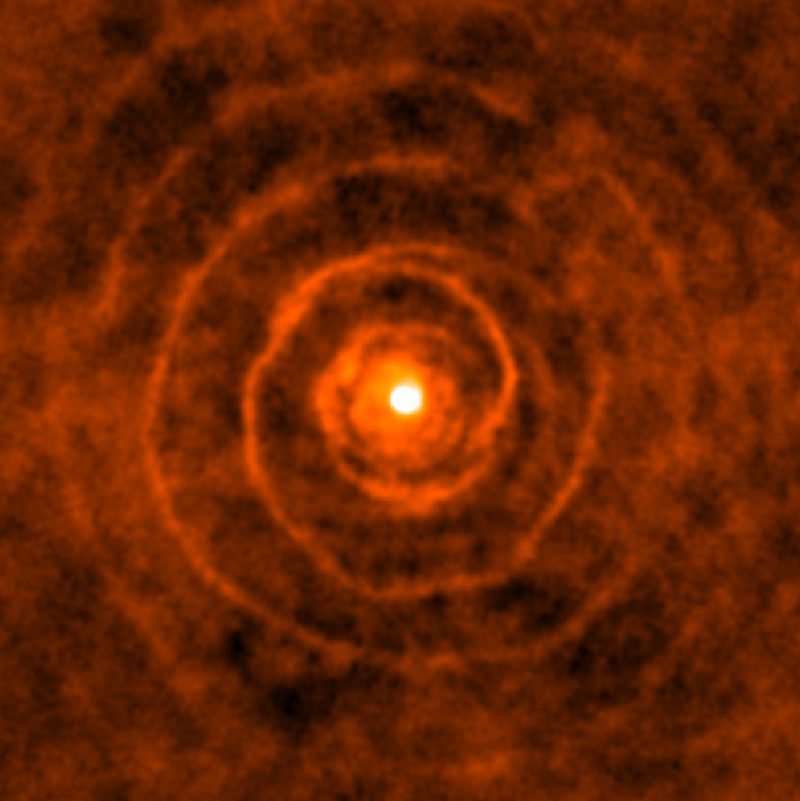
The European Southern Observatory published this image on March 6, 2017. It’s a double star system, consisting of the star LL Pegasi (aka AFGL 3068) and a companion star. The image – from the Atacama Large Millimeter/submillimeter Array (ALMA) in northern Chile – shows a huge spiral some third of a light-year across. The secret to the spiral is a nebula, or cloud of gas, surrounding the two stars. In fact, LL Pegasi is an old star, moving into what’s called the planetary nebula phase. Planetary nebulae are vast shells of gas sloughed off older stars as they age and begin to die. In the case of this double system, the two stars are creating the spiral pattern as they orbit each other. Astronomers estimate that a new layer in the spiral must appear about every 800 years, a close match to the time it takes for the two stars to orbit each other.
The video below compares the observed structure surrounding LL Pegasi with a predicted theoretical model.
And, by the way, that first image on the video – also seen below – is another beautiful image of this system, taken in near-infrared light by the Hubble Space Telescope.
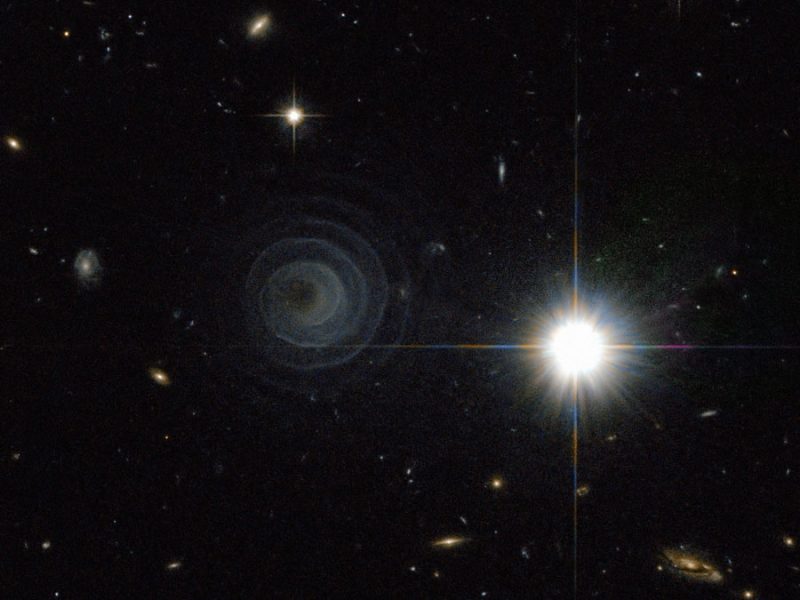
Bottom line: A double star system – consisting of LL Pegasi and companion star – orbit within a shell of gas. As they orbit, they create a spiral-shaped nebula.
Like what you read?
Subscribe and receive daily news delivered to your inbox.
More from
Deborah Byrd


Visible planets and night sky guide for October

Cassiopeia the Queen is overhead on autumn evenings
What star in the northeast flashes colorfully? It’s Capella!
Proxima Centauri is the closest star to our sun