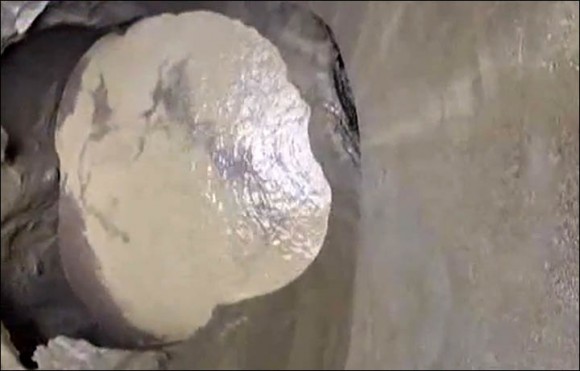
The mysterious crater on the Yamal Peninsula, discovered by helicopter last week, is not as wide as original aerial estimates suggested. It is now thought to be about 30-60 meters wide, in contrast to original estimates of up to 100 meters. Meanwhile, the crater is now known to be up to about 70 meters deep, and it’s seen to have an icy lake at its bottom. There is water flowing down the smooth crater walls. A Russian science team has returned from exploring the crater, and they still say it is a natural formation, but there are no easy answers as to what caused it.
Their next step, they say, is to use Russian satellite pictures to fix the moment when the crater suddenly formed. They believe the crater was not there two years ago.
They have also taken soil samples from inside the crater to the lab, in hopes of finding some answers.
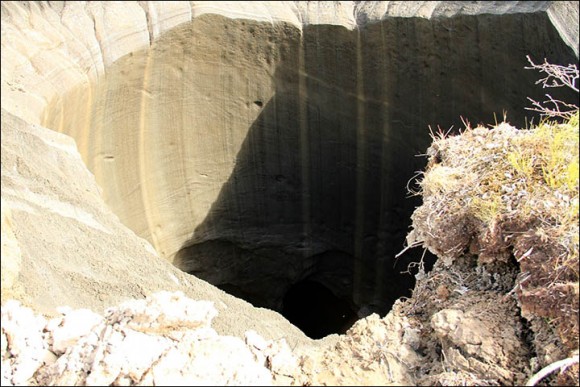
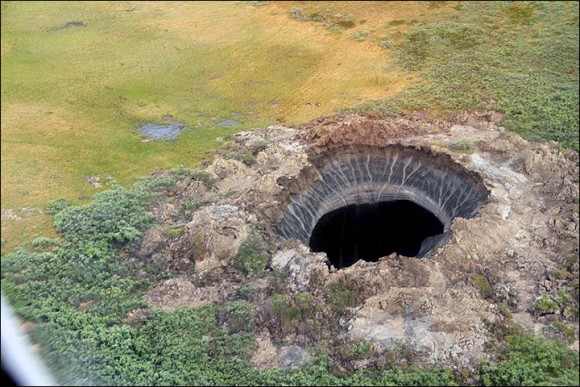
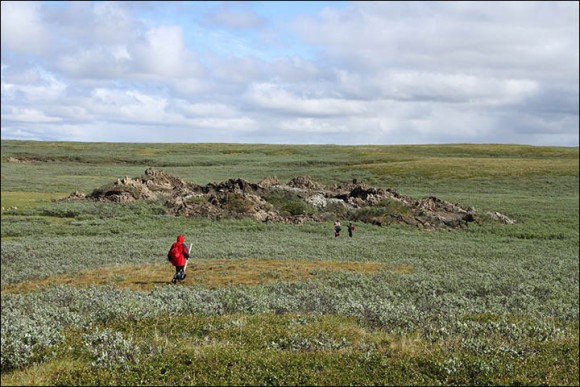
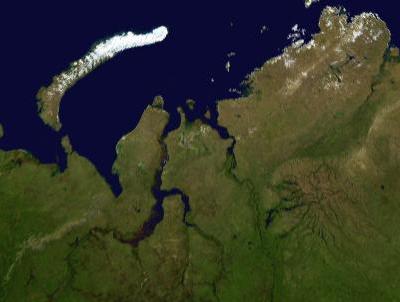
Bottom line: Scientists are back from a first exploration of the strange crater on the Yamal Peninsula in northern Siberia. Curiouser and curiouser.
Discovery story: Large crater appears at ‘the end of the world’
Like what you read?
Subscribe and receive daily news delivered to your inbox.
More from
Deborah Byrd


Cassiopeia and Perseus on October evenings

Visible planets and night sky guide for October
Orionid meteor shower 2026: All you need to know
See brightest star, Sirius, in your morning sky