Taipei, Taiwan
11:35 pm
Seestar S50
Use PowerPoint to compare the two photos side by side.
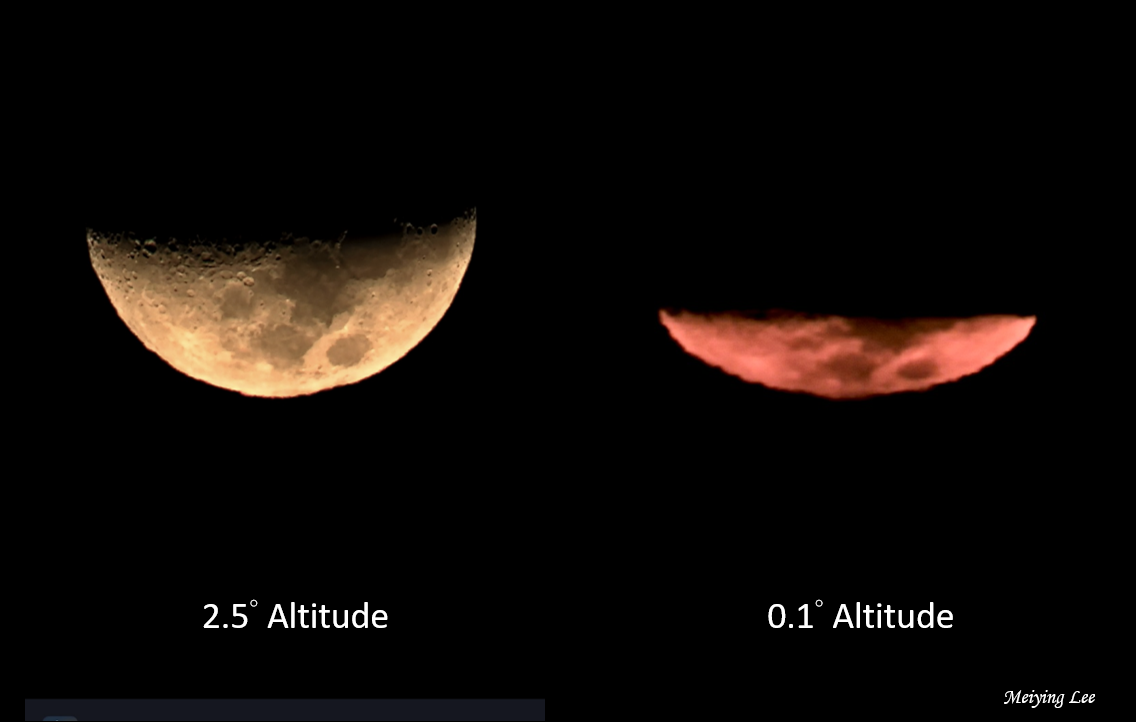
How flat can the moon actually get? When celestial bodies are near the horizon, due to variations in atmospheric density and the refraction of light, they appear more flattened. The closer to the horizon, the flatter the celestial body becomes. At about 11:35 pm on January 17th, I captured a very flat waxing crescent moon! At that time, the real moon was almost below the horizon, but due to atmospheric refraction, we could still see the moon, but it became very flat, as shown on the right in the photo. The left image in the photo was taken when the moon was at an altitude angle of about 2.5 degrees. By comparing the two, we can observe that the prominent feature, Mare Crisium, located in the lower right corner of the moon, which was originally nearly circular, has become almost elliptical, and the entire moon has flattened by almost 50%!
Like what you read?
Subscribe and receive daily news delivered to your inbox.
More from
David Callejas


Sometimes Island on Lake Travis
Sunset on Lake Travis
Ready, set, explore Earth from home
Two planets destined to die as their star expands