Erbil, KRI, Iraq
10:10 pm
Explore Scientific CF102 Triplet Apo Refractor
Stellarvue x0.8 Reducer/Flattener
AVX EQ Mount
Canon D 40 (Astro/Modified)
ZWO ASI224 MC (guiding Camera)
Stellarvue 60mm Guiding Scope
Astronomik EOS Clip on Ha (6 nm)
Astronomik EOS Clip on OIII (6 nm)
Astronomik EOS Clip on Nebula / City Light Suppression Filter
11.6 hours of integration time ISO 1,250, f 5.6
14 x 500' Ha
22 x 500' OIII
80 x 300' Lum
Stacked (Batch Stacking) in DSS
Post Processing/cropping: PixInsight / GIMP2 / Raw Therapee
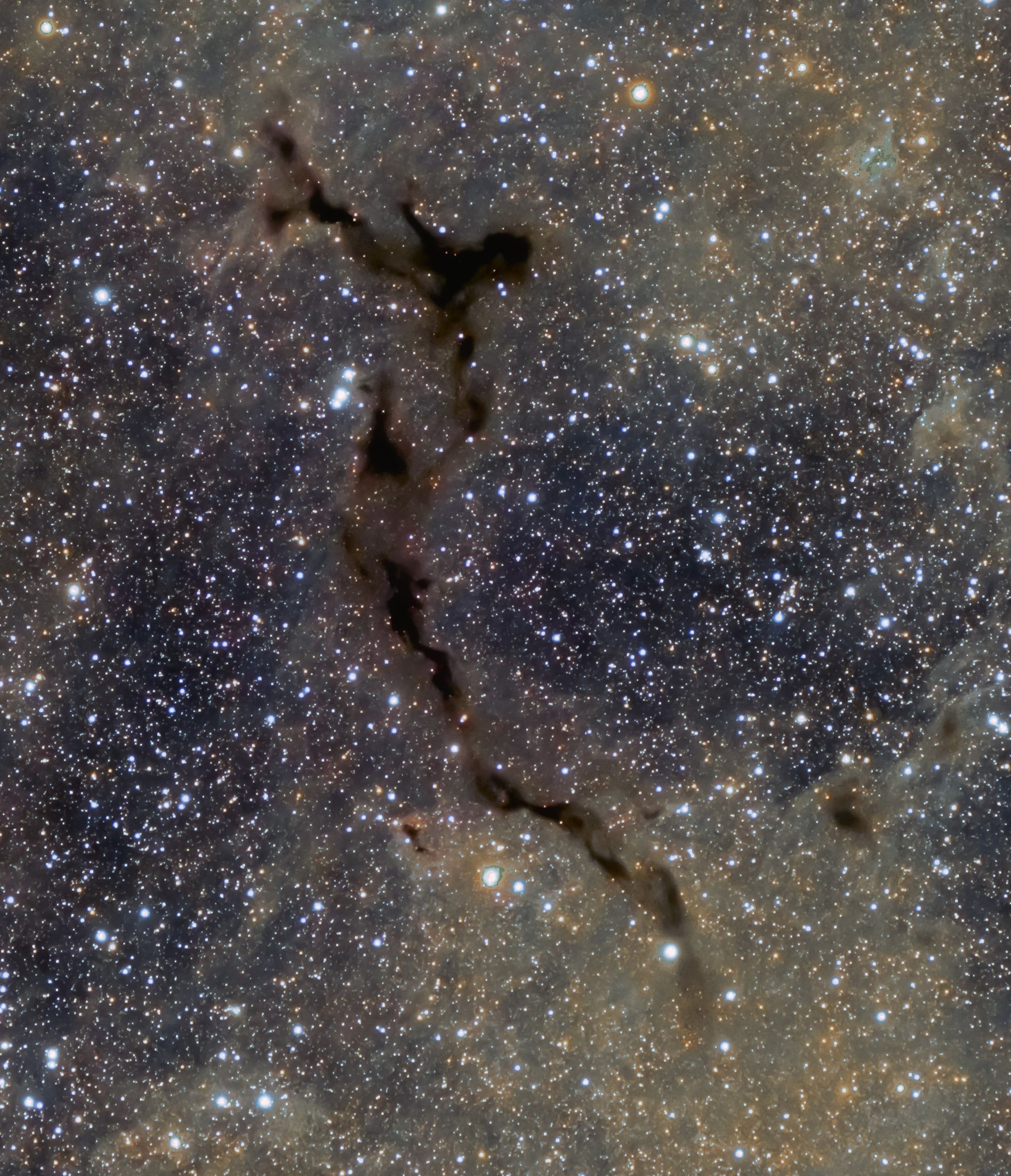
Barnard 150, also known as Seahorse Nebula, is a dark molecular cloud of dust in Cepheus constellation, so thick, that it absorbs all the light that comes from the stars behind it. This molecular cloud is part of our Milky Way galaxy, one of the 182 objects cataloged by astronomer Edward E. Barnard and it lies at about 1,200 Light Years away. Cloud location on the Milky Way's plane, makes it stand out on the background completely filled with colorful stars of any age and size.
Due to all of the light emitted from these stars, the distinctive, serpent like shape of this molecular cloud can be observed. We can easily recognize why this cloud inherent a second name of "Seahorse Nebula". This nebula is about 1 degree in size, width of two Moons. What is also interesting about this cloud, as it has 3 highly dense dust cores, which actually is a star formation regions. They were cataloged by Lynds and named LDN 1082 A, B and C.
Like what you read?
Subscribe and receive daily news delivered to your inbox.
More from
David Callejas


Sometimes Island on Lake Travis
Sunset on Lake Travis
Ready, set, explore Earth from home
Two planets destined to die as their star expands