On October 30 and 31, 2019, watch for two brilliant luminaries – the crescent moon and the dazzling planet Jupiter – to pop out near one another as dusk deepens into nightfall. Given clear skies, you’ll have no trouble seeing either world, because they are so bright! The moon is the 2nd-brightest sky object (after the sun). Jupiter is 4th-brightest (after Venus).
By early November, a larger crescent moon will have left the king planet Jupiter behind to join up with the ringed planet Saturn, the sixth planet from the sun and second-largest planet in our solar system.
Click here to find a sky almanac providing you with the setting times for the sun, moon and planets in your sky.
EarthSky 2020 lunar calendars are available! They make great gifts. Order now. Going fast!
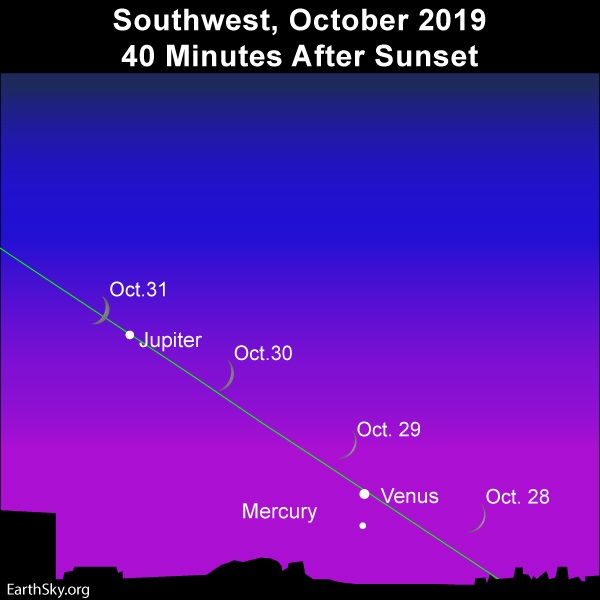
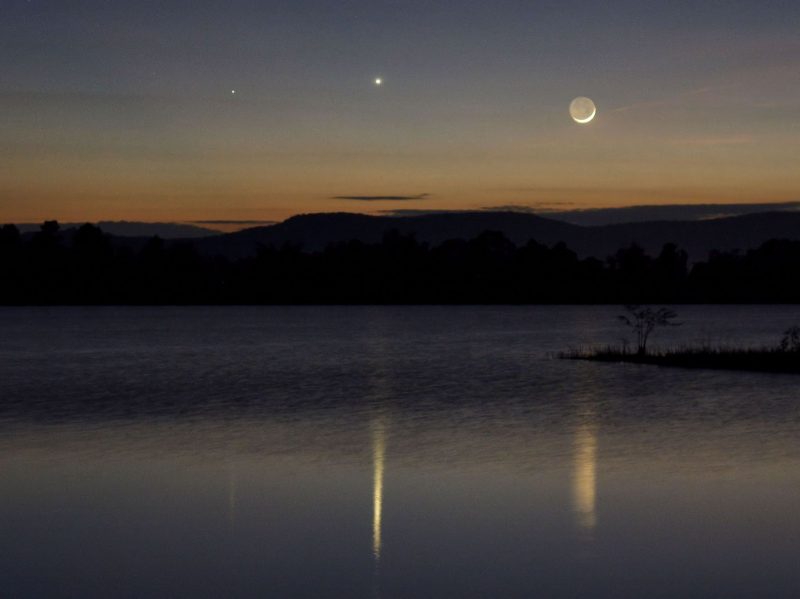
The moon, planets and stars will all move westward as evening deepens into late night.
All these celestial objects move westward across the sky for the same reason that the sun moves westward during the day. This apparent motion in our sky is really a reflection of Earth’s spin on its axis from west to east. Earth’s spin makes it appear as if the sun, stars, moon and planets all travel westward around the Earth each day.
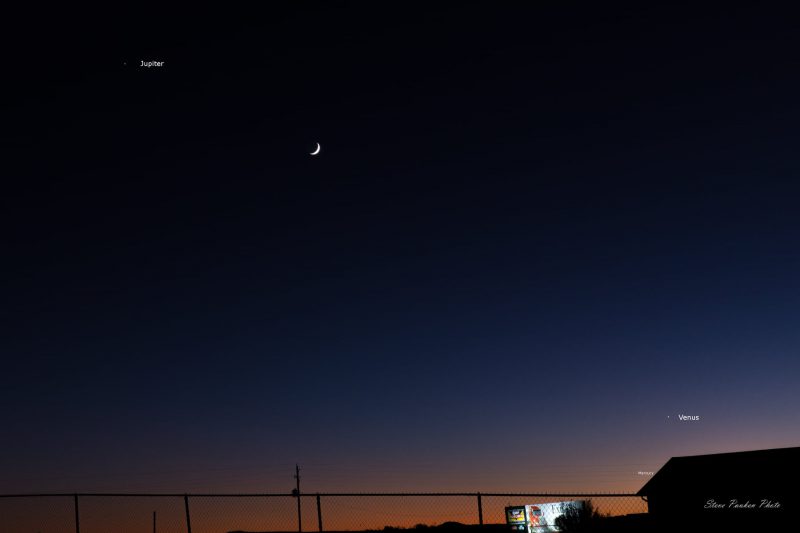
All the while, however, the moon is moving eastward relative to the stars and planets of the zodiac. The moon travels about 1/2 degree (its own angular diameter) eastward per hour or about 13 degrees eastward per day. Day by day, at the same time, note the moon’s change of position relative to the backdrop stars and planets. The moon’s change of position is due to the moon’s orbital motion.
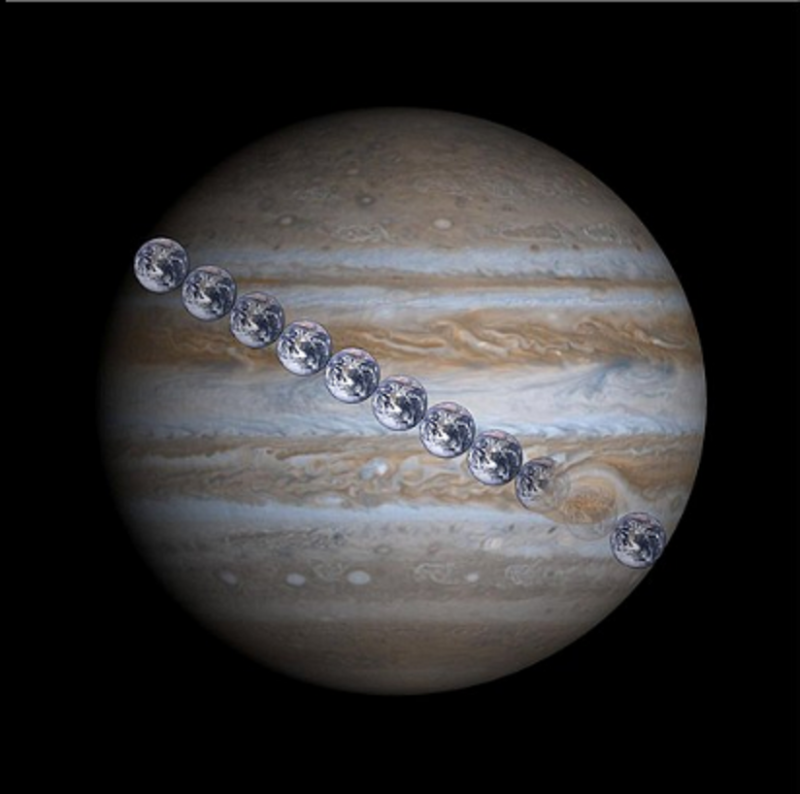
Bottom line: On October 30 and 31, 2019, as darkness falls, look for the brilliant “star” by the moon. That’ll be Jupiter, 5th planet from the sun and our solar system’s largest planet. By November 1 and 2, the moon will be closer to Saturn.
Like what you read?
Subscribe and receive daily news delivered to your inbox.
More from
Bruce McClure


Cassiopeia and Perseus on October evenings

Meet Aquarius the Water Bearer and its stars
Check out the Double Cluster in Perseus on October evenings
Find the Andromeda Galaxy using Cassiopeia