
What are circumpolar stars?
Circumpolar stars always reside above the horizon, and for that reason, never rise nor set. All the stars at the Earth’s North Pole and South Pole are circumpolar. Meanwhile, no star is circumpolar at the equator.
Anyplace else has some circumpolar stars and some stars that rise and set daily. The closer you are to either the North or South Pole, the greater the circle of circumpolar stars. The closer you are to the equator, the smaller the circle.
From the Northern Hemisphere, all the stars in the sky go full circle around the north celestial pole once a day. Or, more precisely, go full circle every 23 hours and 56 minutes. And from the Southern Hemisphere, all the stars in the sky go full circle around the south celestial pole in 23 hours and 56 minutes.

Polaris and the north celestial pole
We in the Northern Hemisphere are particularly lucky to have Polaris. It is a moderately bright star, closely marking the north celestial pole. The north celestial pole is the point of sky that’s at zenith (directly overhead) at the Earth’s North Pole.
At the equator (0 degrees latitude), the star Polaris – the stellar hub – sits right on the northern horizon. Therefore, no star can be circumpolar at the Earth’s equator. But at the North Pole (90 degrees), Polaris shines at zenith (directly overhead). So from the North Pole, every star in the sky stays above the horizon all day long every day of the year.
Your latitude determines the circle of circumpolar stars in your sky. For instance, at 30 degrees North latitude, the circle of stars within a radius of 30 degrees from Polaris is circumpolar. In the same vein, at 45 degrees or 60 degrees North latitude, the circle of stars within 45 degrees or 60 degrees of Polaris, respectively, would be circumpolar. Finally, at the North Pole, the circle of stars all the way to the horizon is circumpolar.
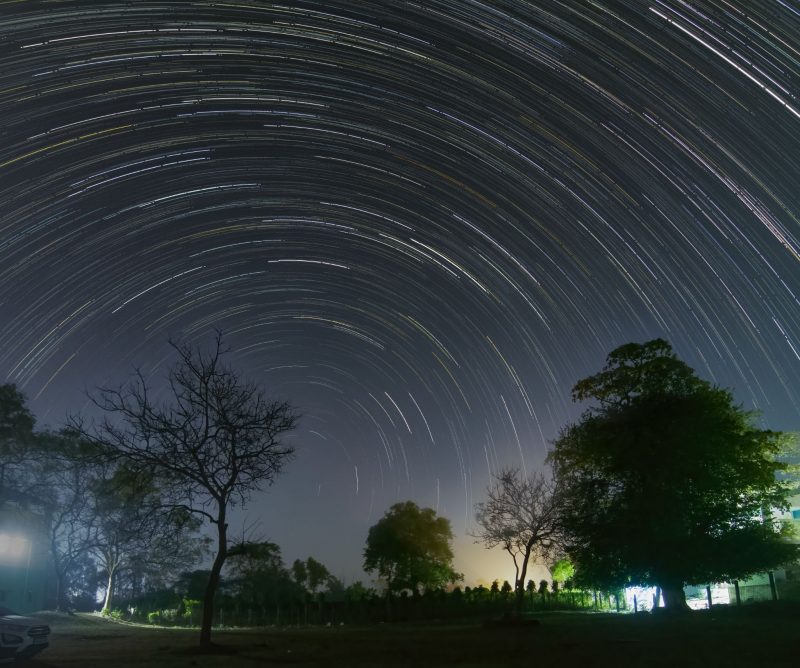
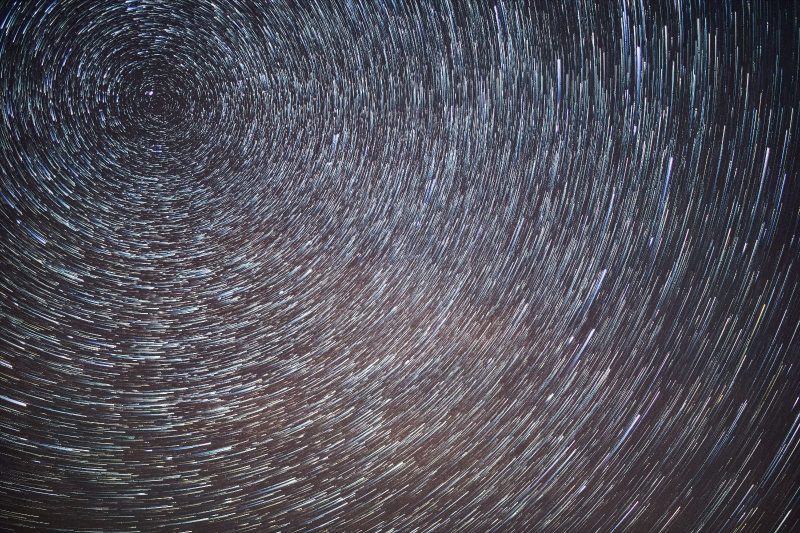
The Big Dipper is circumpolar
At 41 degrees North latitude (the latitude of New York City) and all latitudes farther north, the famous Big Dipper asterism is circumpolar. That’s because the southernmost star of the Big Dipper, Alkaid – the star marking the end of the Big Dipper handle – is 41 degrees south of the north celestial pole (or 49 degrees north of the celestial equator).
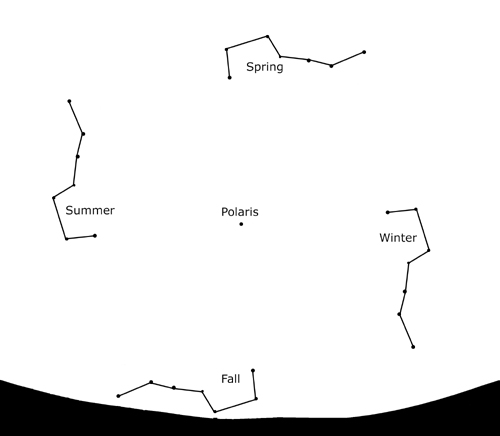
Bottom line: Circumpolar stars are those that never rise nor set from a certain location. At the poles, all stars are circumpolar, while at the equator, no star is.
Like what you read?
Subscribe and receive daily news delivered to your inbox.
More from
Bruce McClure


The Wild Duck cluster, M11, a lovely open cluster in Scutum

Sagittarius the Archer is home to deep-sky wonders
Teapot of Sagittarius points to the Milky Way’s center
The Great Rift is a dark swath in the Milky Way