Sign Up for Our Amazing Newsletter!

A daily update by email. Science news, great photos, sky alerts.

Your email address will only be used for EarthSky content.
Privacy Policy
Thank you! Your submission has been received!
Oops! Something went wrong while submitting the form.

EarthSky
One Earth. One Sky. EarthSky.
Tonight Space Sun Earth Human Best Places to Stargaze EarthSky Community Photos About Store Donate Contact Us
Subscribe
Tonight
Tonight Brightest Stars Astronomy Essentials Moon Phases Clusters Nebulae Galaxies Favorite Star Patterns Constellations
Moon Phases
May 1 full moon is a Flower Moon and micromoon
John Jardine Goss
May 1, 2026
Astronomy Essentials
Human World
Happy May Day! Today is an astronomy holiday
Deborah Byrd
May 1, 2026
Astronomy Essentials
Tonight
Visible planets and night sky guide for May
Marcy Curran
May 1, 2026
Space
Sun
Earth
Human
Human Spaceflight
Best Places to Stargaze
Community Photos
View Community Photos Trending Submit a Photo
About
Store
Donate
Space image of several small galaxies, one spiral and one a ring, with a few foreground stars.

Surprising spiral galaxy hosting a quasar jet

A recent Hubble image reveals a spiral galaxy hosting a quasar. Typically, quasars are older galaxies that have grown very massive and are not spiral shaped.

Read More
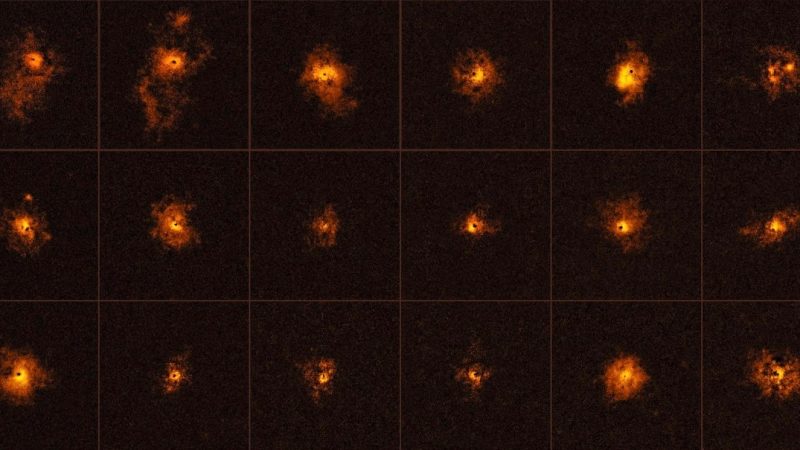
Fuzzy, glowing round blue object with a black center and a long glowing blue filament coming out from it.

Hubble’s closest look at a quasar reveals … weirdness

NASA's Hubble Space Telescope has taken the closest-ever look at a distant quasar. The new images reveal complex blobs and filaments around the quasar.

Read More
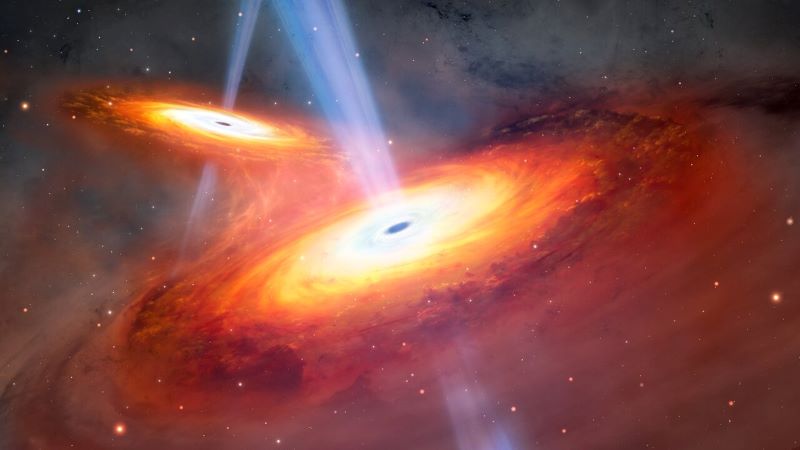
Two spiral disks glowing yellow to orange, with jets coming out. The disks are close together.

1st pair of merging quasars seen at Cosmic Dawn

For the first time, scientists have discovered the most distant merging quasars yet - at the Cosmic Dawn - some 900 million years after the Big Bang.

Read More
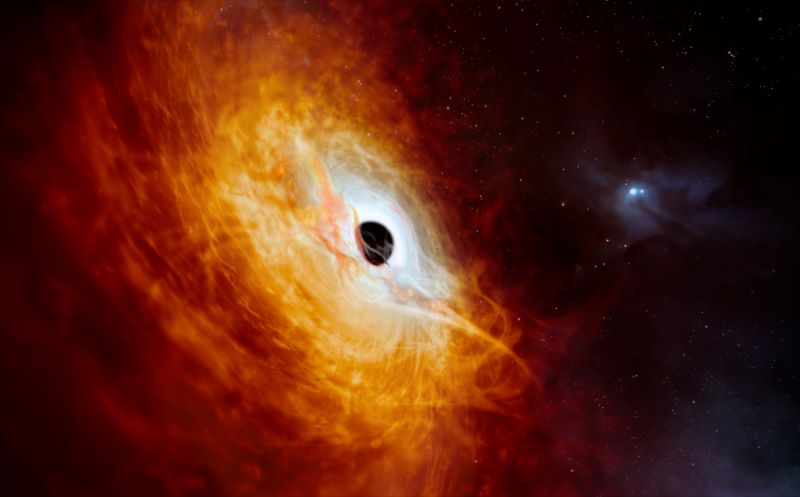
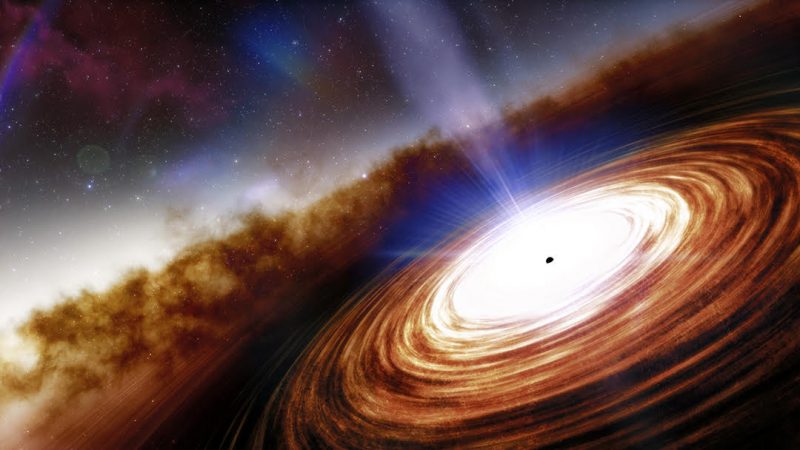
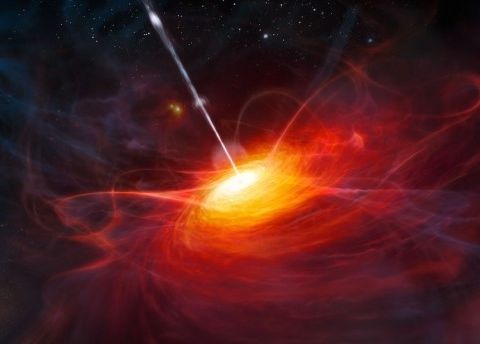
Small black sphere in the center of a wide, fat ring of glowing orange and white gases in space.

Record quasar is most luminous object in the universe

Record quasar J0529-4351 is the current record holder for most luminous object in the universe, fastest-growing black hole and largest accretion disk.

Read More
Spiral-shaped cloud, bluish outside, orange and yellow at the center. A white line crosses the center.

Do galaxy collisions power quasars? Will our Milky Way become a quasar?

Do galaxy collisions power quasars? UK astronomers have evidence suggesting they do. If so, then our own Milky Way galaxy might someday become a quasar.

Read More

Maarten Schmidt, father of quasars, dies at 92

Maarten Schmidt died on September 17, 2022, at age 92. He unraveled the mystery of quasars and changed the way scientists view the universe.

Read More
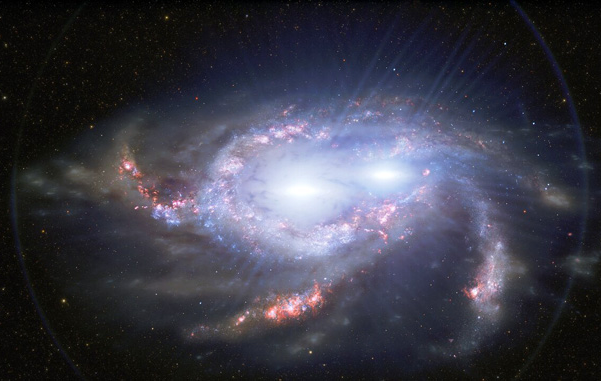
2 galaxies nearly merged, dotted with pink along arms, and centered with 2 brilliant white lights.

Hubble spots double quasars in merging galaxies

New images of the oldest known pairs of quasars, farthest and oldest yet seen, show that their home galaxies are colliding.

Read More
Blue-colored mass of swirling gas, with jets extending from the center.

What is a quasar?

A quasar is an extremely bright, distant object visible to radio telescopes. The source is an active galactic nucleus fueled by a supermassive black hole.

Read More
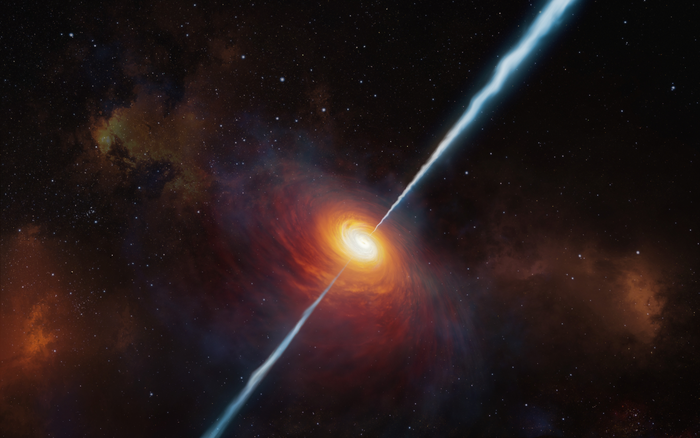
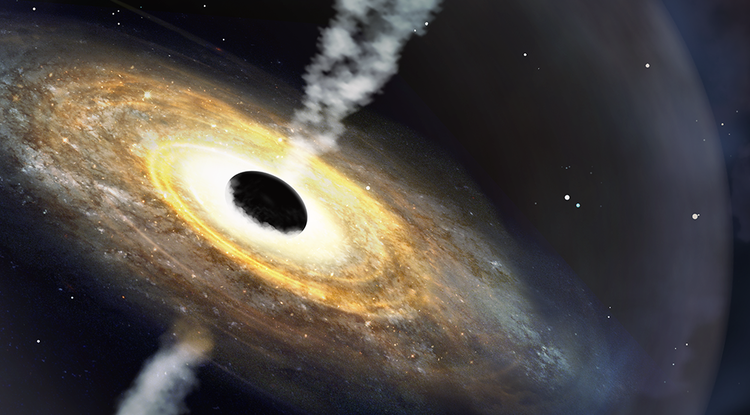
A tiny black dot at the center of a swirling disk. A jet appears to emanate from the dot, perpendicular to the disk.

A new record for the most distant quasar

Astronomers have a new measurement for the distance of quasar J0313-1806, making it the new record-holder for the most distant quasar known. We're seeing it just 670 million years after the Big Bang, or more than 13 billion light-years away.

Read More
A swirling, glowing disk, with a large black ball in center, and jets radiating from both poles of the black ball.

A monster quasar in the early universe

Astronomers just announced the most massive quasar yet known in the early universe. Its monster central black hole has a mass equivalent to 1.5 billion of our suns. The object has been given a Hawaiian name, Poniua'ena.

Read More
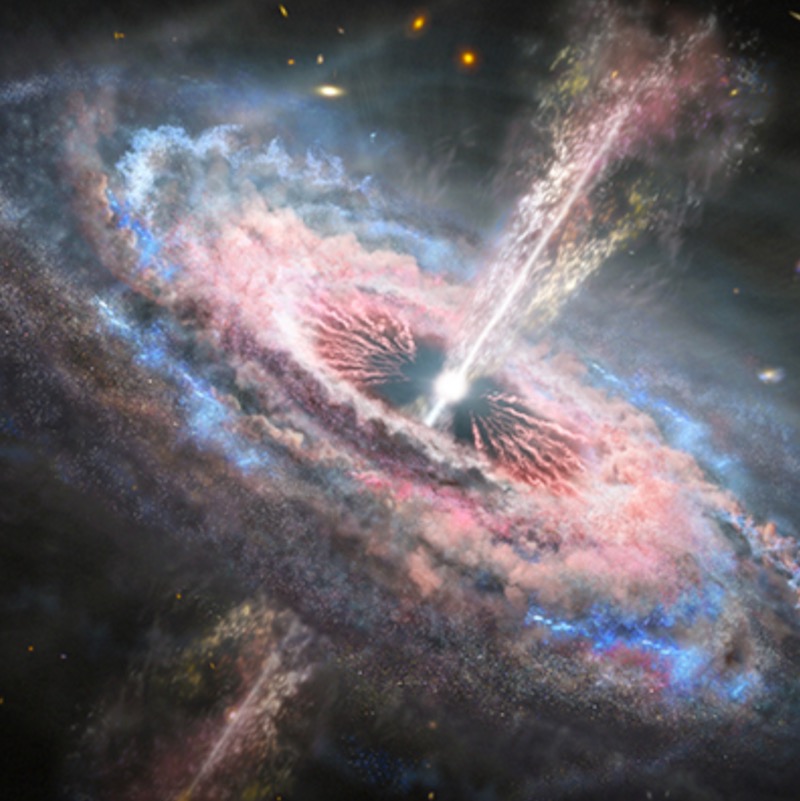
A swirling disk with 2 jets at either pole.

Quasar tsunamis rip across galaxies

Astronomers using the Hubble Telescope found that the region around a quasar's black hole pushes out material at a few percent the speed of light. These quasar tsunamis wreak havoc on the galaxies in which the quasars live.

Read More
Blue-colored mass of swirling gas, with jets extending from the center.

Astronomers find the brightest quasar yet

It shines with a brightness equivalent to 600 trillion suns. "We don’t expect to find many quasars brighter than that in the whole observable universe," said the astronomers.

Read More

Why do quasars twinkle?

Is it just a coincidence that some twinkling quasars are close on the sky's dome to hot, bright stars? New research suggests a connection and an explanation for a 30-year-old mystery.

Read More

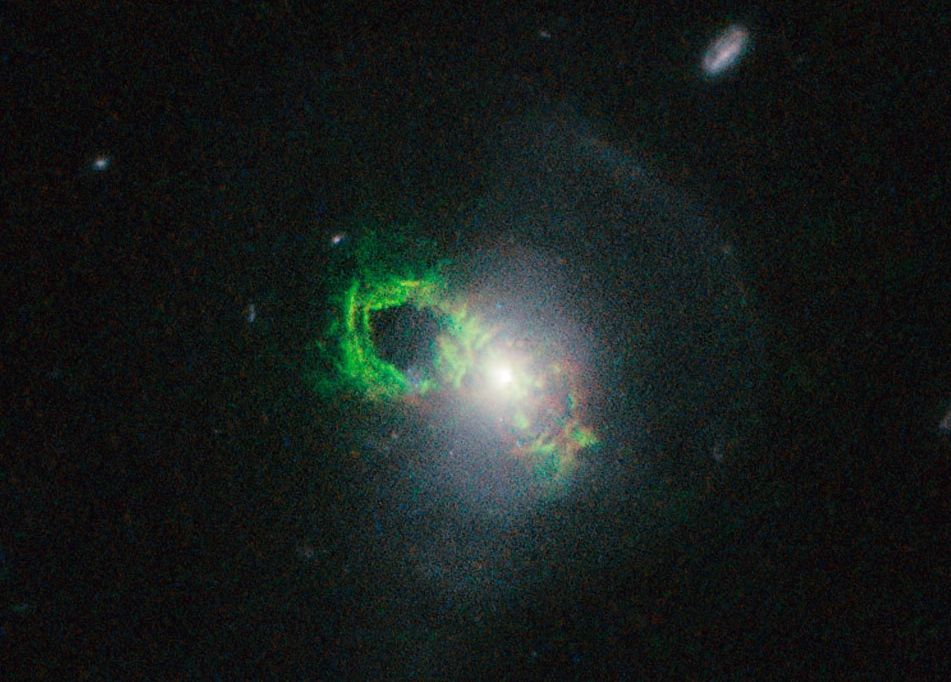
Quasars’ unexpected giant glowing halos

Astronomers didn't expect so many quasars to have halos. The discovery may help them probe the large-scale structure of the universe, aka the cosmic web.

Read More

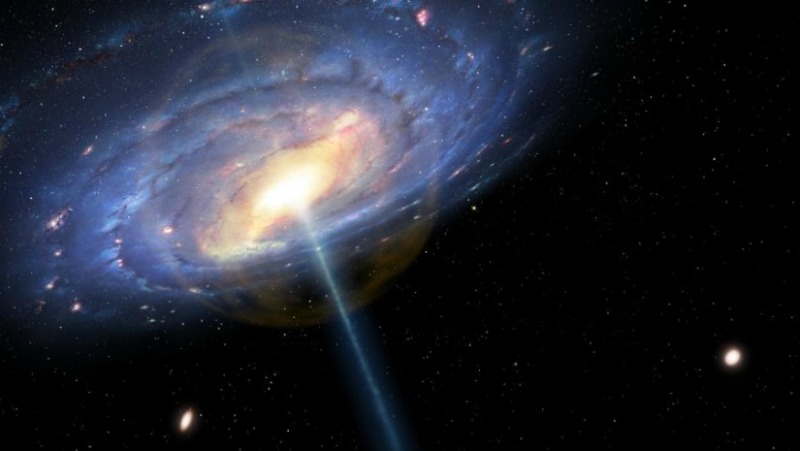
A quasar Milky Way six million years ago?

As the first human ancestors walked the Earth, our galaxy's central black hole might have been in the process of blasting away most of the galaxy's normal matter.

Read More

The extremely hot heart of quasar 3C273

Scientists combined telescopes on Earth and in space to learn that this famous quasar has a core temperature hotter than 10 trillion degrees! That's much hotter than formerly thought possible.

Read More

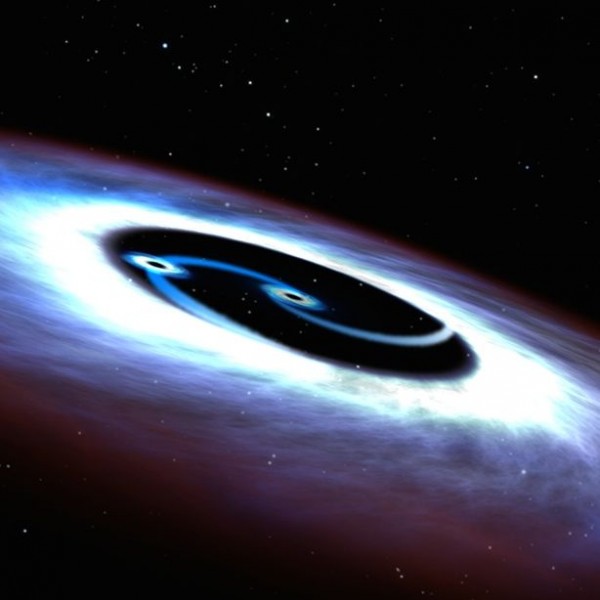
Double black hole powers nearby quasar

One black hole may be 4 million solar masses, about the same mass as our Milky Way's central black hole. The other may be 150 million solar masses.

Read More

Four quasars in a row

Astronomers at Keck Observatory in Hawaii have found a quartet of quasars, embedded in a giant nebula of cool, dense gas. The odds of four of them being so closely packed purely by chance is about 1 in 10 million.

Read More

Hubble spies enigmatic quasar ghosts

Astronomers use the Hubble Space Telescope to examine 8 ethereal wisps orbiting distant galaxies, illuminated by blasts of radiation from quasars.

Read More

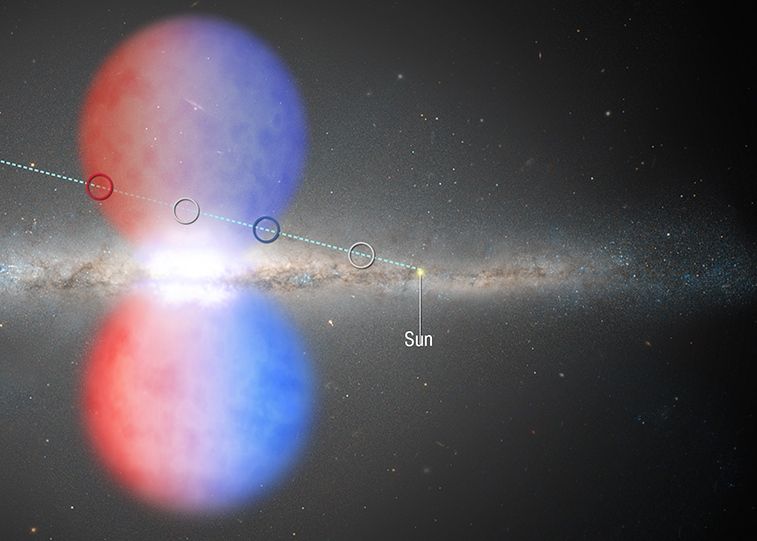
Mind-boggling Fermi Bubbles probed via quasar light

Among other discoveries, a team of astronomers found that the core of our Milky Way galaxy drives a wind at 2 million miles per hour.

Read More
EarthSky YouTube Channel
YouTube
Twitter
Facebook
Instagram
Store
Donate
© 2025-2029 Earthsky Communications Inc.
WEbsite by Milkyway.co
About
Contact Us
Terms & PRivacy