A daily update by email. Science news, great photos, sky alerts.

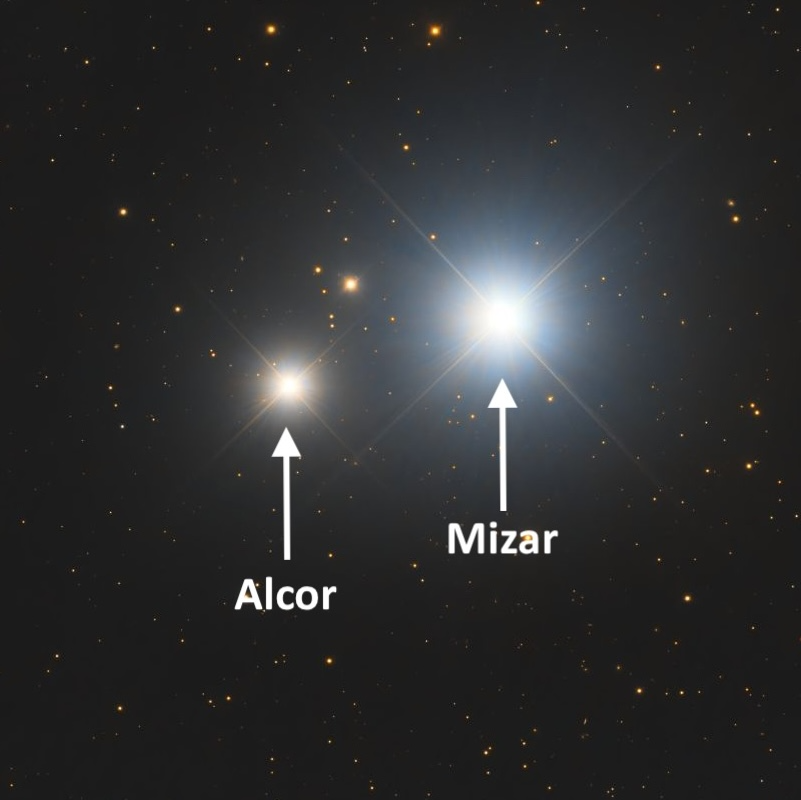
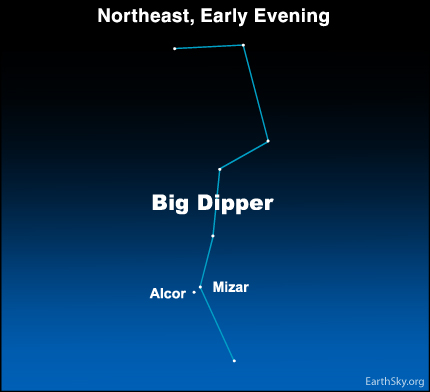
Mizar and Alcor are a famous pair of stars located at the bend of the handle of the Big Dipper. But what we see as 2 stars are really 6 stars!
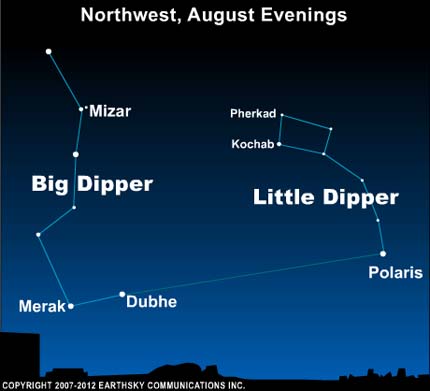
Use the Big Dipper to find Polaris, the North Star. Then notice the two stars Mizar and Alcor in the Big Dipper’s handle.
Early stargazers used this pair of stars as a vision test.
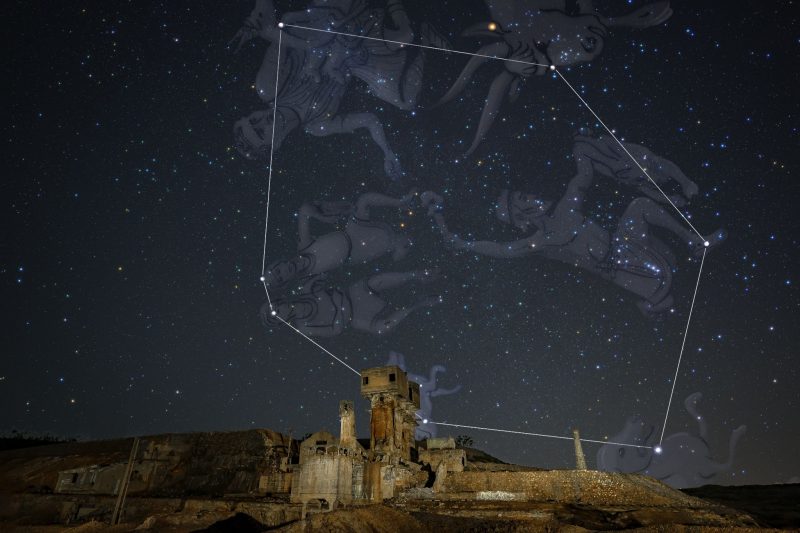
Constellations and asterisms are patterns of stars. Some asterisms consist of stars from different constellations, and some are part of 1 constellation.
The best targets for binoculars in the night sky are the moon, planets, star clusters and nebulae. You can even catch the smudge of distant galaxies in them.
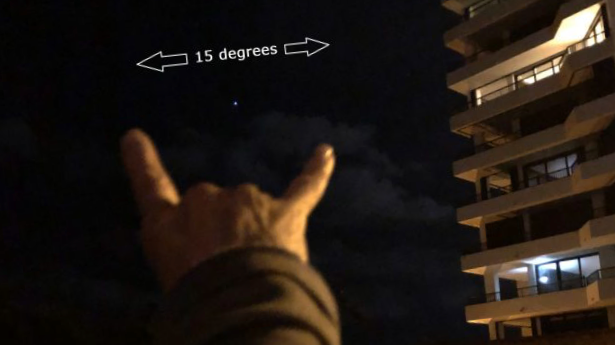
What are sky measurements - or distances - in the night sky? Here's what it means for objects to be several degrees (or arcminutes or arcseconds) apart.
This observing guide gives you a range of choices for seeing double stars with your eyes alone, with binoculars or with a telescope. And some are easy to find.
If you're new to observing the night sky, check out our top 10 stargazing tips for beginners. We'll help you explore and expand your love for astronomy.
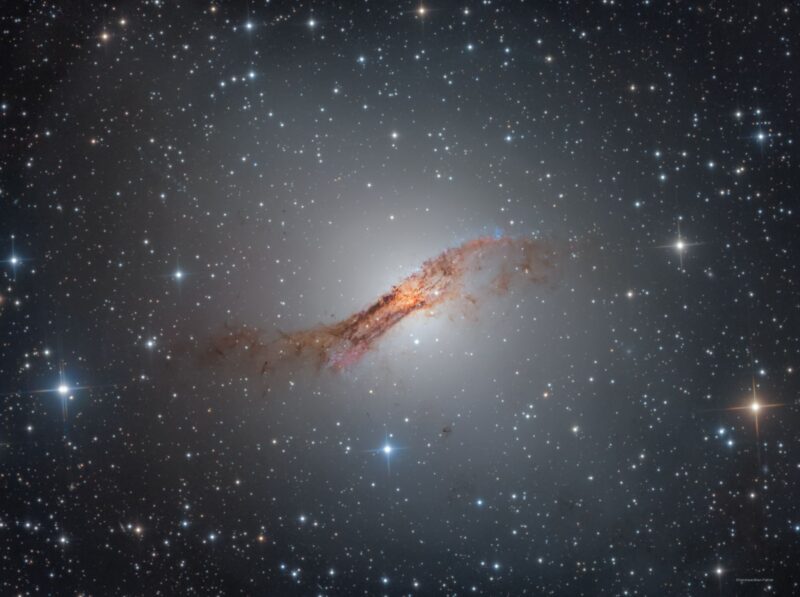
Enjoy this gallery of deep-sky photos for February 2024 from our EarthSky community. And if you have a great photo to share, send it in. We love to see them!
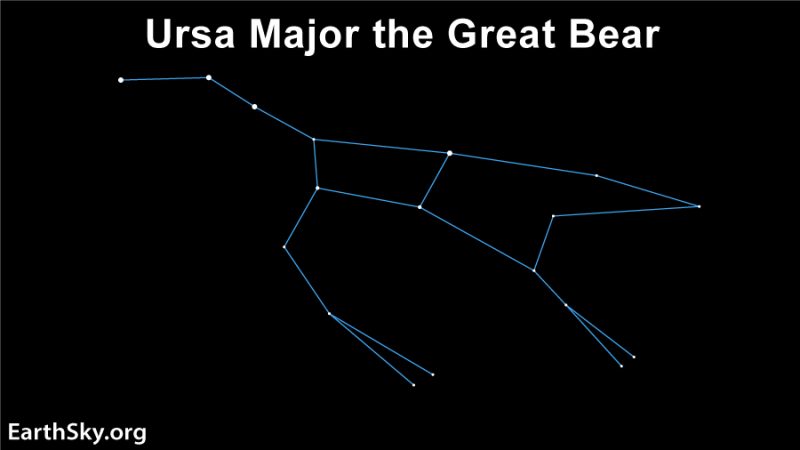
Ursa Major the Great Bear is in Northern Hemisphere skies and is home to the asterism of the Big Dipper, which you can use to find other constellations.
Many people recognize the Big Dipper in the northern sky. Here are 10 deep-sky Messier objects - 8 galaxies, a planetary nebula, and a double star - in and around the Big Dipper.
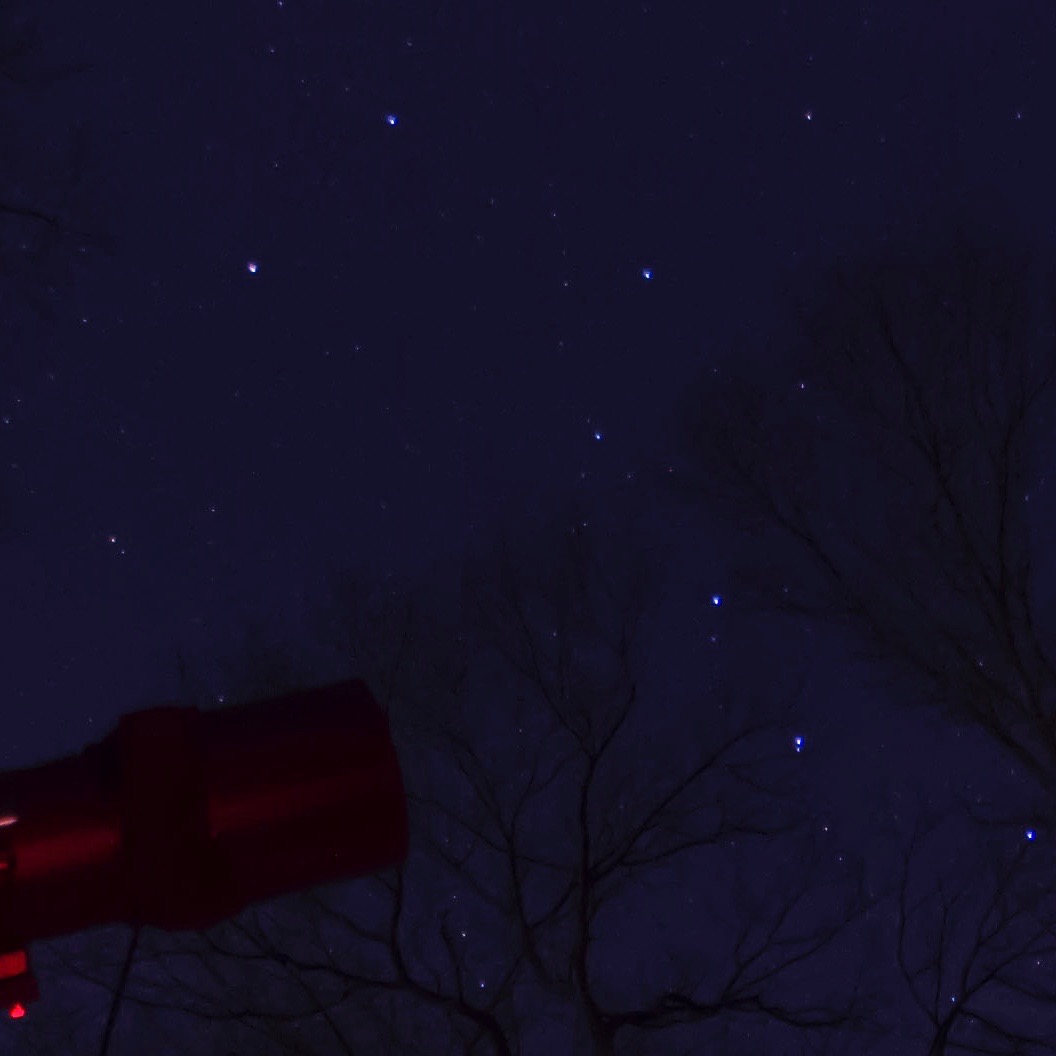
In the month of June, the Big Dipper is low in the sky before dawn.