We stumbled on this video via a May 3, 2020, re-post at ScienceAlert. Matt Russo and Andrew Santaguida of System Sounds in Toronto – which calls itself “a sci-art outreach project” – created the video. It’s part of NASA’s Astrophysics Visualizations series. NASA explained the video this way:
Space becomes sonified in this visualization of a cluster of galaxies imaged by NASA’s Hubble Space Telescope. Time flows left to right, and the frequency of sound changes from bottom to top, ranging from 30 to 1,000 hertz. Objects near the bottom of the image produce lower notes, while those near the top produce higher ones. Most of the visible specks are galaxies housing countless stars. A few individual stars shine brightly in the foreground. Stars and compact galaxies create short, clear tones, while sprawling spiral galaxies emit longer notes that change pitch. The higher density of galaxies near the center of the image – the heart of this galaxy cluster, known as RXC J0142.9+4438 – results in a swell of mid-range tones halfway through the video. Hubble’s Advanced Camera for Surveys and Wide Field Camera 3 acquired this image on August 13, 2018.
Cool!
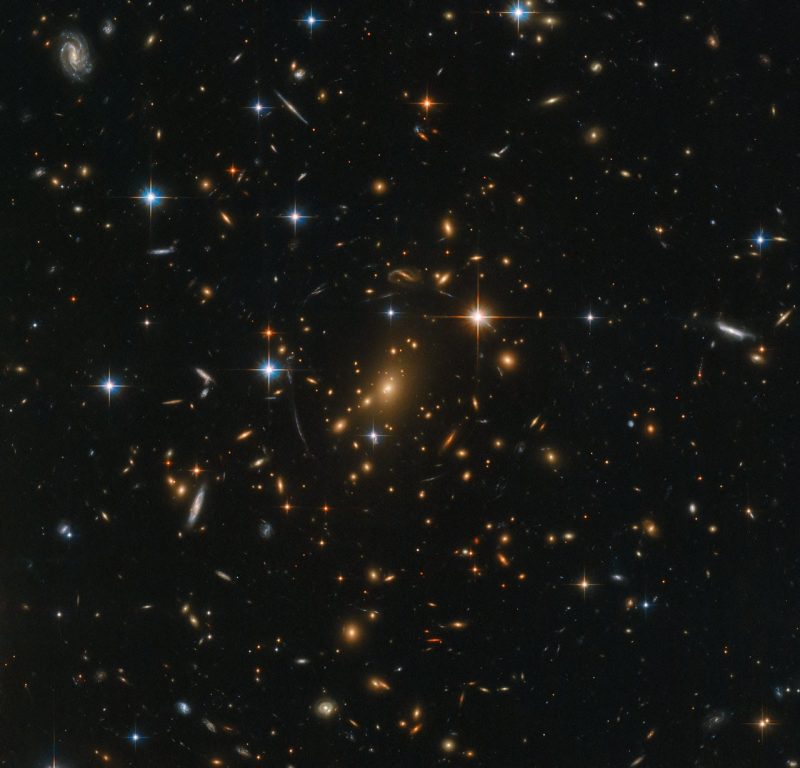
Bottom line: Musicians and scientists turned a Hubble Space Telescope image – of galaxy cluster RXC J0142.9+4438 – into music.
Like what you read?
Subscribe and receive daily news delivered to your inbox.
More from
Deborah Byrd


Cassiopeia the Queen is overhead on autumn evenings

Visible planets and night sky guide for October
What star in the northeast flashes colorfully? It’s Capella!
Proxima Centauri is the closest star to our sun