Watch a video about 1816: The Year Without a Summer.
1816 was The Year Without a Summer
The summer of 1816 became known by those who survived it as The Year Without a Summer. The temperatures, particularly in Europe and the northeastern U.S., hit record lows. Snow and frost caused crops to fail, and riots and famine followed. People didn’t know what was causing their suffering, because the culprit behind this frigid summer was located half a world away.
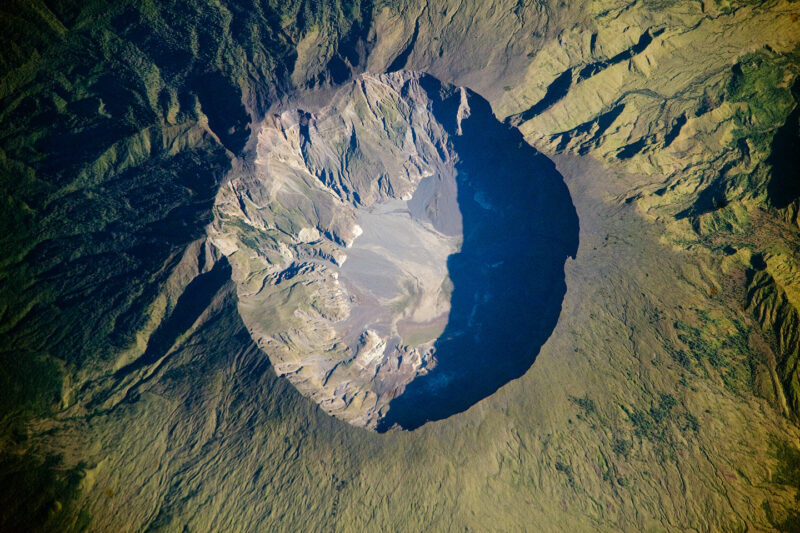
More than a year earlier – on today’s date (April 10) in 1815 – Mount Tambora, located in present-day Indonesia, had exploded violently. It was the most powerful volcanic eruption in recorded human history.
The volcano had been rumbling off and on since 1812, culminating in the big event on April 10, 1815. Tambora erupted with a volcanic explosivity index (VEI) of 7. That’s the 2nd-highest possible category for volcanoes, and the most recent VEI of 7 in history. It was so violent that people reported hearing the explosion more than a thousand miles away and mistook it for cannon fire.
Tambora spewed some 25 cubic miles (100 cubic km) of debris – ash, pumice and aerosols – into the atmosphere, plus some 60 megatons of sulfur. The initial eruption killed roughly 10,000 people. But as the debris blocked out the sun and circled around the Northern Hemisphere, deaths from starvation and disease soon followed.
The average global temperature following the explosion dropped about 5.4 degrees Fahrenheit (3 C). Estimates are that the lingering climatic change from the volcano killed an additional 80,000 people.
Sunspots visible with the eye alone
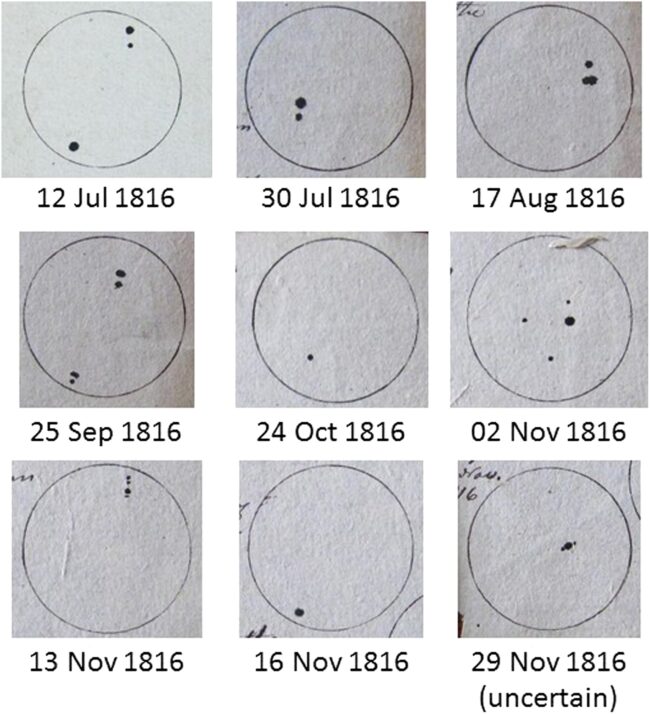
Although people had likely read about the volcano in 1815, the science of volcanology and meteorology wasn’t yet able to connect the previous year’s eruption to the “dry fog” people were seeing in northern skies. Therefore, many people understandably blamed the sun for the cold weather. Plus, the thick haze in the atmosphere allowed people to look at the sun directly, without optical aid. And what they saw were many dark blemishes on the sun’s surface. In fact, the peak of Solar Cycle 6 was in May of 1816, so sunspots would have been numerous.
While Galileo first documented sunspots back in 1611 in Starry Messenger (read here), most people had not seen them for themselves. But now the sun was so dim from particles in Earth’s atmosphere that it filtered the sun’s strong light. So they could look directly at the sun without harming their eyes. They blamed these dark spots for blocking the sun’s light and warmth. Donald R. Prothero wrote about Tambora in his book about another Indonesian volcano, Toba, titled When Humans Nearly Vanished. Prothero described the chaos in society that the Tambora eruption caused:
The London Chronicle wrote, ‘The large spots which may now be seen upon the sun’s disk have given rise to ridiculous apprehensions and absurd predictions. These spots are said to be the cause of the remarkable and wet weather we have had this summer; and the increase of these spots is represented to announce a general removal of heat from the globe, the extinction of nature, and the end of the world.’
Even some scientists thought that the sudden visibility of these spots meant that the sun would soon go out. One prediction, claiming that the world would end on July 18, 1816, caused riots, suicides and religious craziness all over Europe.
Documenting the Year Without a Summer
A Harvard-educated minister in Maine, Jonathan Fisher, began sketching the sunspots that summer, and was able to continue sketching them into 1817.
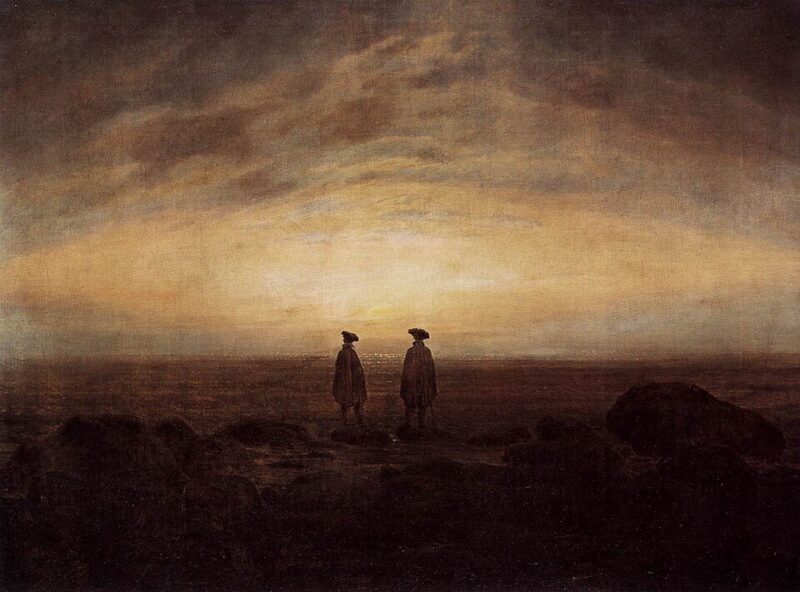
The cold, dark days that followed the eruption inspired more fanciful works as well. These include Lord Byron’s poem Darkness, along with Mary Shelley’s Frankenstein.
The poem “Darkness” begins:
I had a dream, which was not all a dream.
The bright sun was extinguish’d, and the stars
Did wander darkling in the eternal space,
Rayless, and pathless, and the icy earth
Swung blind and blackening in the moonless air;
Morn came and went – and came, and brought no day …
Bottom line: 1816 was The Year Without a Summer. Following the eruption of Mount Tambora in 1815, Earth’s atmosphere was filled with particles, darkening the day and causing crops to fail. The haze was so thick, people could see sunspots with their eyes alone.
Like what you read?
Subscribe and receive daily news delivered to your inbox.
More from
Kelly Kizer Whitt


No more leap seconds! Timekeeping is officially changing

Space is getting crowded. Here’s the latest satellite report
Visible planets and night sky guide for October
Planetary systems fall into 2 distinct families, astronomers say