Earth-observing satellite GOES-19 achieves 1st light
The GOES-19 satellite launched from Cape Canaveral on June 25, 2024. The satellite is still in its beta phase, undergoing testing before being operational, so its data are preliminary. But it has achieved first light and the views of our planet are stunning.
This is the 4th and final satellite in the GOES series, which monitors Earth’s environment. These satellites map weather on Earth, like lightning or hurricanes, and weather in space. NOAA explained:
GOES-19 orbits 22,236 miles [37,800 km] above the equator at the same speed the Earth rotates. This allows the satellite to constantly view the same area of the planet and track weather conditions and hazards as they happen.
Our latest and greatest weather satellite, GOES-19, spotted a solar eclipse today!
This brilliant imagery from GOES-19 is preliminary and non-operational. pic.twitter.com/g1FbII8Sae
— CIRA (@CIRA_CSU) October 2, 2024
Looking at Earth in multicolor
The main instrument aboard GOES-19 is the Advanced Baseline Imager (ABI). It looks at Earth in different wavelengths of the electromagnetic spectrum. This range can provide a more in-depth view of Earth’s systems in the atmosphere, on land and in the ocean.
Scientists will use the data for weather forecasts and other hazards such as dust storms, volcanic eruptions, wildfire smoke and more.
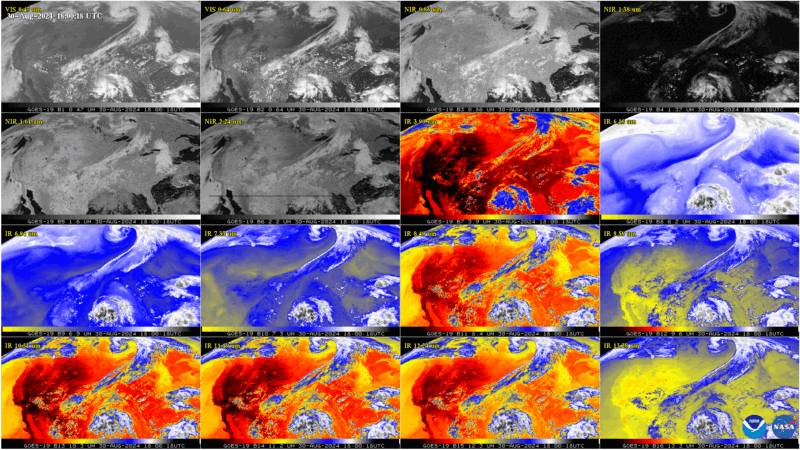
A look at the capabilities of GOES-19
3, 2, 1, blastoff last June!
EarthSky photographer and friend Greg Diesel-Walck was on hand at Cape Canaveral in Florida in June when the GOES satellite – then called GOES-U – went to space.
GOES-U, the 4th and final member of NOAA’s GOES-R series of Earth- and spaceweather-observing craft, lifted off from NASA’s Kennedy Space Center. It's designed to provide data on earthly weather and climate, plus solar data. Read more: https://t.co/dVTIcoTvEg
? Greg Diesel Walck pic.twitter.com/9mmeF99hWc— EarthSky (@earthskyscience) June 26, 2024
Good morning remote camera set up media for @earthskyscience at @NASAKennedy #nasa #goesu #noaa @NOAASatellites pic.twitter.com/BSG5eQf8Yd
— Greg Diesel Walck (@GregDieselPhoto) June 24, 2024
Going against the weather odds launching a @NOAASatellites weather satellite. Media coverage for @earthskyscience with an amazing view of the dual boosters returning to land at CCSFS tonight ? #launch #noaa #nasa @spacex pic.twitter.com/eurGU1KDdV
— Greg Diesel Walck (@GregDieselPhoto) June 26, 2024
Bottom line: The GOES-19 satellite has achieved first light and is now in beta mode. This Earth-observing satellite is already sending back stunning views of our home planet.
Like what you read?
Subscribe and receive daily news delivered to your inbox.
More from
Kelly Kizer Whitt


Another satellite breakup raises concerns about space junk

Smile mission releases its stunning 1st aurora footage!
Visible planets and night sky guide for October
Hera mission hits the brakes to arrive at asteroid