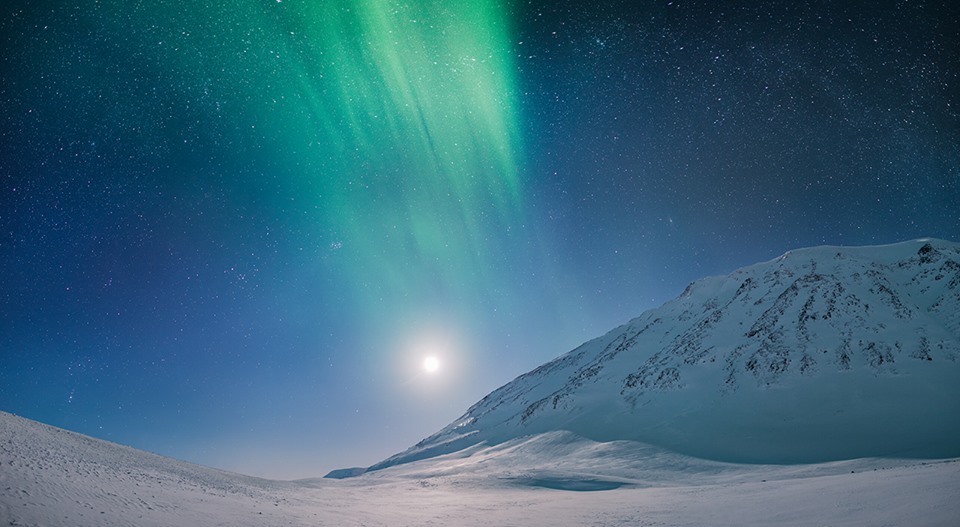
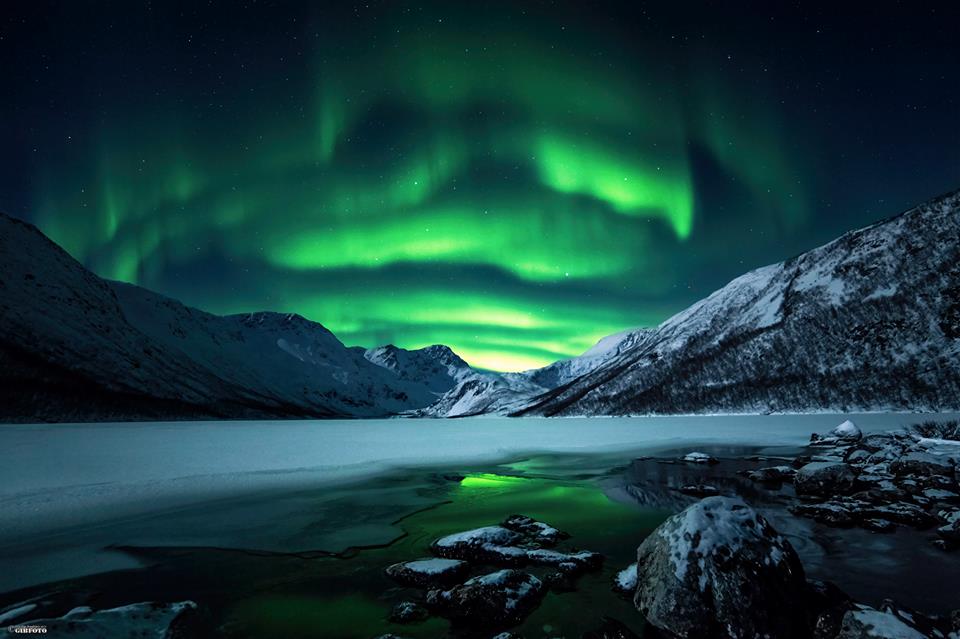
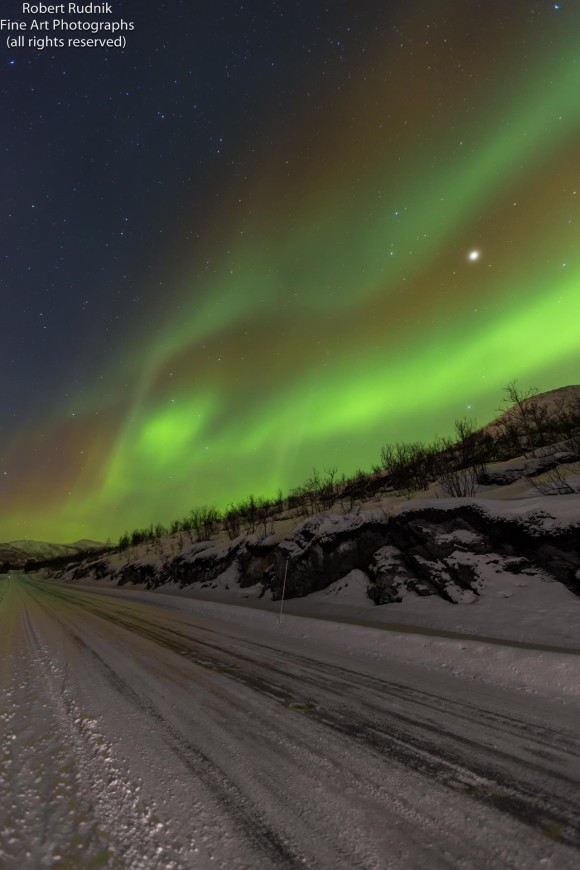
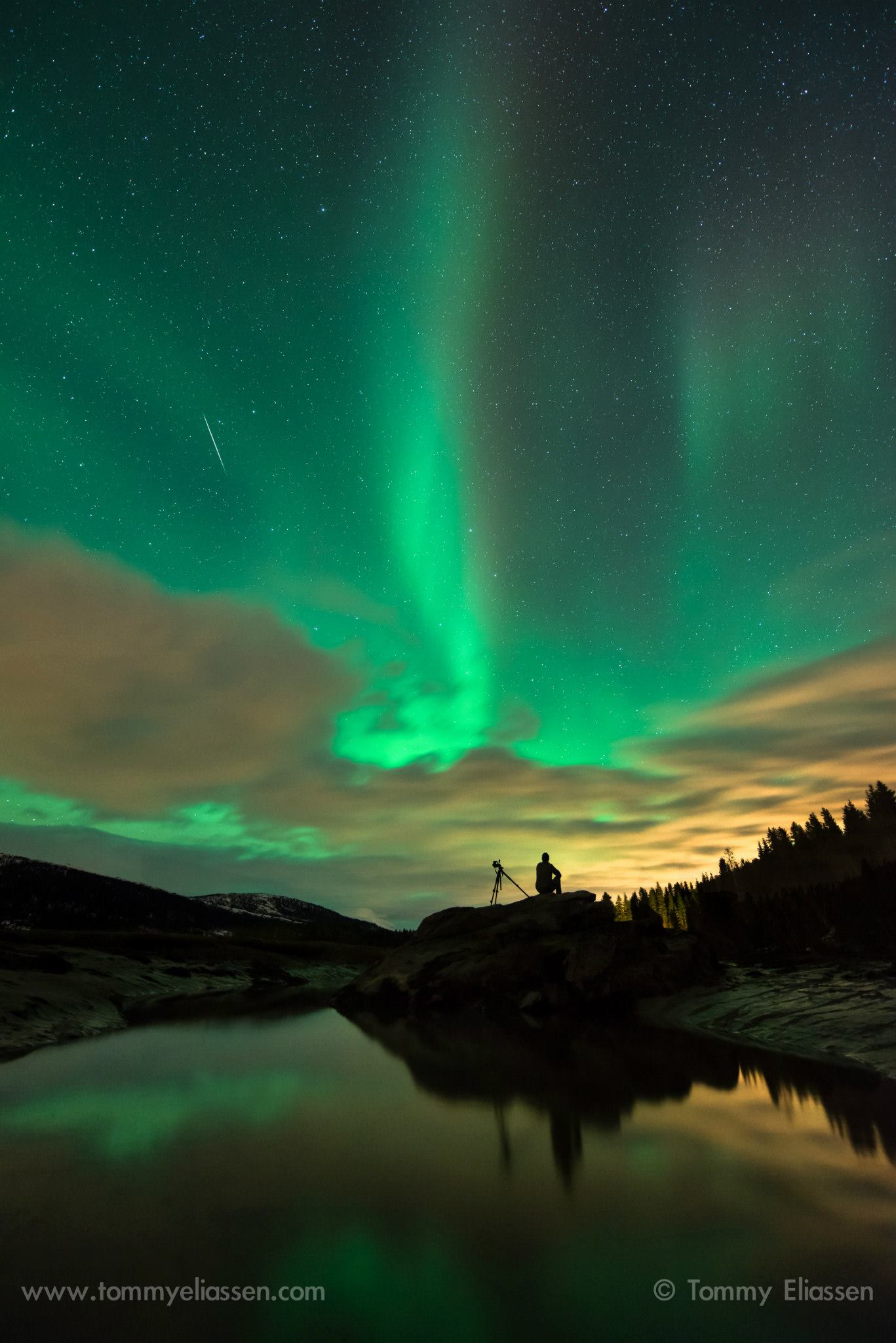
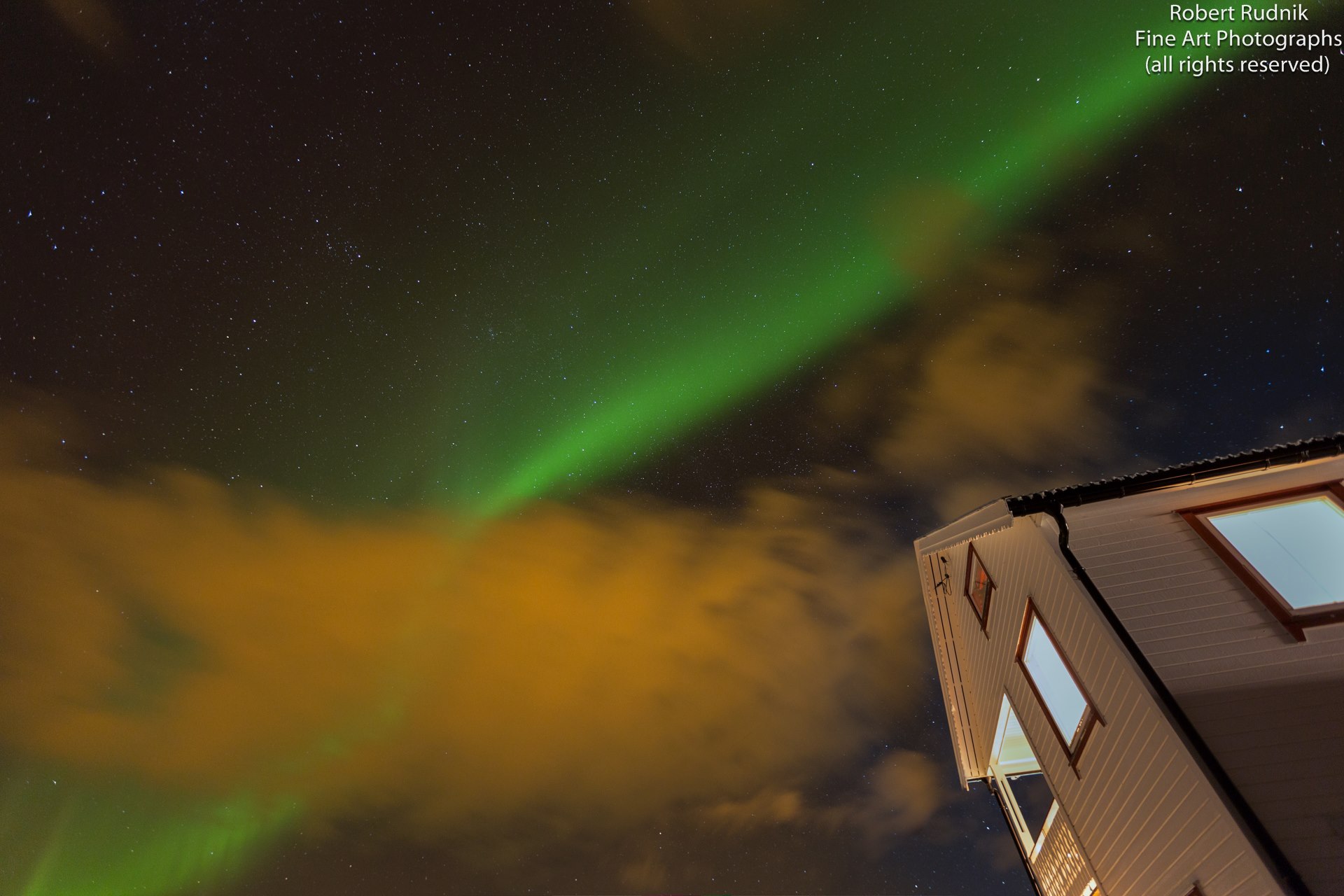
T. Richardsen in Norway captured this lovely aurora on January 9, 2014, saying, “Not crazy cold, but you certainly feel -17 degrees C (1.4 degrees F) after a few hours. Did some minor retouching to bring forth the Milky Way.” Art by T. Richardsen on Facebook.View larger. | Aurora on the night of January 9-10, 2014. Geir-Inge Buschmann, who captured this beautiful photo, wrote, “Nice conditions for aurora-hunting today, even though we had to wait a few hours in biting cold and wind, but at the end it was all worth it.” View more photos by Geir-Inge Buschmann.When charged particles from the sun strike atoms in Earth’s atmosphere, they cause electrons in the atoms to move to a higher-energy state. When the electrons drop back to a lower energy state, they release a photon: light. This process creates the beautiful aurora, or northern lights. Robert Rudnik captured this aurora on January 2, 2014. See more photos by Robert Rudnik at Nature Sky Images on Facebook.View larger. | Tommy Eliassen Photography captured this photo on January 3, 2014. At the same time the auroras were showing up at far northern latitudes, meteors in the annual Quadrantid shower were flying. Thank you, Tommy! Visit Tommy Eliassen PhotoReisafjorden, Norway bathing in auroras on January 2, 2014. The aurora often appears as curtains of lights, but can also appear as arcs or spirals, often following lines of force in Earth’s magnetic field. Most are green in color but sometimes you’ll see a hint of pink, and strong displays might also have red, violet and white colors. Image copyright 2014 Tor-Ivar Næss. Via WaitForIt on Facebook.Aurora on January 1, 2014 by Geir-Inge Bushmann. The lights typically are seen in the far north – the nations bordering the Arctic Ocean – Canada and Alaska, Scandinavian countries, Iceland, Greenland and Russia. See more photos from Geir-Inge BushmannNew Year’s Eve aurora by Robert Rudnik. Oxygen gives off the green color of the aurora. Nitrogen causes blue or red colors. See more photos by Robert Rudnik at Nature Sky Images on Facebook.
Deborah Byrd (asteroid 3505 Byrd) helps edit EarthSky.org and is a frequent host of EarthSky videos. Deborah created the EarthSky radio series in 1991 and founded EarthSky.org in 1994. Prior to that, she had worked for the University of Texas McDonald Observatory since 1976, and created and produced their Star Date radio series. She has won a galaxy of awards from the broadcasting and science communities, including having an asteroid named in her honor in 1990, a Public Service Award from the National Science Board in 2003, and the Education Prize from the American Astronomical Society in 2020. A science communicator and educator since 1976, Byrd believes in science as a force for good in the world and a vital tool for the 21st century. "Being an EarthSky editor is like hosting a big global party for cool nature-lovers," she says.
Like what you read? Subscribe and receive daily news delivered to your inbox.
Thank you! Your submission has been received!
Oops! Something went wrong while submitting the form.