About 66 million years ago, a space rock hurtled toward Earth and smashed into our planet along the coast of what’s now the Yucatan Peninsula in Mexico. The impact kicked massive amounts of debris up into Earth’s atmosphere. This debris ultimately circled the globe. It blotted out the sun for years afterwards, creating the catastrophic extinction event on Earth that killed the dinosaurs. Now new research suggests it did more. It also created an underground hydrothermal habitat – a place where new life could take hold and thrive – that lasted for 8 million years.
The new research comes from the University of Glasgow in Scotland. The journal Communications Earth & Environment published the peer-reviewed study on June 9, 2026.
The huge resulting crater
When the 6.5-mile-wide (10-km-wide) asteroid struck Earth, it formed the Chicxulub crater, which – though buried under layers of sediment and water – still spans 125 miles (200 km) today.
The researchers believe the impact was so intense that it melted rock, which mixed with seawater from what’s now the Gulf of Mexico. They think this process created porous material at the crater site, which then resulted in many tiny pockets of heated water. Within these pockets, the conditions for microbial life existed.
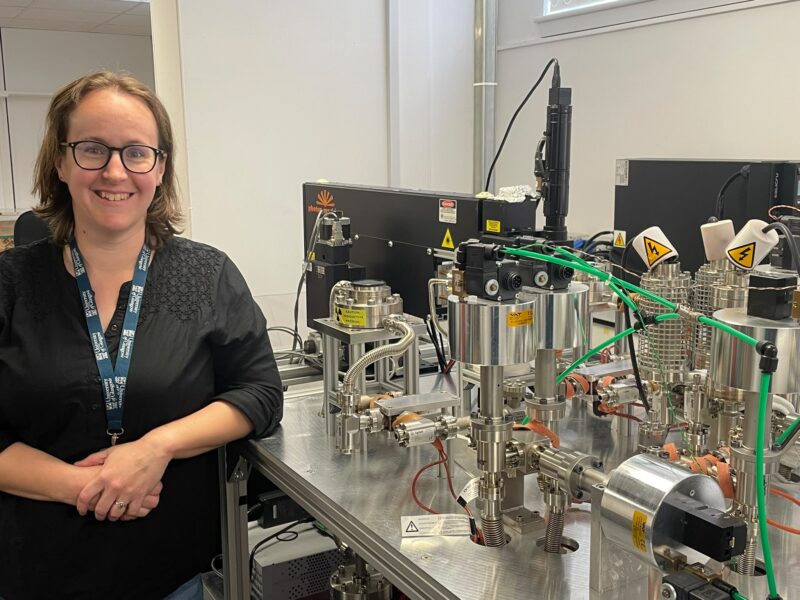
The researchers, led by Annemarie Pickersgill of the Scottish Universities Environmental Research Centre, found that this post-impact hydrothermal habitat lasted 8 million years. That’s four times longer than previous estimates. If correct, it would make this underground habitat the longest-lived impact-generated hydrothermal system known.
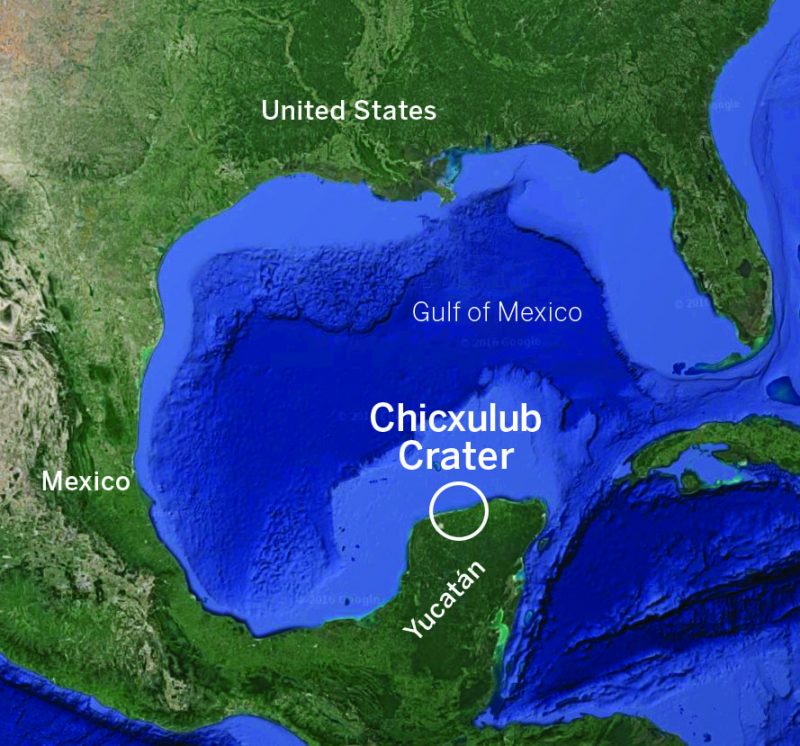
How the dinosaur-killing asteroid created an abode for life
The researchers came to this conclusion after studying samples from the Chicxulub crater and running computer models of the impact. Back in 2016, they drilled samples from the crater ring. What they found was a potassium-rich type of rock called feldspar. The feldspar served as smoking-gun evidence for two major things: the presence of a massive heat source and the movement of water.
So the scientists believe the feldspar formed after the asteroid impact, as heated sea water mixed with Earth’s crust.
And finding this mineral suggests that a giant, underground plumbing network of hot, circulating water actually did exist.
The team then used argon-argon dating to learn the age of their samples. And that dating showed the rocks formed 66 million to 58 million years ago.
A new record for hydrothermal habitats
The new research extends the period during which, scientists believe, the hydrothermal habitat for microbes existed. The new time period is 6 million years longer than previous estimates. The researchers pointed to three conditions that helped maintain the long habitat: high rock permeability, sustained heat from the impact and natural geothermal conditions. Pickersgill said:
Wherever on Earth you find flowing warm water, you find life. And we’ve known for a while that asteroid impacts create hydrothermal systems. Previous research undertaken in the early 2000s suggested that the system created by the Chicxulub impact lasted for about 2 million years. Those findings were based on computer models which were, even at the time, regarded as conservative estimates, but we were still surprised by the outcomes of our research.
Implications for early Earth
While we don’t yet know what, if anything, lived in these habitats during this time, the findings have broader implications for life on Earth and elsewhere. Learning about the conditions and longevity of subterranean hydrothermal habitats could be relevant to conditions for life on early Earth or other planets like Mars. Pickersgill said:
We know that planets like Mars, which don’t have the protection of a thick atmosphere as Earth does, have experienced many, many impacts during their history. That includes periods when water may have been much more abundant, and big enough impacts could have spurred the formation of long-lived hydrothermal systems which could have supported life.
The porous, fractured rocks created by impacts create microenvironments where micro-organisms can be protected from radiation and extreme temperatures. Those conditions give life the chance to take hold and flourish. And that is likely what happened here on Earth billions of years ago.
As we look to the future of space exploration, these findings could help future missions to other planets determine which impact craters might have been most likely to sustain life.
Bottom line: Scientists have new evidence that the dinosaur-killing asteroid that struck Earth created a hydrothermal habitat that lasted for 8 million years.
Source: A long-lived impact-generated hydrothermal system at the Chicxulub impact structure
Read more: When the asteroid killed the dinosaurs: Blow-by-blow account
Like what you read?
Subscribe and receive daily news delivered to your inbox.
More from
Kelly Kizer Whitt


Why does anything exist? New theory emerges

Visible planets and night sky guide for October
Euclid was mapping the universe. Then it found a comet
Auriga the Charioteer and bright Capella on October evenings