



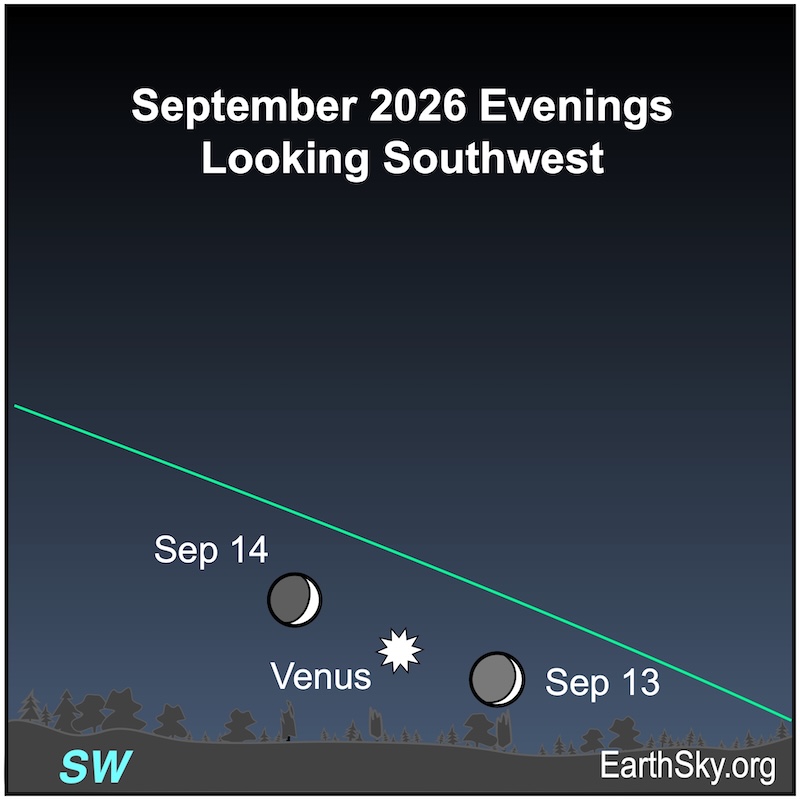
Join EarthSky’s Marcy Curran for your skywatching best bets for the week of September 14. Don’t miss dazzling Venus at its brightest this week in the west after sunset. And the moon will visit Venus on the evenings of September 13 and 14. Plus, this Saturday, September 19, is International Observe the Moon Night. See what’s in store in the night sky this week. Watch here or on YouTube.
Venus brightest? Now’s the time
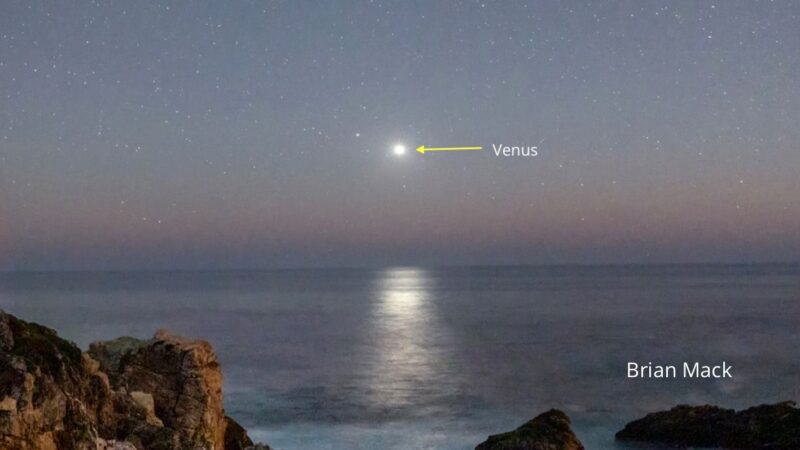
Venus is blazing in the evening sky now. You’ll see it easily in the west after sunset. It lives up to its reputation of outshining all other objects in our sky, except the sun and moon. UFO reports are probably increasing! But you’ll know better. It’s not a UFO in the western twilight sky. It’s Venus, the 2nd planet from the sun.
This inner world is now speeding up from behind Earth, the 3rd planet, in the race of the planets around the sun. It’ll go between us and the sun on October 23-24, 2026.
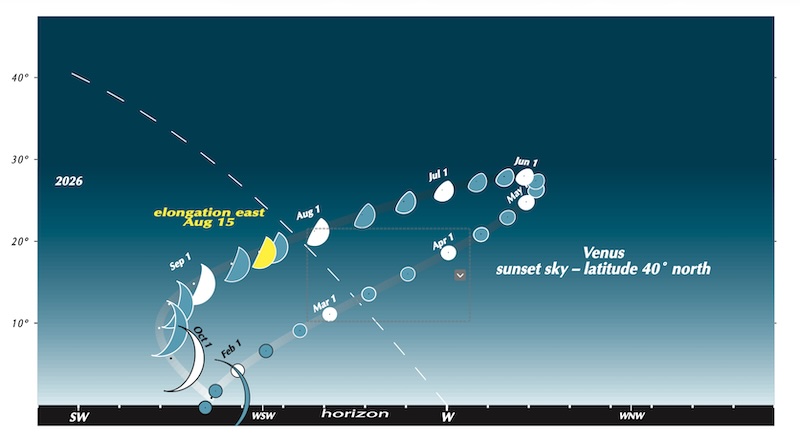
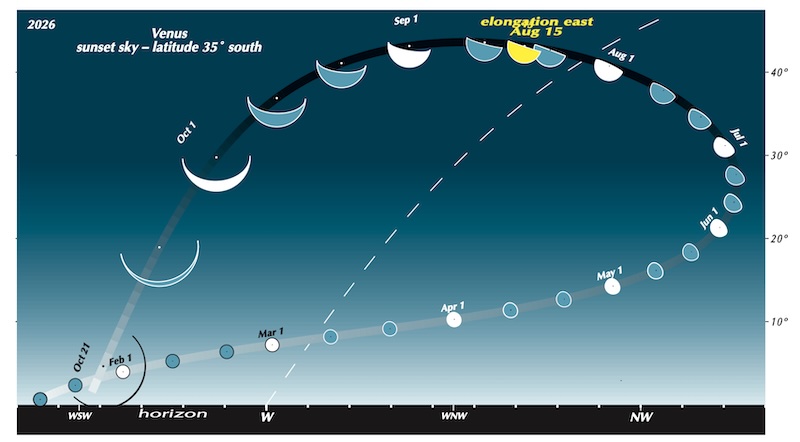
Whenever that happens, about five weeks before (and after), Venus shines at greatest brilliancy in our sky. You’ll sometimes hear this peak in brightness in our sky called greatest illuminated extent, for reasons explained below. Venus will reach its peak brilliancy on September 18. Then it’ll be brighter than it’s been for all of 2026 so far.
Start watching now! You can’t miss it. And be sure to look for the waxing crescent moon shining near Venus this evening and tomorrow evening. It’ll be lovely to see this blazing world near a slim crescent in the evening sky.
So Venus is now brighter than it’s been for all of 2026. Clouded out this week? Never fear. Venus will have a 2nd greatest brilliancy after it goes between us and the sun in late October, when it emerges into the predawn sky. Its predawn greatest brilliancy will happen on November 29, 2026.
Afterwards, Venus won’t appear this bright to us again in the evening sky until April 2028.
How bright is it?
Venus is always the 3rd brightest object in our sky, after the sun and moon. But it’s especially blazing around now.
Venus will reach its maximum brightness at 23 UTC on September 18. Then it’ll shine at magnitude -4.8. That’s much, much brighter than any star.
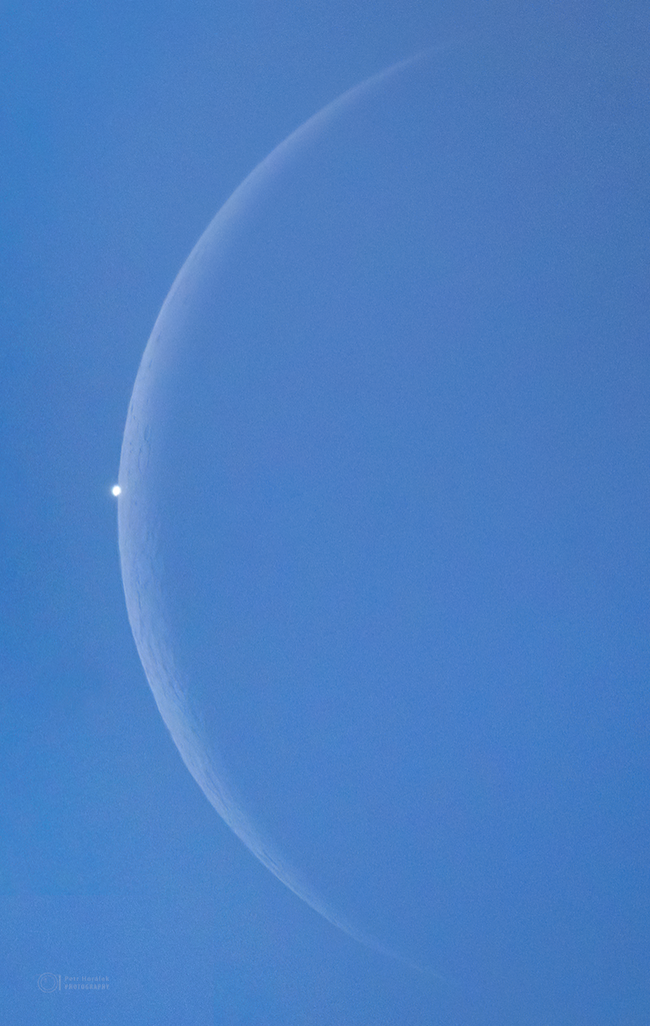
And the fact of this very bright Venus in mid-September 2026 presents an interesting challenge for experienced observers in parts of Europe, Africa and Asia. They might be able to catch an occultation of Venus by the moon around 11 UTC on September 14. In other words, the moon will pass in front of Venus. The trick is, the event will happen in daytime. It’s likely only experienced observers will see it.
Read about the daytime occultation of Venus from In-the-sky.org.
For the rest of us: How to see Venus in the daytime
Why does Venus look brightest now?
It’s only when we see Venus as a crescent that this world comes close enough to us to appear brightest in our sky. In other words, it only happens before and after inferior conjunction, when Venus goes between us and the sun. Again, that’ll happen next on October 23-24, 2026.
Greatest elongation for Venus is a combination of two factors: Venus’ disk size in our sky, and its phase in our sky.
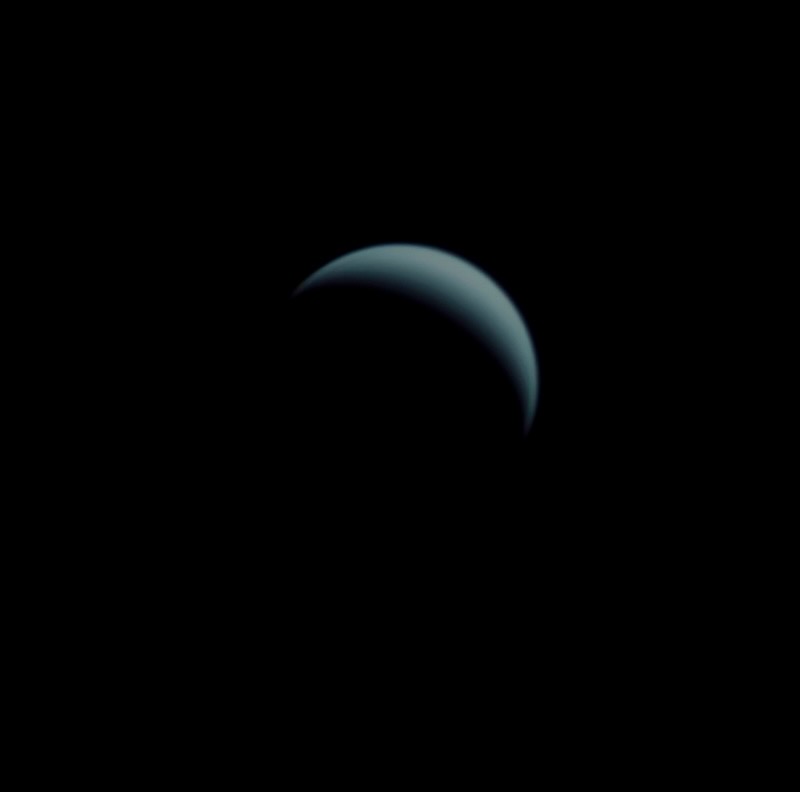
Disk size. If you could see Venus through a telescope now, you’d find the planet as a relatively large disk (around 40 arcseconds). That’s because it’s relatively close to us now.
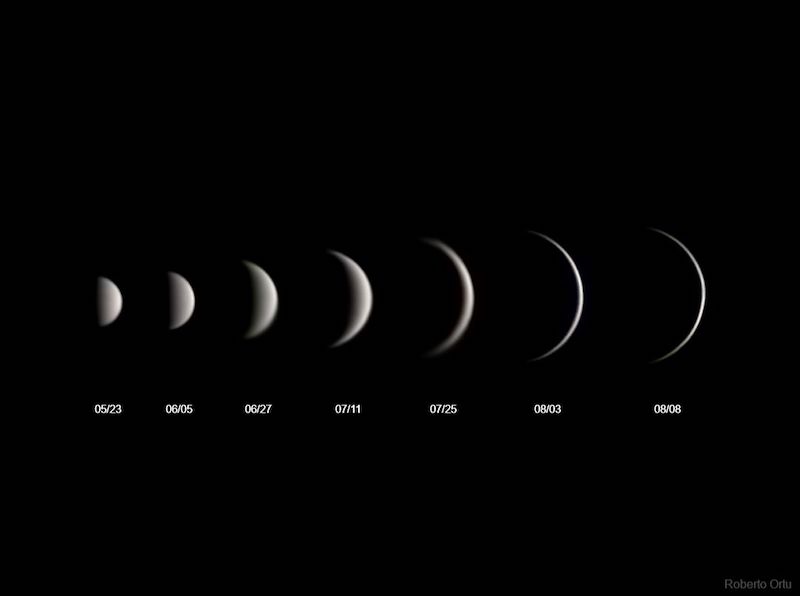
Phase. Venus is now in a waning crescent phase. Its thinnest phase will come when it goes between us and the sun on October 23-24. Then its day side will be almost entirely turned away from us. Why almost? It’s because Venus rarely goes exactly between us and the sun. Such events are called transits of Venus. The next one won’t be until December 10-11, 2117!
So greatest brilliancy for Venus is a combination of a relatively large phase and relatively large disk size.
Venus charts for 2026, from Guy Ottewell
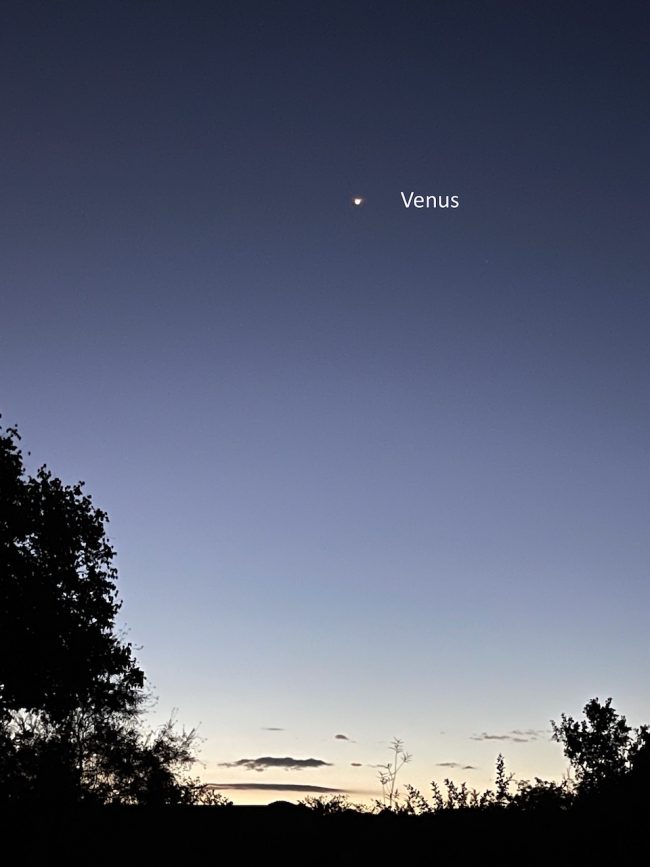
Venus photos from our community

Bottom line: Venus will be brightest in the evening sky around September 18, 2026. After that, Venus will next be at its brightest again — this time in the morning sky — in November 2026.
Planet-observing is easy: Top tips here
EarthSky’s monthly planet guide, updated daily: Visible planets and more
Like what you read?
Subscribe and receive daily news delivered to your inbox.
More from
Editors of EarthSky


See Venus in the daytime: Here are 3 tips

Crepuscular rays are sunrays in twilight skies
What is retrograde motion? And why is the moon moving backwards?
How many stars can you see on a moonless night?


