



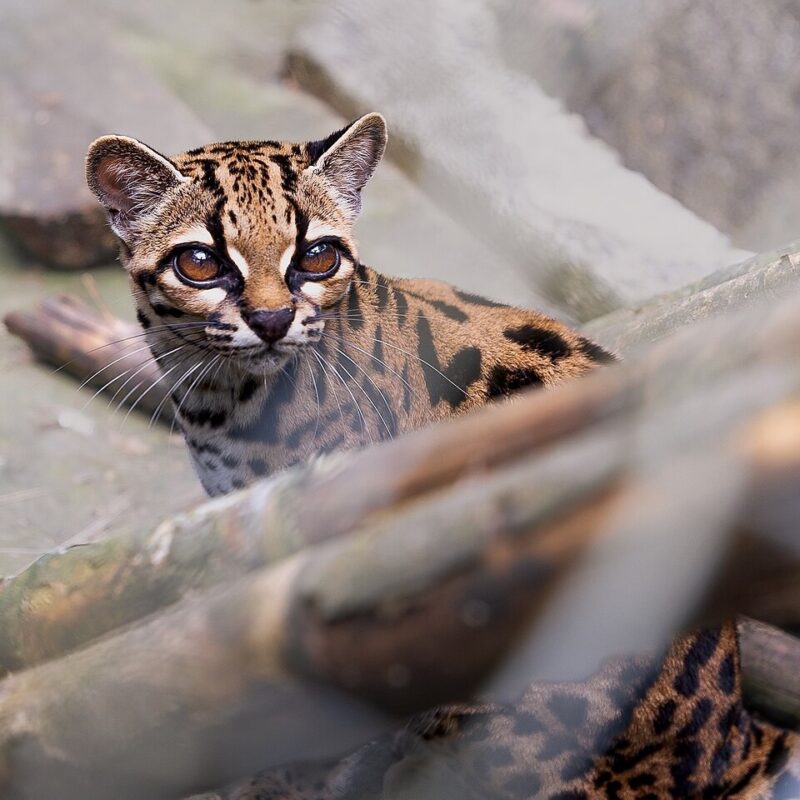
For decades, scientists struggled to sort out South America’s tiger cats. Now, using whole-genome data from 38 individuals, including museum specimens, researchers have found that what scientists once treated as a single group actually contains five distinct species.
And they’ve identified and formally described a new tiger cat species, Leopardus tilcayo.
It’s the first new living cat species formally recognized in more than a century. The researchers estimate that the L. tilcayo lineage diverged from other tiger cats about 1.4 million years ago. It is known from Bolivia’s Yungas region, a mountainous area on the eastern slopes of the Andes, where forests connect the high Andes with the Amazon. The area is difficult to explore, but rich in wildlife.
The journal Current Biology published their peer-reviewed findings on September 17, 2026.
The new cat is from Bolivia
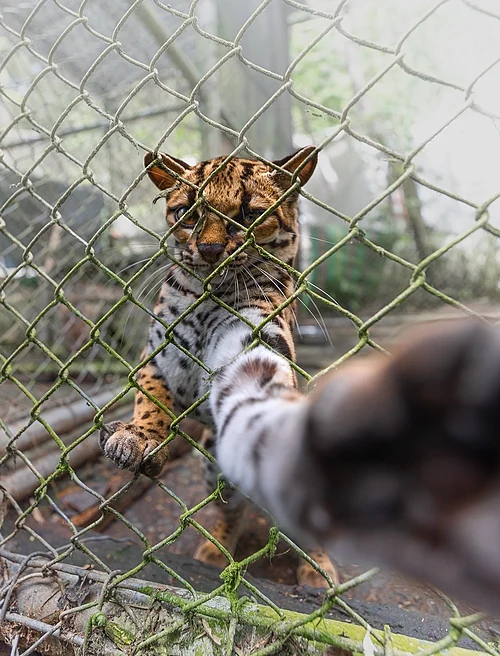
How did they notice it? A local family in Bolivia’s Yungas region found a little spotted cat and initially thought it was a domestic cat. They kept it for about a year before giving it to the Senda Verde wildlife refuge when its wild behavior became apparent. Local people already knew cats like it, calling them tilcayos. At the refuge, biologist Paola Nogales-Ascarrunz noticed that something about the little cat didn’t look quite right. Her curiosity eventually led to the new study and the formal recognition of a new species.
The newly recognized species, Leopardus tilcayo, takes its name from the local name for the cat.
So the cat wasn’t new to the people who lived in the Yungas. It was new to science. Tiger cat is a common name for several species of small spotted wild cats in the genus Leopardus in Central and South America.
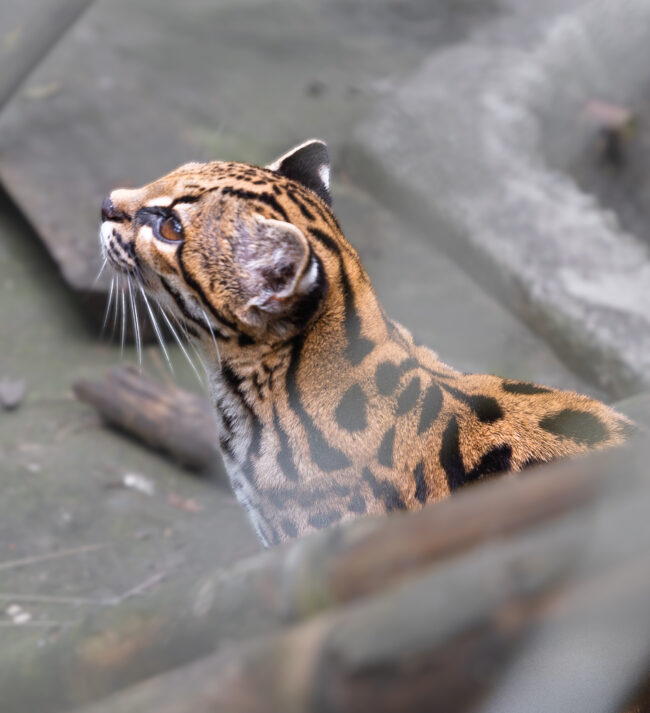
They’re little cats — roughly housecat-sized or smaller — covered in spots and rosettes. They can look remarkably similar, even when they come from very different parts of the continent. That’s why scientists call them a cryptic species complex: visually similar animals that turn out to represent genetically distinct evolutionary lineages.
The new species is about 18 inches (46 centimeters) long from its head to the base of its tail. It weighs around 3 pounds (1.4 kilograms). Nogales-Ascarrunz, who is a co-author of the new study, told Reuters:
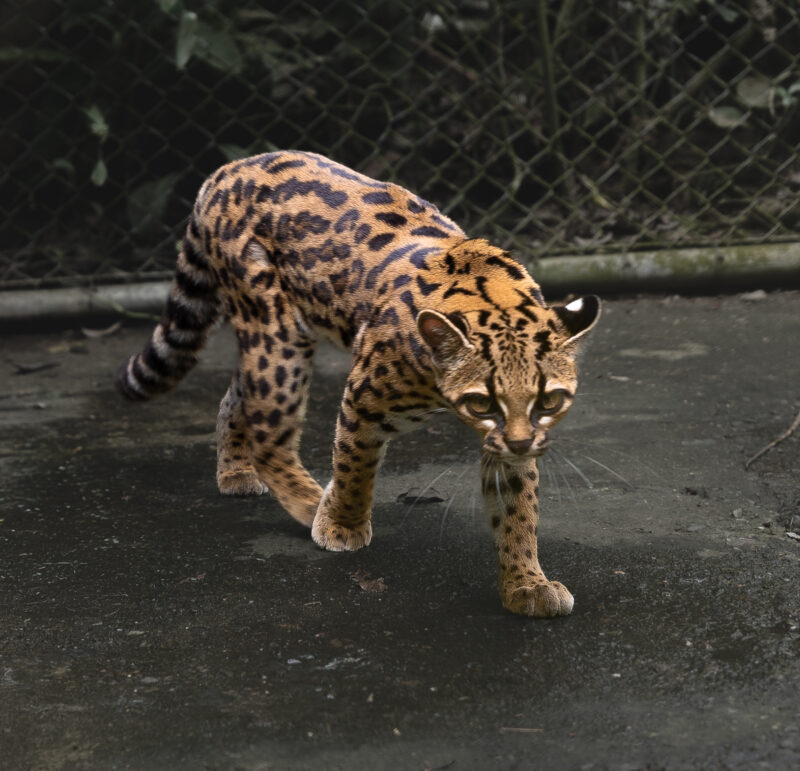
Its fur is light brown … with irregularly shaped rosettes across its body.
Why didn’t we know until now?
The cat’s appearance helped hide its separate species status for so long. Leopardus tilcayo looks a lot like other tiger cats. Simply looking at its coat or body shape does not make its separate identity obvious. So the researchers turned to DNA, comparing the genomes of 38 tiger cats from different parts of South and Central America. A genome is an organism’s complete set of genetic information. By comparing genomes, scientists can see how closely related different animals are and identify populations that have followed separate evolutionary paths.
The results showed that the five tiger cat species are genetically distinct. Evolutionary biologist Jonas Lescroart told Reuters:
We never expected this Bolivian tiger cat to be a separate species, and no one had ever proposed it as a different animal, subspecies or otherwise.
The study also identifies a new subspecies in Peru, Leopardus tigrinus antisuyo. A subspecies is a distinct population within a species that has developed consistent differences from other populations.
Four known species and one new one
The five species recognized in the study are:
Leopardus tigrinus, Leopardus guttulus, Leopardus emiliae, Leopardus pardinoides and Leopardus tilcayo.
Assuming the researchers are correct, and the lineage leading to L. tilcayo separated from its closest relatives about 1.4 million years ago, the Bolivian cat didn’t recently become different from its relatives. It has been following its own evolutionary path for a very long time.
Old museum specimens helped
The researchers didn’t rely only on animals sampled recently in the wild. Eight of the 38 tiger cats included in the study came from natural history museum collections, and some of those specimens had been collected decades ago.
Today, scientists can sometimes recover DNA from preserved museum specimens and compare it with genetic material from living animals.
This approach is known as museomics, or using museum collections and modern genetic techniques to answer questions about biodiversity.
In this case, those old specimens helped researchers piece together the evolutionary history of tiger cats across their ranges. The team combined them with samples from countries including Bolivia, Peru, Brazil, Colombia, Venezuela, Guyana, Suriname and Costa Rica.
A name is a beginning
Recognizing Leopardus tilcayo as a species is a first step. Researchers still need to find out how widely the cat occurs, how many individuals live in the wild and what threats it faces.
But we don’t yet know much about the tilcayo itself. The researchers have very little direct information about its abundance, reproduction or behavior. Camera-trap evidence suggests nocturnal activity, and rodent remains have been found in scat. Other observations and camera-trap records have provided clues about the species, but much remains unknown.
That uncertainty matters because the Yungas region of Bolivia faces increasing pressure from human activities.
A species can also appear more common than it really is when it is counted together with other animal look-alikes. Now that scientists can separate the five tiger cats, they can begin assessing each one on its own.
The discovery changes the conservation picture
So the newly recognized tiger cat lineages can now be assessed individually. And the researchers have shared their findings with the International Union for Conservation of Nature, or IUCN, which maintains the world’s major Red List, of threatened species.
And now conservation scientists have a more accurate picture of where each tiger cat species lives and can begin assessing how large each population might be and what threats it faces.
So the story of Leopardus tilcayo isn’t just about finding a new name for a small cat. It shows how scientists can uncover hidden biodiversity by combining information from the past with modern genetic tools. A cat that looked familiar had been living in the forests of Bolivia all along.
Now science has a better understanding of what it is.
Bottom line: A newly identified South American tiger cat is the first cat species discovered in a century. Scientists studying tiger cats have found five distinct species, revealing more diversity among these familiar-looking wild cats than previously known.
Source: Phylogenomics and museomics reveal five distinct species of tiger cats in South America
Read more: How the lynx beat extinction: Lifeform of the week
Read more: Meet the snow leopard: the ghost of the mountains
Like what you read?
Subscribe and receive daily news delivered to your inbox.
More from
Cristina Ortiz


Reef fish survival threatened by motorboat noise

Giant trees break a decades-old science theory
Walking shark discovered in Papua New Guinea
The giraffe weevil: When a beetle grows a giraffe’s neck


