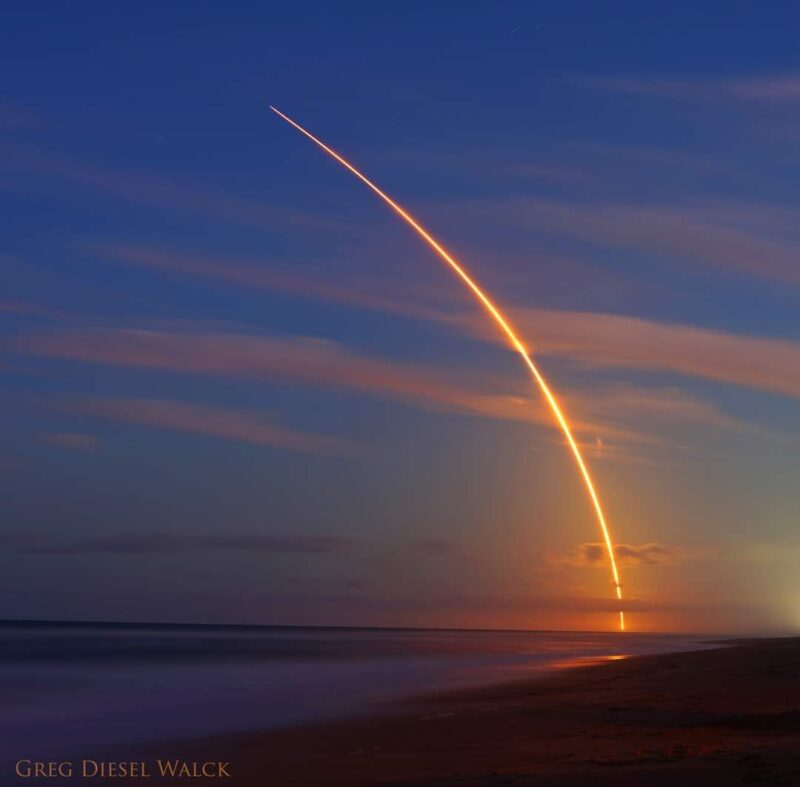
See 6 major spaceport launch sites … from space!
There are dozens of launch pads around the world. These launch pads lift rockets into space carrying satellites, cargo and humans. And some of those missions to space include satellites that look back at us. Take a look at six major spaceport launch sites as we peer down at them from orbiting satellites.
All the images below are from ESA’s Copernicus Program, which uses satellite imagery to monitor Earth. You can explore their views of your neighborhood, favorite national park or any place you like at the Copernicus browser.
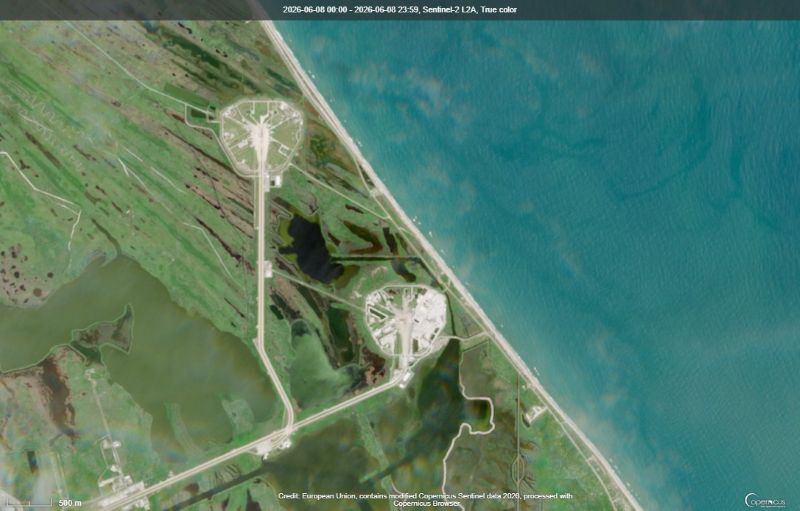
Moon-launch site: Kennedy Space Center, Florida
Some of humanity’s most ambitious journeys began at Kennedy Space Center. Apollo astronauts launched from pad 39b on their voyages to the moon, and today the site supports NASA’s Artemis program, which aims to return humans to the lunar surface. And launch pad 39a, also visible in the image below, now serves as a major hub for SpaceX missions.
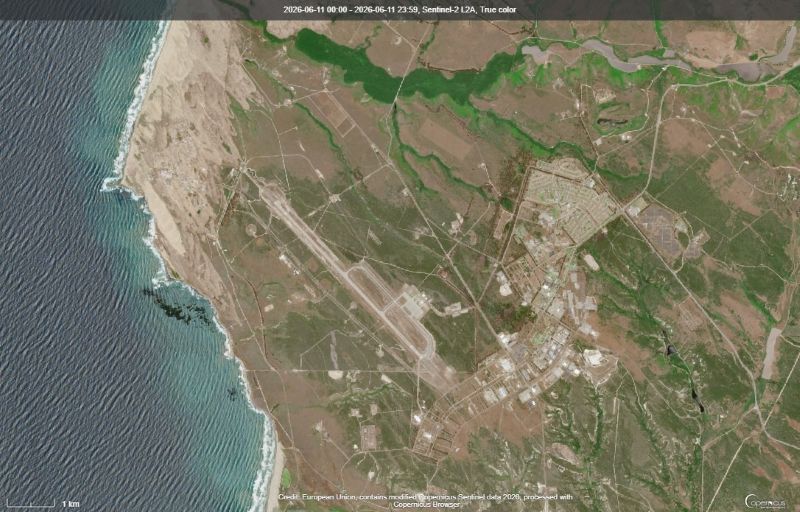
Polar-orbit specialist: Vandenberg Space Force Base
Unlike many launch sites, Vandenberg in California specializes in missions to polar orbit. Polar-orbiting satellites pass over Earth’s poles on each trip around the planet. These orbits are ideal for Earth-observing and reconnaissance satellites because they eventually cover nearly the entire globe. The base location on California’s coast allows rockets to fly southward over open ocean.
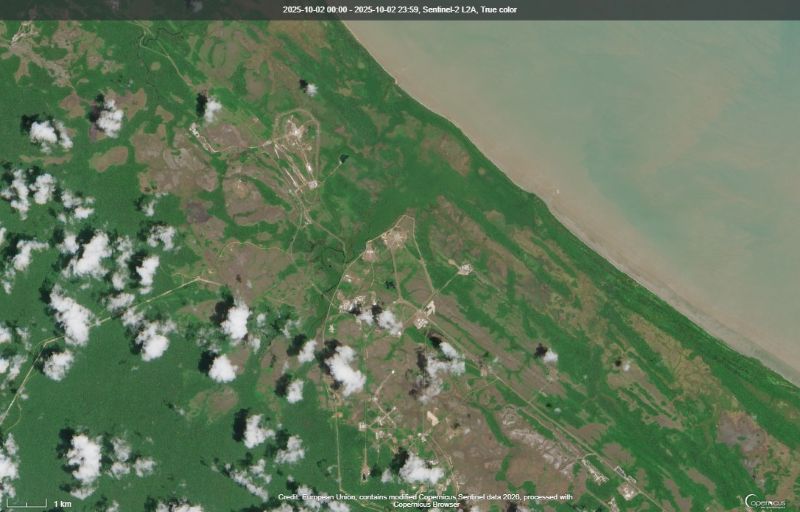
Closest to the equator: Europe’s Guiana Space Centre
Guiana Space Centre sits just 5 degrees north of the equator, giving rockets a natural speed boost from Earth’s rotation. That extra velocity means launch vehicles can carry heavier payloads while using less fuel. The location helped make the site Europe’s primary gateway to space and the launch point for the James Webb Space Telescope.
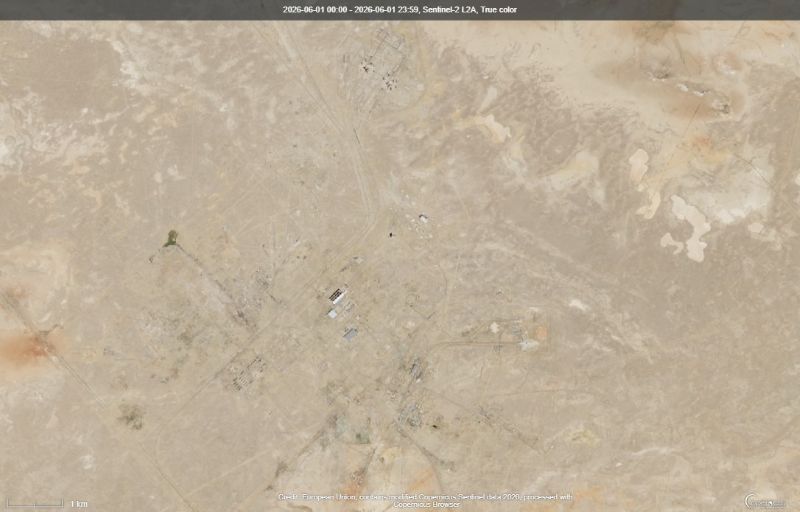
Most historic: Russian Baikonur Cosmodrome, Kazakhstan
Baikonur Cosmodrome is where the space age began. The Soviet Union launched Sputnik 1, the world’s first artificial satellite, from here on October 4, 1957. Less than four years later, Yuri Gagarin lifted off from Baikonur to become the first human in space.
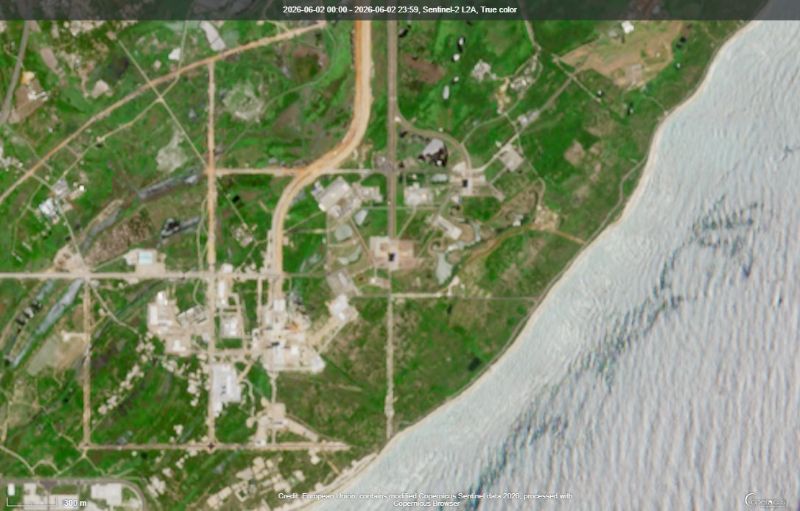
China’s gateway to space: Wenchang Space Launch Site
China built Wenchang on the tropical island of Hainan to support its newest and most powerful rockets. The facility handles launches of Long March 5 vehicles, which carry modules for China’s space station and other large spacecraft. Its coastal location also makes it safer for falling rocket stages to splash down over the ocean.
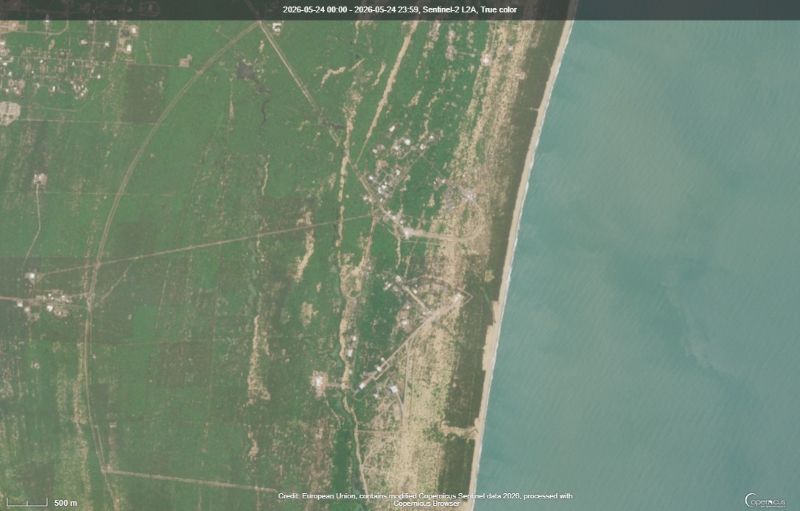
India’s launch hub: Satish Dhawan Space Centre
Nearly every Indian space mission begins at Satish Dhawan Space Centre. From here, India launched the Chandrayaan lunar missions and the spacecraft that became the first to orbit Mars on its maiden attempt. Its location near the equator helps rockets take advantage of Earth’s eastward spin.
Bottom line: These six launch sites helped open the space age. Now, satellites orbiting Earth can look back at the spaceports that sent them there.
Read more: Groundbreaking Swift spacecraft rescue mission launches
Read more: NASA announces Artemis 3 astronauts: See them here
Like what you read?
Subscribe and receive daily news delivered to your inbox.
More from
Kelly Kizer Whitt


Visible planets and night sky guide for October

Why does anything exist? New theory emerges
Euclid was mapping the universe. Then it found a comet
Auriga the Charioteer and bright Capella on October evenings